


Get you up to speed: Satellite images show Gaza in ruins three years into Israel’s genocidal war
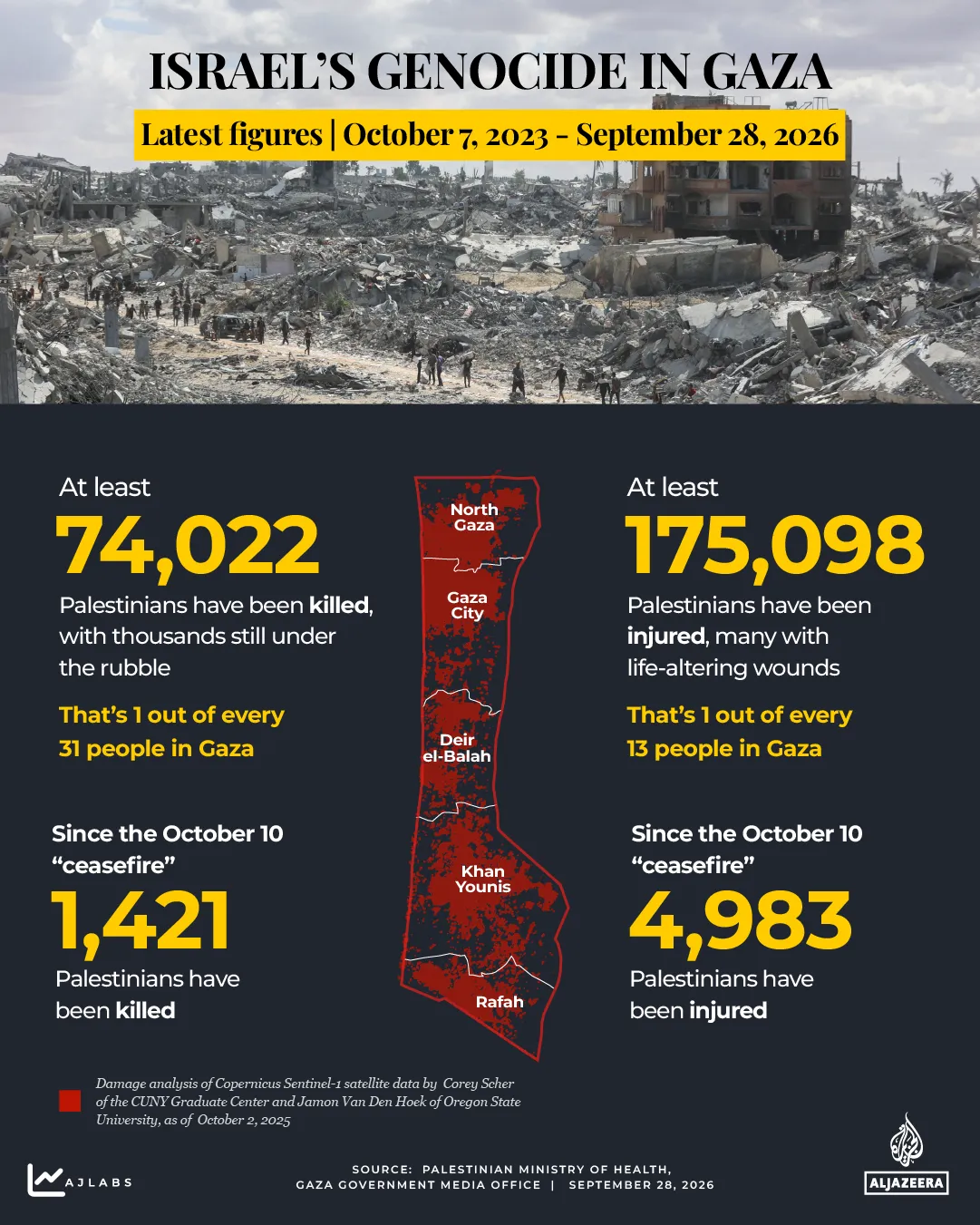
Satellite images reveal extensive destruction across Gaza, nearly three years into the ongoing conflict, with over 74,000 Palestinians reported killed. The United Nations estimates that around 82 percent of structures in Gaza have been damaged, with significant devastation observed in areas such as Rafah and Khan Younis.
The United Nations Satellite Centre (UNOSAT) has reported a 9 percent increase in the number of destroyed structures in Gaza since last year’s ceasefire, with approximately 200,000 buildings affected. Furthermore, the governorate of Khan Younis has recorded the highest number of damaged structures at 51,885, according to the UN’s October 2025 assessment.
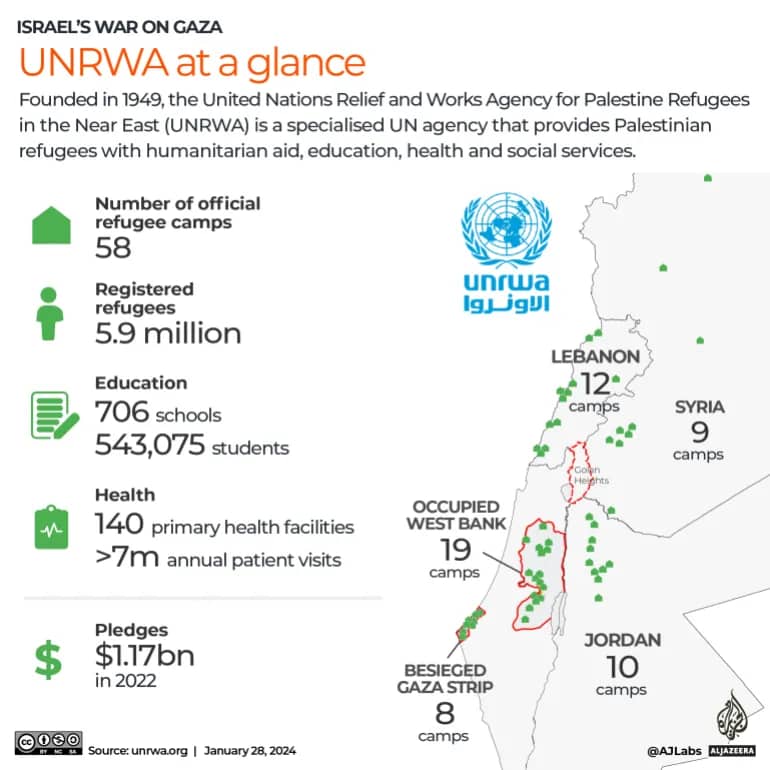
The United Nations has reported a 9 percent increase in the number of destroyed structures in Gaza since the ceasefire took effect nearly a year ago, as the humanitarian situation deteriorates amidst ongoing conflict. As a response, UNRWA is expected to increase its efforts to provide immediate aid to displaced Palestinians, with a focus on shelter and food security in the wake of this escalating crisis.
What remains unclear — The number of people still unaccounted for beneath the rubble in Gaza has not been confirmed.
Satellite images reveal extensive destruction across Gaza three years into conflict
EXPLAINERNews|Israel-Palestine conflictSatellite images show Gaza in ruins three years into Israel’s genocidal war
New Google Maps images show the scale of Israel’s destruction of Gaza, where more than 74,000 Palestinians have been killed.
Published On 29 Sep 202629 Sep 2026
Newly updated Google Maps satellite imagery shows the scale of destruction across the besieged Gaza Strip nearly three years into Israel’s genocidal war.
With neighbourhood after neighbourhood reduced to rubble and little left but the faint outlines of main roads, it is now almost impossible to tell one part of Gaza from another. Farmland has been charred, and centuries-old places of worship have been damaged or wiped from the landscape.
A recent assessment by the United Nations Satellite Centre (UNOSAT) found that the number of destroyed structures across Gaza has increased by 9 percent since a “ceasefire” took effect nearly a year ago. Overall, about 82 percent of structures in Gaza, roughly 200,000 buildings, have been damaged, and about two-thirds of those have been destroyed, according to the UN agency for Palestinian refugees, UNRWA.
Using satellite images recently released on Google Maps, WTX News compared Gaza before the war with today, from Rafah in the south to North Gaza. The images of Rafah were captured this year while those of northern Gaza date from 2025 and 2024. Drag the slider to the left to see what remains of some of Gaza’s neighbourhoods.
Tal as-Sultan, Rafah
Rafah, Gaza’s southernmost city, became a major refuge for Palestinians displaced from across Gaza, but about one million people were forced to flee the area after Israeli military operations began there in May 2024. Most had already been displaced multiple times and were forced to move towards Khan Younis, a city just north of Rafah, and Deir el-Balah in central Gaza as UNRWA shelters in Rafah were emptied.
In western Rafah, the once densely populated Tal as-Sultan neighbourhood has been almost entirely wiped out. Satellite images showed little more than sand where homes once stood.
Al-Mawasi, Rafah
Al-Mawasi, once a sparsely populated coastal strip of sand and farmland stretching along the coast of the Rafah and Khan Younis governorates, was declared a “humanitarian zone” by Israel early in the war. It told displaced Palestinians to seek safety there. In May 2024 as Israel prepared to invade the city of Rafah, then-US President Joe Biden warned: “If they go into Rafah, … I’m not supplying the weapons.” Israel went ahead with the operation, pushing hundreds of thousands more people into al-Mawasi, which it has since bombed repeatedly.
The latest satellite images show the once largely empty area now covered in tents and packed with families who have nowhere else to go.
Indonesian Istiqlal Mosque, Khan Younis
Khan Younis recorded the highest number of damaged structures of any governorate in UNOSAT’s October 2025 assessment with 51,885 structures. The governorate was also one of Gaza’s main agricultural hubs, and Khan Younis has recorded the largest total area of damaged cropland in the Gaza Strip. The Indonesian Istiqlal Mosque in the Ma’an area of Khan Younis was destroyed during the war after being reopened less than two years earlier.
Port of Gaza, Gaza City
Gaza governorate recorded the second-highest number of damaged structures in UNOSAT’s October 2025 assessment at 51,530 with 41,663 in Gaza City alone.
Among the worst-hit sites has been Gaza City’s port, the heart of a fishing industry that once supported about 110,000 people. The UN Food and Agriculture Organization said the port has been severely damaged and most of its fishing boats destroyed.
Jabalia refugee camp, North Gaza
The North Gaza governorate had the highest proportion of damaged cropland in the Strip with 94 percent damaged by July 2025, according to the UN’s Office of Humanitarian Affairs. During the war, Beit Lahiya, Jabalia and other communities in the north were subjected to repeated Israeli military operations, forced displacements and severe restrictions to humanitarian aid. Jabalia refugee camp, the largest of Gaza’s eight camps, has been destroyed with satellite images showing entire blocks reduced to rubble.
Since Israel’s war on Gaza began on October 7, 2023, more than 74,000 Palestinians have been killed and more than 175,000 have been injured. The true toll is likely higher because many people are still missing beneath the rubble. Since the October “ceasefire” last year, more than 1,400 people have been killed and almost 5,000 injured.












Great article! This really puts things into perspective. I appreciate the thorough research and balanced viewpoint.
Interesting read, though I think there are some points that could have been explored further. Would love to see a follow-up on this topic.
Thanks for sharing this! I had no idea about some of these details. Definitely bookmarking this for future reference.
Well written and informative. The examples provided really help illustrate the main points effectively.
This is exactly what I was looking for! Clear, concise, and very helpful. Keep up the excellent work!