


Get you up to speed: European far-right parties struggle to unify stance on US-Iran conflict
US and Israeli airstrikes on Iran have caused significant divisions among European far-right parties, complicating their responses amid energy and migration concerns.
EU far-right parties face internal conflicts over the Iran war, as leaders seek to balance nationalist sentiments with concerns about escalating energy prices and migration challenges.
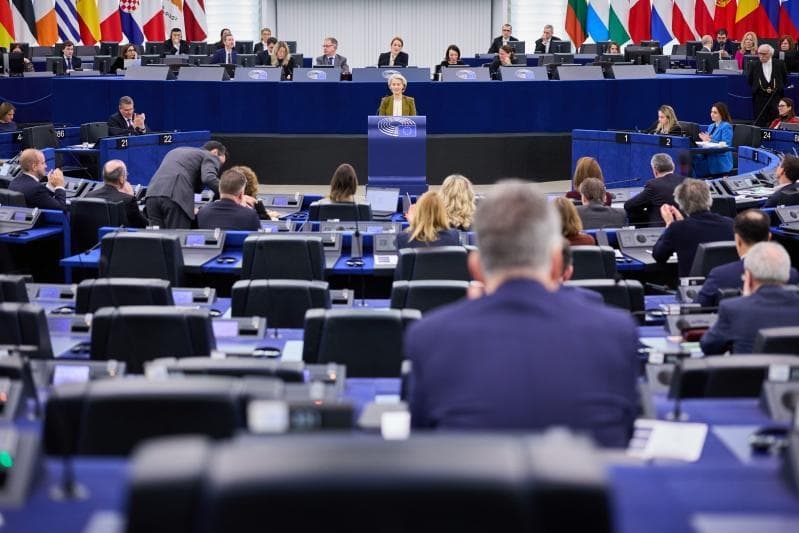
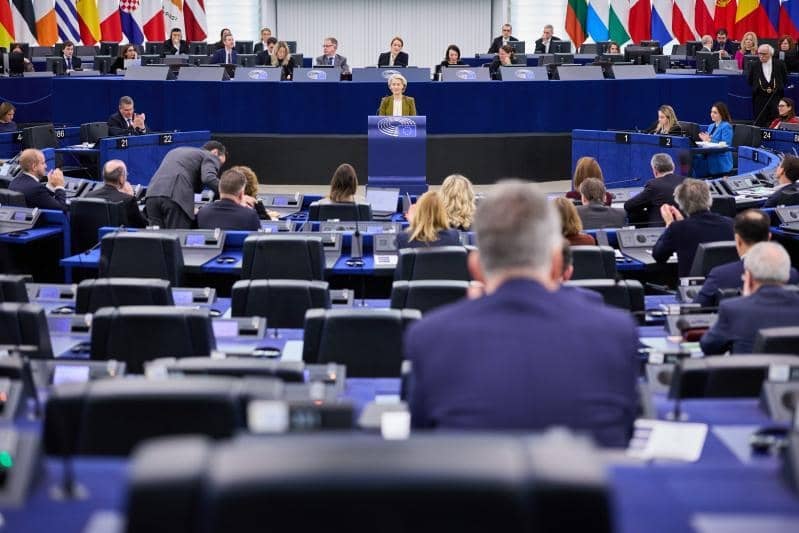
Next Wednesday, the European Parliament will hold a general discussion in Strasbourg on the consequences of the ongoing war.
Briefing summary
The war initiated by US and Israeli actions against Iran has created significant divisions within European far-right parties, leading to conflicting narratives about their positions.
Hungary’s Prime Minister Viktor Orbán and Italy’s Matteo Salvini have both faced challenges in aligning their traditional support for Trump with the potential negative implications of the conflict on European citizens.
As nationalist groups navigate their stances, many are expressing concerns over the consequences of the war, including increased energy prices and migration, complicating their relationship with Trump’s administration.
Europe’s far right is lost in Trump’s war against Iran
The war started with Iran by the United States and Israel has left the European far right divided and doubtful.
The conflict, which began with US and Israeli airstrikes that knocked out Iran’s top leadership, has put nationalists across Europe in a difficult position, with different narratives to reconcile.
Enthusiastic pro-MAGA, pro-Israel and anti-Islamic political forces cannot openly endorse a war that could have negative consequences for European citizens, such as an increase in energy prices. Beyond the obvious condemnation of the Iranian regime, some of these parties are struggling to balance the support they generally give to Donald Trump with pressure to condemn the war’s effects.
In the first days of the war, the loudest silence came from Hungary’s ruling party, Fidesz. Prime Minister Viktor Orbán, who has praised Trump as a “peacemaker” for his role in the war in Gaza, neither condemned nor endorsed the attacks on Iran.
Orbán, who is campaigning for re-election on a “pro-peace narrative” and accuses the EU of fuelling the war in Ukraine by supporting Kyiv with money and weapons, has since resolved the dissonance by saying in an interview with Hungary’s ATV that bombing Iran is not a fresh war, but rather the “final elimination and closure of a previous, unresolved focal point”.
The same problem has affected the Italian League, whose leader Matteo Salvini has repeatedly called for Trump to be given the Nobel Peace Prize and touted anti-interventionism as the best strategy in conflicts around the world, including Ukraine.
“We always prefer the diplomatic way”, the League’s head of delegation in the European Parliament Paolo Borchia told EU News, acknowledging the topic is very delicate, amid a fierce domestic debate on the use of US bases on Italian soil to attack Iran.
‘Renewed destabilisation’
Some parties seem more able than others to acknowledge the risks of the war, while still avoiding direct criticism of Trump.
“The renewed destabilisation of the Middle East is not in Germany’s interest and must be brought to an end”, said Alternative für Deutschland (AfD) leaders Alice Weidel and Tino Chrupalla.
“A further collapse of Iran would be catastrophic, unleashing massive migration waves, severe energy price shocks, and a cascade of other collateral damage that would inevitably burden our own population”, AfD MEP Tomasz Fröhlich told EU News, suggesting urgent measures such as recommitting to coal and nuclear power and opposing any possible deployment of German troops in the region.
Consequences for energy and migration are top of the list also for the far-right Flemish Interest party, which raised the issue in a debate in the Belgian Parliament, recalling the knock-on effects of Western countries’ interventions in Libya and Syria.
Czechia’s ruling ANO party is having similar doubts. According to internal sources, on one side, they do not want to criticise Trump; on the other, they are not keen on blindly following the US and Israel, and especially not into a conflict that could drive up energy costs, a major issue in the country.
The most critical voice comes from the French National Rally (RN), whose leaders Marine Le Pen and Jordan Bardella had already questioned US raids on Venezuela that led to the capture of Nicolás Maduro.
Despite taking a strong stance against Tehran’s regime, the RN agrees with France’s President Emmanuel Macron that US intervention was conducted “outside the framework of international law”.
“It should be up to the Iranian people to change the government, take power, and ensure a transition. A change imposed from the outside – especially through air bombings alone – has no historical example of success”, RN MEP Pierre-Romain Thionnet told EU News.
Yet several other leading nationalist forces, including Spain’s Vox, the Netherlands’ Freedom Party, and Nigel Farage’s Reform UK, are more openly aligned with Trump, with each party adapting its political message to a domestic audience.
A European Parliament quagmire
This is all making it very difficult for far-right groups in the European Parliament to find a common position on the war.
Both Patriots for Europe (PfE) and Europe of Sovereign Nations (ESN) claim they are leaving autonomy on the matter to each national delegation, as they usually do. But multiple sources told EU News that beyond the official line, it is clear that the topic has been discussed and that it is a sensitive one within the groups.
The attack on Iran could mark another turning point in the relationship between Trump’s MAGA movement and some of its staunchest European supporters.
The US raid on Venezuela in January and Trump’s threats to take control of Greenland last year had already put the president in a bad light for many Europeans who value sovereignty, and his behaviour is fuelling a growing discomfort among far-right politicians. Once emboldened by the comeback of a nationalist, anti-woke conservative in Washington, they are now starting to put Trump at arm’s length.
“It seems Trump is becoming toxic also for their voters”, a prominent MEP from another political group told EU News. “Behind the scenes, they are scrambling to find a way to distance themselves from him before it’s too late”.
That is why they want as little media attention as possible on their stance towards the war. Far-right and right-wing groups rejected a proposal to debate threats made by Trump against Spain in next week’s European Parliament plenary, a discussion that could have been very complicated for them. Another more general discussion on the war’s consequences is scheduled for next Wednesday in Strasbourg.
“Choosing Trump’s side is very complicated these days,” said the MEP. “Even for Trumpists”.










Great article! This really puts things into perspective. I appreciate the thorough research and balanced viewpoint.
Interesting read, though I think there are some points that could have been explored further. Would love to see a follow-up on this topic.
Thanks for sharing this! I had no idea about some of these details. Definitely bookmarking this for future reference.
Well written and informative. The examples provided really help illustrate the main points effectively.
This is exactly what I was looking for! Clear, concise, and very helpful. Keep up the excellent work!