


What’s the Latest: U of T rejects report, recommendations on anti-Muslim, anti-Arab discrimination
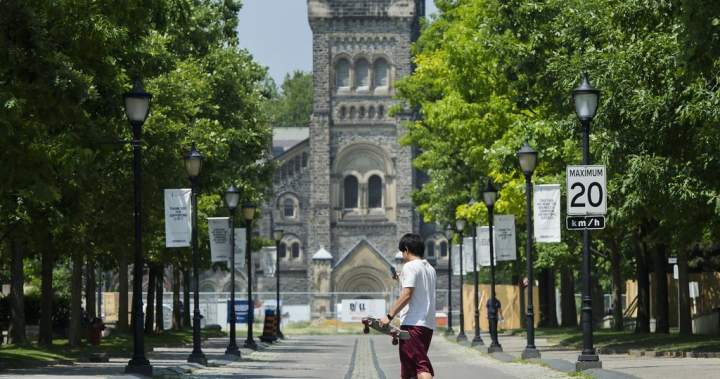
The University of Toronto has rejected a report from its Muslim, Arab, and Palestinian discrimination working group, which highlighted discrimination and proposed 57 recommendations for change. The university acknowledged the existence of anti-Muslim, anti-Arab, and anti-Palestinian discrimination and committed to taking immediate actions to address these issues.
The University of Toronto’s report, which includes 57 recommendations, is rooted in consultations with 85 individuals and 525 survey responses collected from March 2025 to January 2026. While the university stated it acknowledges the existence of discrimination within its community, it rejected the report’s recommendations for conflicting with existing collective agreements and the institution’s stance on academic freedom.
The University of Toronto rejected the recommendations from its Muslim, Arab, and Palestinian discrimination working group, stating they “depart significantly from past equity reports” and clash with academic freedom protections. However, the university committed to improving support for affected communities through enhanced prayer spaces and the introduction of an e-module on discrimination, indicating a focus on addressing these issues moving forward.
What remains unclear — It is not specified how the university plans to address the issues of bias in its partnerships and the specific actions to be taken regarding investment prohibitions discussed in the report.
University of Toronto rejects report on anti-Muslim and anti-Arab discrimination
The University of Toronto has rejected a comprehensive report from its Muslim, Arab, and Palestinian discrimination working group, which identified a “general pattern of over-policing and under-protecting” these communities on campus. The 300-page report included 57 recommendations concerning academic freedom, security, and institutional practices, but the university argued it “departs significantly” from earlier equity reports.
Despite not accepting the report or its recommendations, the university committed to addressing discrimination against Muslims, Arabs, and Palestinians. The institution released the report, which is based on consultations with 85 individuals and a survey of 525 respondents, to uphold its commitment to transparency. “What happens around the world has implications locally on our campus,” the report noted.
Concerns raised include inconsistent complaint processes, double standards in event enforcement, and negative attitudes based on stereotypes of Muslims and Arabs. “The most prevalent pattern we encountered was a generalized ignorance of the histories, cultures, and lived experiences of Muslims, Arabs, and Palestinians,” the report stated.
In its response, the university recognised the existence of discrimination and pledged to enhance support for affected communities. However, it acknowledged that the contrasting views on the report’s findings reflect “the fraught circumstances” surrounding the ongoing global conflict.
The university highlighted certain recommendations that conflicted with collective agreements or were outside its jurisdiction. While it currently accommodates Muslim communities with designated prayer spaces, it aims to improve facilities on all its campuses and will also introduce an e-module on discrimination to educate its governing council.











Great article! This really puts things into perspective. I appreciate the thorough research and balanced viewpoint.
Interesting read, though I think there are some points that could have been explored further. Would love to see a follow-up on this topic.
Thanks for sharing this! I had no idea about some of these details. Definitely bookmarking this for future reference.
Well written and informative. The examples provided really help illustrate the main points effectively.
This is exactly what I was looking for! Clear, concise, and very helpful. Keep up the excellent work!