


What’s the Latest: Wartime mystery solved as divers find wreck of ship torpedoed by German U-boat
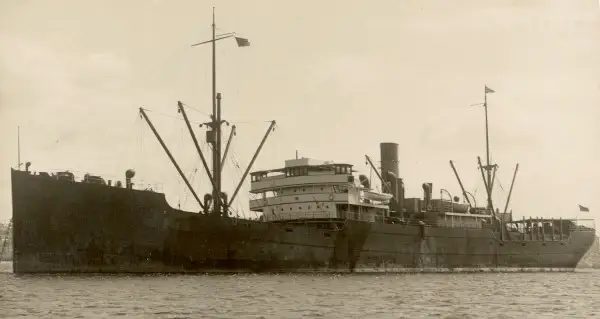
American volunteer divers discovered the wreck of the SS Cornwallis, which was torpedoed by a German U-boat in December 1944, located approximately 16 kilometres off the coast of Maine. The ship was carrying a crew of 48, of whom only five survived the attack.
The Nomad Exploration Team spent five days conducting a grid search in the Gulf of Maine before locating the wreck of the SS Cornwallis at a depth of 122 metres, approximately 16 kilometres off the coast. Identification involved comparing the wreck’s dimensions to available blueprints, confirming the find with 100 per cent certainty through visible structural features.
The discovery of the wreck of S.S. Cornwallis has provided a sense of closure to families of the crew members, with Glenn Roy stating, “At least somebody was thinking about him,” regarding his uncle James. The Nomad Exploration Team, responsible for locating the wreck, plans to share their findings with relevant authorities to ensure the site is maintained and respected.
What remains unclear — It is uncertain whether any further artefacts from the SS Cornwallis will be recovered from the wreck site.
Divers discover wreck of ship sunk by German U-boat during World War II
Divers have located the wreck of the S.S. Cornwallis, a steamboat torpedoed by a German U-boat in December 1944. The ship, en route from Barbados to New Brunswick, was sunk just off the coast of Maine, resulting in the loss of 43 crew members among its total of 48. Only five survived the attack, part of the larger toll taken on merchant mariners during the Second World War.
The discovery, made by an American team of volunteer divers, brings a measure of closure to the families affected. Donald Stewart, grandson of crew member David H. Stewart, expressed gratitude, saying, “It was almost as if our grandfather had spoken, ‘Hey, don’t forget about me.’” Robert Stewart added, reflecting on the telegram he received at 15 informing him of his father’s death: “Devastating, to say the least.”
The search for the wreck began in 2019, when volunteer divers from Nomad Exploration Team resolved to uncover its exact location after decades of uncertainty. Danny Allan, a member of the team, remarked, “The big thing is that someone has taken an interest in finding this location and putting a place on a map.” After extensive research and a meticulous search grid, they located the wreck 16 kilometres from a small island at a depth of 122 metres.
Allan noted the difficulty of identification, recalling the importance of checking blueprints from the shipbuilders in British Columbia. He stated, “This one is easy simply because it’s a 400-foot wreck with a 50-foot beam. There’s not many ships of that size.” While the discovery came without finding identifiable remnants such as the ship’s bell, divers were able to confirm the wreck’s identity through distinctive structural features.
The identification of the Cornwallis has significant emotional impact on the families of the deceased. Glenn Roy remembered his uncle James Roy, saying, “At least somebody was thinking about him,” and reflected on his father’s enduring memories. “No family, no kids or anything. So I keep it going,” he added, highlighting the importance of preserving their legacy.













Great article! This really puts things into perspective. I appreciate the thorough research and balanced viewpoint.
Interesting read, though I think there are some points that could have been explored further. Would love to see a follow-up on this topic.
Thanks for sharing this! I had no idea about some of these details. Definitely bookmarking this for future reference.
Well written and informative. The examples provided really help illustrate the main points effectively.
This is exactly what I was looking for! Clear, concise, and very helpful. Keep up the excellent work!