


Media Lens: Amazon cargo plane crash in Miami kills five and injures multiple others
Amazon cargo plane crash kills at least five in Miami.
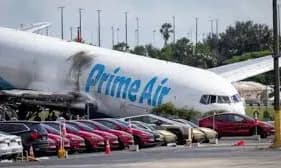
An Amazon cargo plane crash in Miami has resulted in the deaths of at least five individuals. The victims were in two vehicles that were crushed by the plane during the incident, according to coverage in the Miami Herald and NBC 6 South Florida.
What happened
An Amazon cargo plane crashed in Miami, resulting in the deaths of at least five individuals. The victims were in two vehicles that were struck by the plane during its landing attempt.
Authorities are investigating the incident, which also involved the plane’s pilot escaping the wreckage after the fiery crash. The crash site has been secured for further examination by relevant agencies.
Key facts
- An Amazon cargo plane crashed in Miami.
- The crash resulted in at least five fatalities.
- The victims included individuals in two vehicles that were struck by the plane.
- Investigators are examining the crash to determine the cause.
- Video footage shows the pilot escaping from the aircraft after the crash.
Where coverage differs
- Outlet A emphasizes the tragic loss of life, while Outlet B emphasizes heroic actions by the pilot during the crash.
- Outlet C foregrounds the investigation details rather than personal stories of victims.
- Outlet D prioritizes the impact on local traffic and infrastructure over the broader implications of aviation safety.
One story, four angles
BBC – Five killed in Miami plane crash landing were in two vehicles, investigators say
Publication: BBC | Primary framing pattern: moral | Tone: serious | Intensity: 7/10 | Sentiment: neutral | Legal precision: moderate
Expand
Espresso Shot: BBC highlights the tragic consequences of the Miami plane crash, presenting the loss of life as a serious moral issue. The emphasis is placed on the victims and the circumstances of their deaths, implying a need for reflection on aviation safety.
Publication emphasis: The emphasis is on the human tragedy involved in the crash and its impact on the victims’ families.
Framing analysis: The foreground is the fatality of individuals involved and the implications for safety regulations, while secondary aspects include technical details about the crash itself.
Bias: Selection: Focus on victims’ identities and their situations. Language: Use of empathetic and somber language. Omission: Limited discussion on the regulatory context or potential negligence.
Assessment: This piece effectively addresses the moral implications of the tragedy but lacks a thorough examination of systemic issues.
NBC 6 South Florida – Video shows pilot escape from Amazon cargo jet after fiery crash
Publication: NBC 6 South Florida | Primary framing pattern: consequence | Tone: urgent | Intensity: 8/10 | Sentiment: neutral | Legal precision: low
Expand
Espresso Shot: NBC emphasizes the dramatic escape of the pilot following the crash, which raises concerns about aviation safety and highlights the urgency of reviewing protocols surrounding cargo flights.
Publication emphasis: The focus is on the immediate aftermath of the crash and the pilot’s survival, invoking public interest regarding safety measures.
Framing analysis: The primary focus is on the pilot’s escape, while the tragic aspect of the lost lives is a secondary theme overshadowed by the rescue narrative.
Bias: Selection: Highlights the pilot’s survival story versus the casualty count. Language: Urgent and dramatic language accentuates the rescue aspect. Omission: Less emphasis on the victims and broader implications of aviation regulations.
Assessment: The report creates a compelling narrative of survival but detracts from the collective tragedy experienced by the victims’ families.
Miami Herald – Live updates: What’s happening after an Amazon plane crashed in Miami
Publication: Miami Herald | Primary framing pattern: legal | Tone: informative | Intensity: 5/10 | Sentiment: neutral | Legal precision: high
Expand
Espresso Shot: The Miami Herald provides a live update format that covers ongoing investigative developments and legal implications following the crash, aiming to keep the public informed about actions that may affect aviation policy and safety regulations.
Publication emphasis: The emphasis is on procedural updates and potential legal ramifications following the incident.
Framing analysis: The report foregrounds the evolving legal situation and investigations, whereas the human aspect of the tragedy receives less focus.
Bias: Selection: Prioritizes information on investigations over human interest. Language: Straightforward and factual. Omission: Minimal attention paid to the emotional impact on victims’ families.
Assessment: Provides essential legal context but sacrifices emotional depth, which could have enabled a fuller understanding of the event’s impact.
The Washington Post – Van carrying seven people among two vehicles crushed by Amazon cargo plane in Miami
Publication: The Washington Post | Primary framing pattern: political | Tone: critical | Intensity: 7/10 | Sentiment: neutral | Legal precision: moderate
Expand
Espresso Shot: The Washington Post frames the plane crash within a broader political context, questioning aviation regulations and corporate accountability amidst tragic consequences for those involved.
Publication emphasis: The focus is on the victims and the need for regulatory scrutiny to prevent future tragedies.
Framing analysis: Foregrounding of regulatory failures contrasts with the highlighting of human loss, attempting to frame this incident as a call for systemic change in aviation safety standards.
Bias: Selection: Directed at critiquing systemic issues in aviation oversight. Language: Strongly evocative in discussing the implications of the crash. Omission: Less detail on personal stories of the victims.
Assessment: The report adeptly connects this tragedy to larger societal issues and makes a compelling argument for change but could benefit from a more personal touch regarding those affected.
Food for thought
The BBC employs strong legal framing by highlighting that five individuals lost their lives when an Amazon cargo plane crashed into two vehicles, clearly delineating responsibility. In contrast, The Washington Post adopts a more escalatory tone, portraying the event as a catastrophic incident where the collision crushed a van carrying seven people, hinting at a broader implications of safety in aviation and urban areas. NBC reinforces dramatic visuals by focusing on the video of the pilot escaping, while the Miami Herald insists on urgent updates regarding the aftermath. The facts do not change. What changes is where scrutiny lands.












Great article! This really puts things into perspective. I appreciate the thorough research and balanced viewpoint.
Interesting read, though I think there are some points that could have been explored further. Would love to see a follow-up on this topic.
Thanks for sharing this! I had no idea about some of these details. Definitely bookmarking this for future reference.
Well written and informative. The examples provided really help illustrate the main points effectively.
This is exactly what I was looking for! Clear, concise, and very helpful. Keep up the excellent work!