


Get you up to speed: Jamaica to file slavery reparations petition during UK visit
A Jamaican delegation, led by Minister of Culture, Gender, Entertainment and Sport Olivia Grange, intends to file a petition to King Charles III in the United Kingdom regarding slavery reparations. The petition seeks legal guidance on the legality of slavery under English law and the UK’s responsibilities for reparations, with discussions also planned with the British Museum about the repatriation of cultural artefacts.
Jamaica’s delegation will also discuss the repatriation of cultural artefacts with officials at the British Museum during their visit. The Jamaican government estimates that it is owed approximately $10 billion in reparations, a claim the UK government has historically denied.
Jamaica’s delegation, led by Minister of Culture Olivia Grange, plans to file a petition to King Charles III seeking legal clarification on the country’s entitlement to reparations for slavery. Buckingham Palace has confirmed awareness of the petition but stated that the king has no role in deciding the claim’s substance.
What remains unclear — It is uncertain what specific answers Jamaica anticipates from the UK regarding its legal obligations on reparations for slavery.
Jamaica to submit slavery reparations petition to King Charles during UK visit
News|SlaveryJamaica to file slavery reparations petition during UK visit
Petition to King Charles questions the legality of slavery under English law and UK’s responsibility for reparations.
Published On 7 Sep 20267 Sep 2026
 Published On 7 Sep 20267 Sep 2026
A Jamaican delegation to the United Kingdom has said it will file a petition addressed to King Charles III to seek legal guidance on the question of slavery reparations.
This is the first time a British Commonwealth state will use this legal route “for the cause of reparatory justice”, the Jamaican delegation said, as the visit to London kicks off Monday.
Jamaica’s Ministry of Culture, Gender, Entertainment and Sport said its minister, Olivia Grange, will lead the delegation “to advance Jamaica’s push for reparations for the African ancestors who suffered under hundreds of years of enslavement”.
The ministry added that it will meet with the British Museum to discuss “the repatriation of cultural artefacts taken from Jamaica”.
The petition will ask the king, Jamaica’s head of state, to answer three questions on the transatlantic slave trade to the Judicial Committee of the Privy Council, the Caribbean island’s highest court of appeal based in London.
Under the Judicial Committee Act of 1833, the UK monarch has the authority to refer legal matters to the court for an advisory opinion.
The questions include: whether the enslavement of Africans in Jamaica was legal under English common law, whether it violated international law, and whether the UK has a legal obligation to provide a remedy for the harm caused by slavery.
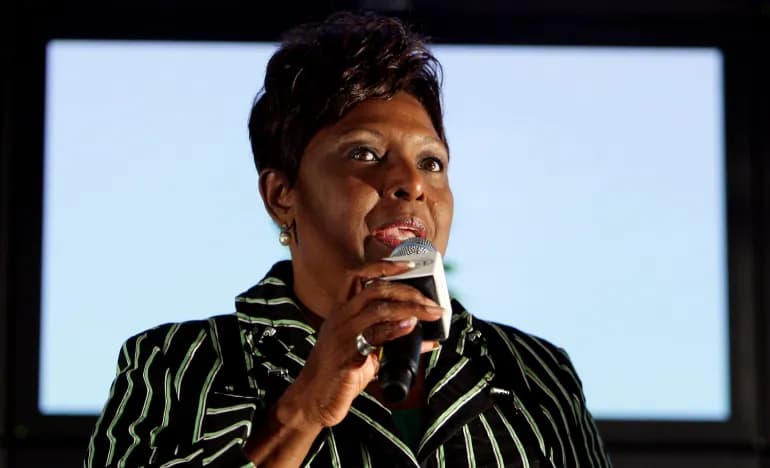
![Jamaica's Minister of Youth, Sports and Culture, Olivia Grange attends the AIPS and Laureus Press Celebration 'Champions in Sport for Good' during day six of the 12th IAAF World Athletics Championships at Casa Italia, Hotel Ellington on August 20, 2009 in Berlin, Germany. [Mark Dadswell/Getty Images]](https://wtxnews.com/wp-content/uploads/2026/09/getty_6a9e04d05e-1788740816.jpg) Jamaica’s Minister of Youth, Sports and Culture Olivia Grange attends the AIPS and Laureus Press Celebration ‘Champions in Sport for Good’ during the 12th IAAF World Athletics Championships at Casa Italia, Hotel Ellington, on August 20, 2009, in Berlin, Germany [Mark Dadswell/Getty Images]
Jamaica’s Minister of Youth, Sports and Culture Olivia Grange attends the AIPS and Laureus Press Celebration ‘Champions in Sport for Good’ during the 12th IAAF World Athletics Championships at Casa Italia, Hotel Ellington, on August 20, 2009, in Berlin, Germany [Mark Dadswell/Getty Images]
Grange said she would not speculate on whether Jamaica was asking the UK to pay reparations for the slave trade.
“We want the answers. Once we get the answers, or once we get a response to those questions, then the next steps will be determined,” she said.
“We understand the Jamaican government is seeking a petition to be heard before the Judicial Committee of the Privy Council,” a Buckingham Palace spokesperson said in response to Jamaica’s inquiry.
The palace acknowledged the king’s constitutional role in the petition as Jamaica’s head of state but said he had no role in deciding the substance of the claim.
British merchants enslaved and forcibly transported 600,000 to 1 million Africans to Jamaica between the 17th century and the early 19th century.
Shortly after abolishing slavery in 1833, the UK paid slave owners $27m in compensation, amounting to 40 percent of the Treasury’s annual income. To raise the cash, the government took out considerable loans, finally paying off its debts in 2015.
The Jamaican government estimates that the country is owed about $10bn, but the UK has repeatedly refused to pay for historical slavery.








Great article! This really puts things into perspective. I appreciate the thorough research and balanced viewpoint.
Interesting read, though I think there are some points that could have been explored further. Would love to see a follow-up on this topic.
Thanks for sharing this! I had no idea about some of these details. Definitely bookmarking this for future reference.
Well written and informative. The examples provided really help illustrate the main points effectively.
This is exactly what I was looking for! Clear, concise, and very helpful. Keep up the excellent work!