


Get you up to speed: U.S. military launches second night of strikes against Iran
The U.S. military conducted strikes on approximately 90 Iranian targets late Wednesday night, following Iranian attacks on three commercial oil tankers earlier in the week. Reported explosions were heard in several Iranian cities, including Bandar Abbas, while Kuwait stated it was “confronting hostile missile and drone attacks” and emergency sirens were activated in Bahrain.
U.S. Central Command conducted a series of strikes against approximately 90 Iranian targets, including infrastructure and naval assets, in response to Iranian attacks on commercial oil tankers. The ongoing military exchanges and the recent escalation threaten the viability of a ceasefire agreement signed last month, which had aimed to facilitate further negotiations regarding Iran’s nuclear program.
The U.S. military, under President Trump’s orders, conducted significant strikes against Iranian targets to counter recent Iranian attacks on commercial vessels, stating the actions aim to “further degrade [Iran’s] ability to threaten freedom of navigation in the Strait of Hormuz.” Amid rising tensions, Kuwait and Bahrain reported missile and drone threats, with Kuwait acknowledging confrontations, while the U.S. positions itself firmly against Iranian claims to control the Strait as diplomatic talks appear to deteriorate.
What remains unclear — It is uncertain how the latest military actions will affect the ongoing peace negotiations and ceasefire between the U.S. and Iran.
US military conducts second consecutive night of strikes on Iran
Washington — The U.S. military launched another round of strikes against Iran late Wednesday night, U.S. Central Command said, in the second night of attacks as diplomacy between the two countries appears to collapse.
CENTCOM said on X that Wednesday’s strikes are intended to “further degrade [Iran’s] ability to threaten freedom of navigation in the Strait of Hormuz.” It said the strikes were ordered by President Trump in response to Iranian attacks on three commercial oil tankers earlier this week.
The military said it hit about 90 Iranian targets, including air defenses, drone and missile storage, naval targets and logistics infrastructure on Iran’s coast. Iranian state media outlets reported that explosions were heard in several cities, including the southern port city of Bandar Abbas.
Early Thursday morning, Kuwait said it was “confronting hostile missile and drone attacks.” Emergency sirens also sounded in Bahrain. The two countries did not specify the source of the threats, but Iranian counterattacks against U.S.-allied Gulf states have closely followed previous U.S. strikes on Iran.
Hours earlier, Mr. Trump had vowed to “hit [Iran] hard again tonight.” Asked about the three-month-old ceasefire between the two countries, which has repeatedly been mired by on-and-off fighting, he told reporters: “As far as I’m concerned, it’s over.”
After Wednesday’s strikes began, Mr. Trump wrote on Truth Social that “it will get much worse” if Iran attacks more ships.
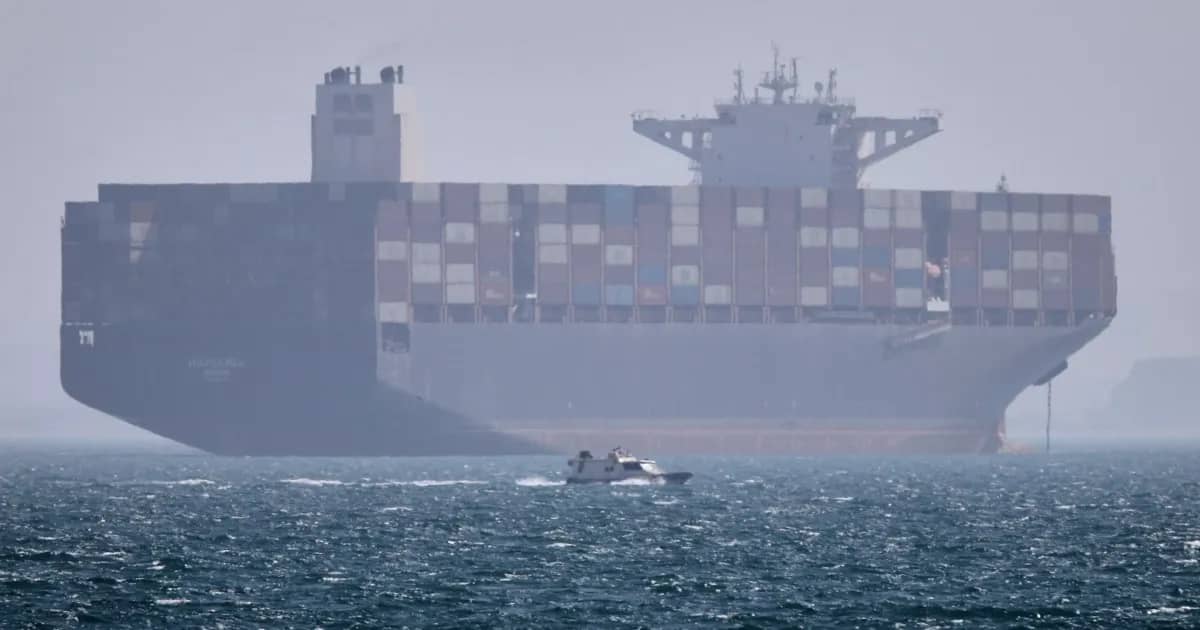
This week’s back-and-forth began with Iranian attacks on three oil tankers in the Strait of Hormuz on Monday and Tuesday. The Trump administration retaliated by striking dozens of targets inside Iran on Tuesday and rescinding a sanctions waiver that allowed Iran to sell its oil abroad. Iran then fired drones and missiles at U.S.-allied Kuwait and Bahrain.
The latest round of fighting could endanger already tenuous peace negotiations between the U.S. and Iran. The two sides signed a memorandum of understanding last month to extend their ceasefire by 60 days, reopen the Strait of Hormuz, end a U.S. blockade on Iranian ports and begin easing sanctions on Iran. The two countries also agreed to hold two months of further talks to tackle thorny issues like the fate of Iran’s nuclear program.
Since then, there have been a handful of military exchanges between the U.S. and Iran, and both countries have accused each other of violating the deal. Commercial ships have begun returning to the Strait of Hormuz, easing oil prices, but Iran has continued to push for some degree of control over the strait — a demand the U.S. has rejected.
On Wednesday, Mr. Trump appeared pessimistic about diplomatic talks with Iran, calling the country’s leaders “sick” and saying “it’s just a waste of time dealing with them.”
“I’ll let our wonderful negotiators keep talking if they want, but I don’t see it,” he told reporters during a NATO summit in Turkey. “I don’t like these people, you know that.”
Later in the day, after Wednesday’s strikes began, Mr. Trump told reporters that Iran wants “to make a deal so badly,” but he doesn’t know if Iran is “worthy of making a deal.”
“I don’t know if they’ll honor a deal,” he said.













Great article! This really puts things into perspective. I appreciate the thorough research and balanced viewpoint.
Interesting read, though I think there are some points that could have been explored further. Would love to see a follow-up on this topic.
Thanks for sharing this! I had no idea about some of these details. Definitely bookmarking this for future reference.
Well written and informative. The examples provided really help illustrate the main points effectively.
This is exactly what I was looking for! Clear, concise, and very helpful. Keep up the excellent work!