

The United Arab Emirates has officially announced its withdrawal from OPEC and OPEC+ to pursue its national interests and strategic autonomy, amid rising tensions linked to the US-Israel-Iran conflict and ongoing regional realignments.
UAE Exits OPEC to strengthen Israel ties
UAE’s move signals a major shift away from collective oil production quotas whilst positioning itself to be the main Arab state and deepening cooperation with Israel, underscoring a new phase in Gulf regional politics and energy strategy.
There are long-standing plans and a preliminary agreement regarding a pipeline to transport oil from the UAE to Israel, which has gained renewed, intense focus in 2026 due to regional tension
UAE’s national strategic and economic vision
The United Arab Emirates confirmed on Tuesday that it will leave the Organisation of the Petroleum Exporting Countries (OPEC) and OPEC+ effective May 1, 2026. The decision, according to state media, aligns with the country’s “long-term strategic and economic vision and evolving energy profile.”
UAE Energy Minister Suhail Mohamed al-Mazrouei described the move as a policy decision taken after careful consideration of current and future energy production strategies. Notably, the UAE did not consult other OPEC members, including Saudi Arabia, before making its decision.
Since becoming a founding OPEC member through Abu Dhabi in 1967, and then as the UAE post-independence in 1971, the country has been a significant oil producer contributing roughly 4.8 million barrels per day capacity. Its exit is expected to dilute OPEC’s ability to manage supply and prices collectively.
No more Big brother – Strategic autonomy
The UAE’s OPEC exit fits a broader pattern of distancing from regional blocs and asserting strategic autonomy. Diplomatic adviser Dr Anwar Gargash highlighted that this autonomy is the UAE’s “enduring choice,” which is reflected in foreign policy decisions and other sectors.
Examples of this autonomy include the UAE’s historic Abraham Accords normalising relations with Israel in 2020 and shifting its weekend to Saturday and Sunday in 2022 to synchronise with global markets like London and New York.
The Israeli-installed mass civil surveillance system of Abu Dhabi, Falcon eye was step one. The UAE has also concluded the Barakah Nuclear Plant, the Arab world’s first nuclear power station, supplying around a quarter of domestic electricity.
Energy analyst Jorge Leon of Rystad Energy stated the withdrawal represents a “significant shift” for OPEC. He noted that with global demand nearing its peak, producers like the UAE see more value outside quota systems, allowing for faster responses to disruptions such as Strait of Hormuz tensions.
Elevated ties with Israel was always the plan
As regional conflicts intensify, particularly between the US-Israel coalition and Iran, the UAE’s decision underscores its evolving defence strategy. Unlike other Gulf states that are eyeing Pakistan as a long term defence partner shifting away from the US for military support, the UAE plans to rely on Israel for defence and security in return for stability and investment in the UAE markets, cementing Dubai’s position as the New York of the Middle East.
Tehran targeted UAE military infrastructure during the ongoing Iran war, prompting the Emirates to label the attacks as “unprovoked and terrorist.” The UAE withdrew its diplomatic staff from Tehran and called for decisive measures against Iran’s ballistic missile programme, reflecting a hardened stance unlike previous Gulf responses.
Saudi and UAE have not seen eye to eye this century
The departure of the UAE risks increasing fragility within OPEC at a time when Gulf producers already face challenges, such as shipping disruptions through the Strait of Hormuz caused by Iranian threats and attacks.
Saudi Arabia, has always been the de facto leader and dominant force within OPEC and the Gulf region, wielding unparalleled influence due to its role as the world’s largest oil exporter and swing producer.
Competition between the UAE and Saudi Arabia has also become more pronounced. Their coalition in Yemen fractured in late 2023 after Saudi Arabia targeted shipments allegedly bound for UAE-backed separatists. This deterioration adds complexity to Gulf cooperation within OPEC.
Breaking up OPEC was always Israel’s plan
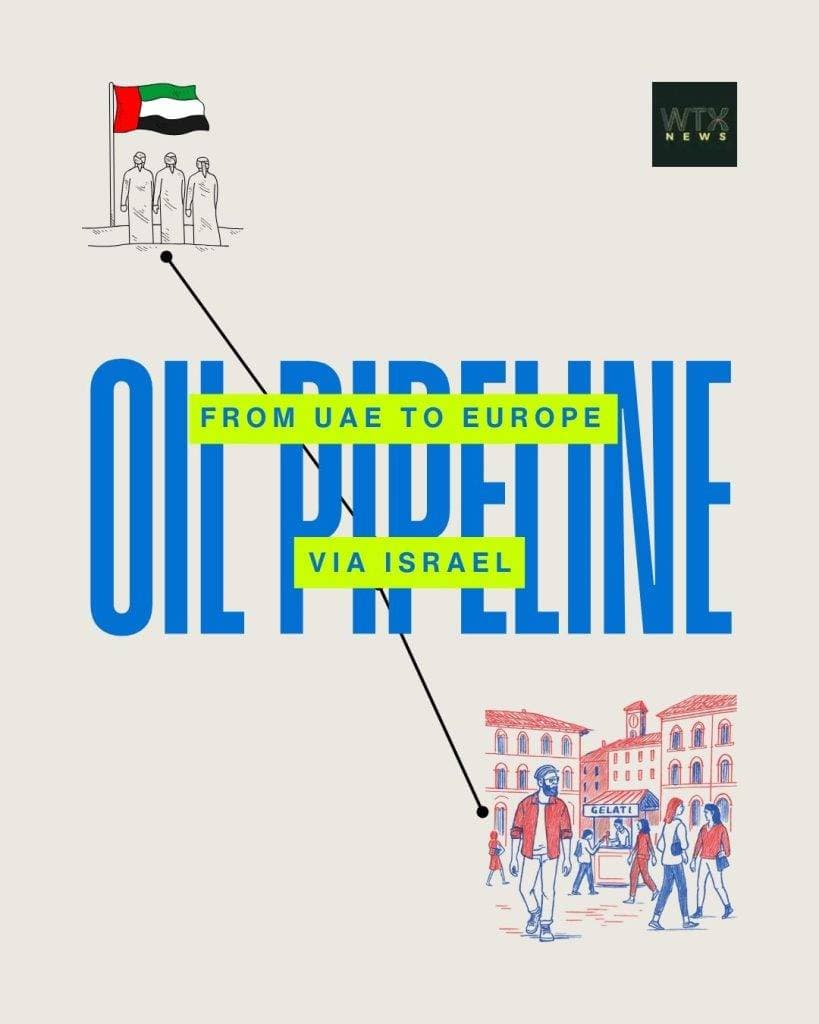
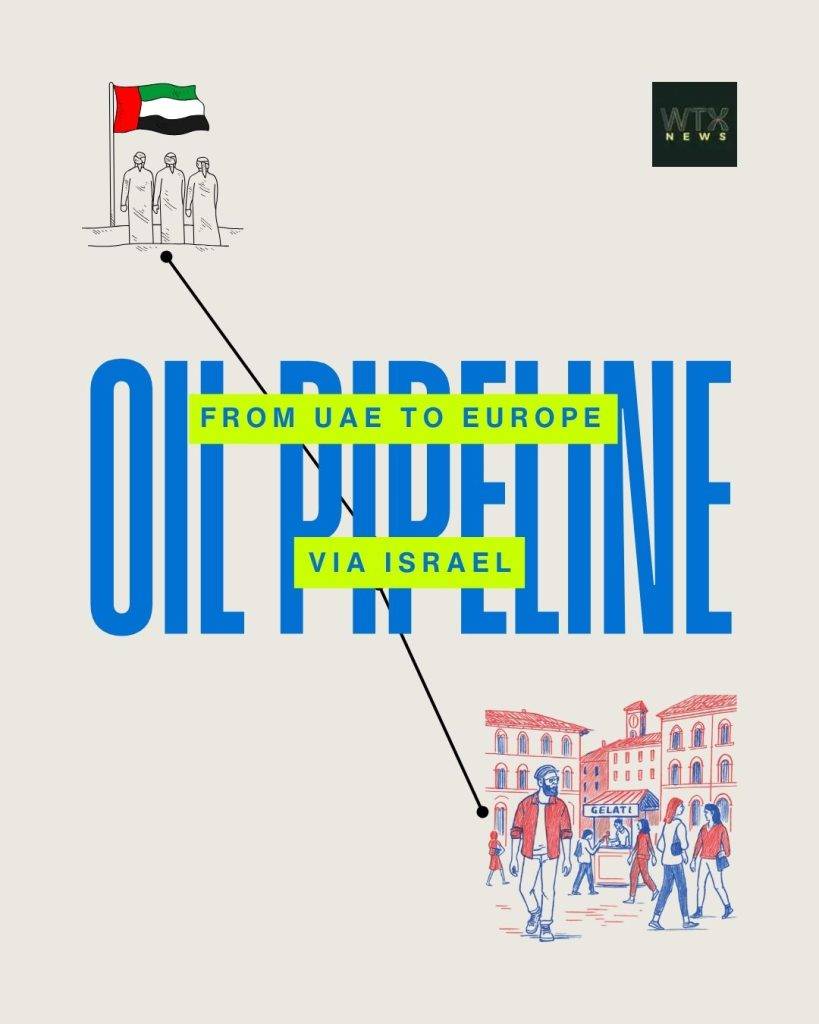
In 2020, following the Abraham Accords, Israel’s state-owned Europe Asia Pipeline Company (EAPC) signed a memorandum of understanding with MED-RED Land Bridge, a joint Israeli-Emirati company, to transport oil from the UAE to Europe via Israel.
The plan involves tankers bringing oil from the Gulf to the Red Sea port of Eilat in southern Israel, where it would travel through an existing EAPC pipeline across the Negev desert to the Mediterranean port of Ashkelon, which is less 15km from the Gaza strip. Conveniently the Russia-Ukraine war also destroyed the Nord Stream 1 and 2 pipelines.
With the UAE adopting a more flexible approach, Saudi Arabia now shoulders greater responsibility in upholding oil price stability. The shifting alliances and strategic calculations reflect a Gulf region undergoing profound transformation.













Great article! This really puts things into perspective. I appreciate the thorough research and balanced viewpoint.
Interesting read, though I think there are some points that could have been explored further. Would love to see a follow-up on this topic.
Thanks for sharing this! I had no idea about some of these details. Definitely bookmarking this for future reference.
Well written and informative. The examples provided really help illustrate the main points effectively.
This is exactly what I was looking for! Clear, concise, and very helpful. Keep up the excellent work!