


Media Lens: TSA Lines Surge as 36% of Houston Airport Officers Call Out Sick
36% of TSA officers call out of work.
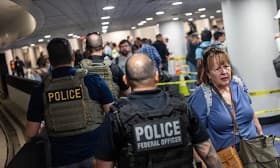
Travelers are experiencing hours-long TSA lines at George Bush Intercontinental Airport. This situation is attributed to 36% of TSA officers calling out of work, according to coverage in CBS News and CNN.
What happened
Travelers are experiencing hours-long TSA lines at George Bush Intercontinental Airport due to a significant number of staff shortages. Reports indicate that nearly 36% of TSA officers called out of work recently, leading to widespread delays and frustration among passengers.
Experts warn that not paying TSA workers could present a security risk, exacerbating challenges in airport operations. Additionally, increased wait times are expected, with some reports suggesting check-in could take several hours for passengers flying out of Texas.
Key facts
- Travelers are experiencing hours-long TSA lines at George Bush Intercontinental Airport.
- 36% of TSA officers have called out of work, causing disruptions at the airport.
- This situation has led to widespread frustration among travelers.
- Reports indicate that significant delays are affecting passengers flying out of Texas.
Where coverage differs
- CBS News emphasizes the shocking impact of TSA officer callouts, while The New York Times focuses on the experience of travelers waiting in long lines.
- CNN foregrounds the potential security risks of not paying TSA workers, rather than the delays passengers face.
- Austin American-Statesman prioritizes practical tips for travelers regarding long TSA wait times, over the broader implications of staffing issues.
One story, four angles
CBS News – Shock and disbelief at Houston airport as 36% of TSA officers call out of work: “This is insane”
Publication: CBS News | Primary framing pattern: moral | Tone: urgent | Intensity: 8/10 | Sentiment: negative | Legal precision: low
Expand
Espresso Shot: The article emphasizes the chaotic situation at Houston’s airport, attributing the long TSA lines to a significant shortfall in staff. The tone underscores public frustration and disbelief, presenting the manpower issue as a crisis.
Publication emphasis: CBS News focuses on the immediate impact of workforce absenteeism on travelers’ experiences.
Framing analysis: The foregrounded issue is the human impact of TSA officer shortages, while policy implications of staffing decisions are less emphasized.
Bias: Selection: Focus on passenger distress. Language: Use of emotionally charged words like “shock” and “insane.” Omission: Lack of detail on systemic issues causing the staffing problems.
Assessment: The article prioritizes emotional responses over a broader systemic analysis of staffing challenges.
CNN – Not paying TSA workers could pose a security risk, experts say
Publication: CNN | Primary framing pattern: consequence | Tone: alarming | Intensity: 7/10 | Sentiment: negative | Legal precision: moderate
Expand
Espresso Shot: CNN’s report highlights the potential security risks associated with underfunded TSA staffing. It discusses expert opinions on the implications for airport security, suggesting a direct link between personnel wages and public safety.
Publication emphasis: CNN emphasizes expert warnings about the danger of not compensating staff properly.
Framing analysis: Focus is primarily on the security consequences of staffing shortages, with less emphasis on the workforce dynamics leading to these issues.
Bias: Selection: Cited expert opinions that stress risks. Language: Use of terms like “security risk” creates urgency. Omission: Lack of in-depth analysis on how to resolve compensation issues effectively.
Assessment: The article effectively conveys the stakes involved but may lack solutions for the workforce challenges faced.
Austin American-Statesman – Flying out of Texas? TSA wait times could take hours — what to check
Publication: Austin American-Statesman | Primary framing pattern: practical | Tone: informative | Intensity: 5/10 | Sentiment: neutral | Legal precision: low
Expand
Espresso Shot: The article provides practical advice for travelers facing long TSA wait times, urging them to prepare adequately. It aims to equip readers with useful tips to navigate the delays effectively.
Publication emphasis: Austin American-Statesman focuses on traveler preparedness amidst unavoidable delays.
Framing analysis: The foregrounded advice on what travelers can do is more prominent than the underlying causes of the wait times.
Bias: Selection: Practical perspectives for travelers. Language: Emphasizes proactive steps. Omission: Minimal discussion of systemic issues affecting TSA operations.
Assessment: The article is useful for immediate traveler concerns but lacks a critical look at the broader implications of staffing shortages.
The New York Times – TSA Airport Delays: What It’s Like Waiting in Line for Hours
Publication: The New York Times | Primary framing pattern: narrative | Tone: reflective | Intensity: 6/10 | Sentiment: mixed | Legal precision: moderate
Expand
Espresso Shot: This article shares personal experiences of travelers as they navigate lengthy TSA lines, providing a narrative that captures the frustration and anxiety of air travel. The tone invites readers to empathize with their struggles.
Publication emphasis: The New York Times focuses on individual stories and experiences, highlighting the emotional toll on travelers.
Framing analysis: The emotional narratives from travelers are central, while broader implications of the systemic issues are secondary.
Bias: Selection: Personal stories highlight emotional struggles. Language: Use of descriptive, empathetic language. Omission: Fewer statistics or direct commentary on administrative failures.
Assessment: The article effectively humanizes an infrastructural issue but could offer insight into solutions or underlying causes.
Food for thought
The New York Times employs a robust legal framing, emphasizing the implications of labor disputes on travelers while illustrating logistical shortcomings at airport security. In contrast, CBS News takes a more escalatory stance, depicting a crisis atmosphere as employees call in sick, which they label as “insane.” CNN contributes to the discourse by warning of potential security risks stemming from underpaid TSA workers. Meanwhile, the Austin American-Statesman focuses on practical advice for travelers, highlighting the specific duration of delays. The facts do not change. What changes is where scrutiny lands.









Great article! This really puts things into perspective. I appreciate the thorough research and balanced viewpoint.
Interesting read, though I think there are some points that could have been explored further. Would love to see a follow-up on this topic.
Thanks for sharing this! I had no idea about some of these details. Definitely bookmarking this for future reference.
Well written and informative. The examples provided really help illustrate the main points effectively.
This is exactly what I was looking for! Clear, concise, and very helpful. Keep up the excellent work!