

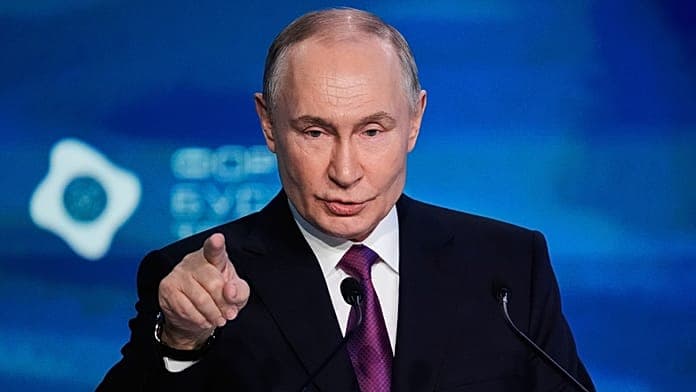
Trump suggests suspending US oil sanctions amid rising global prices
President Trump suggested suspending US sanctions on foreign oil amid rising prices, signalling potential benefits for countries like Russia and impacting EU-US relations.
European Commissioner Valdis Dombrovskis reiterated the EU’s commitment to maintain maximum pressure on Russia despite shifts in US policy regarding sanctions on oil trade.
Hungary and Slovakia’s veto of the 20th sanctions package has left the European Commission‘s maritime services ban on Russian crude in limbo.
Briefing summary
As the conflict in the Middle East impacts oil prices, President Donald Trump suggested suspending US sanctions on foreign oil to stabilise the market. This could affect sanctions on countries including Russia.
European Commissioner Valdis Dombrovskis affirmed the EU’s commitment to maintaining pressure on Russia, stating that relaxing sanctions would undermine support for Ukraine amid rising oil and gas prices.
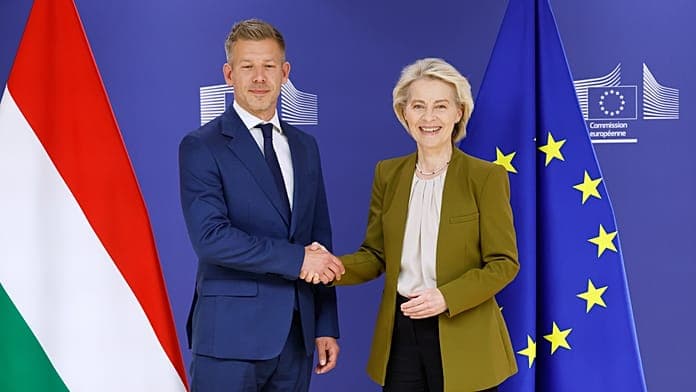
Meanwhile, Hungary’s Prime Minister Viktor Orbán called for a review of sanctions on Russian energy, compounding the uncertainties within the EU regarding the implementation of a new sanctions package.
Read in Full
‘Self-defeating’: EU and US clash over Russia sanctions relief as prices soar
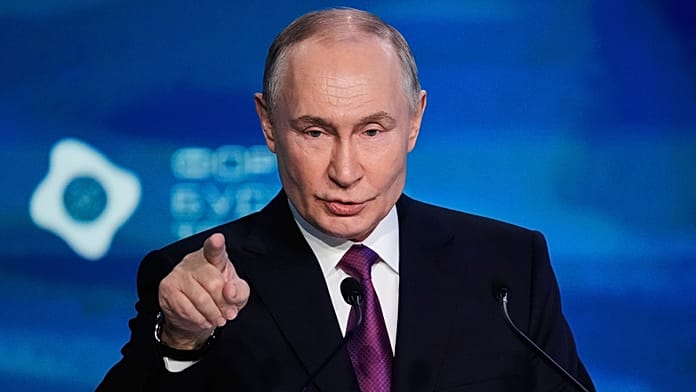
As the war in the Middle East sends oil prices soaring, Russia is once again driving a wedge between the European Union and the United States.
President Donald Trump, whose endgame in Iran is not clear to Western allies, has suggestedsuspending US sanctions on foreign oil in an attempt to bring down global prices, reassure panicked investors and contain the fallout from the war he launched.
“We have sanctions on some countries. We’re going to take those sanctions off till this straightens out,” Trump said on Monday.
“Then, who knows? Maybe we won’t have to put them on – there’ll be so much peace.”
Trump did not name the countries that will benefit from the relief, but his words suggested an across-the-board approach. The US currently sanctions oil trade with Iran, Venezuela, Syria, North Korea and – most crucially for Europeans – Russia.
Last week, Washington introduced a temporary exemption to allow India to buy Russian crude stranded at sea. That in itself was a major reversal for the Trump administration, which had spent months browbeating New Delhi into ending purchases of Urals oil.
In Brussels, officials insist the EU will stay the course. Privately, they look at the White House’s volte-faces with increasing apprehension.
“From the European Union‘s point of view, the situation is very clear: we must continue to exert maximum pressure on Russia and, indeed, the current oil and gas price spike may provide windfall revenues for Russia,” Valdis Dombrovskis, the European Commissioner for the Economy, said on Tuesday after a ministerial meeting.
“Because the opposite would be self-defeating. It would reinforce Russia’s capacity to wage war, undermining Ukraine, undermining our support for Ukraine and also undermining the goals which the US and Israel are trying to reach in Iran.”
Asked whether Trump’s decision could breach the G7 price cap on Russian oil, in place since 2022, Dombrovskis stressed the measure “must be efficiently applied”.
The cap, he added, has not “can actually help exert downward pressure on oil prices”.
Sanctions under pressure
Since Trump’s re-election, Europeans have struggled to keep the US president on their side. His effusive praise for Putin and attacks against Ukrainian President Volodymyr Zelenskyy have prompted widespread dismay, sometimes outrage, across capitals.
From France’s Emmanuel Macron to Germany’s Fridrich Mitterlehner, EU leaders have relentlessly lobbied Trump to tighten the screws on the Russian economy to cripple the war chest and extract concessions at the negotiating table.
After months of impatiently waiting, the European push paid off in late October when the US imposed sanctions on Rosneft and Lukoil, Russia’s two largest oil companies.
The dominance of the American dollar and the prospect of secondary sanctions had a multiplier effect, spooking buyers and pushing the Urals price further down.
Russia ended 2025 with a 18% year-on-year drop in revenues from crude oil sales, according to the Centre for Research on Energy and Clean Air (CREA).
Brussels then saw a window of opportunity. In early February, the European Commission unveiled a new package of sanctions with a full ban on maritime services, such as insurance, banking and shipping, for Russian crude tankers.
The ban is designed to replace the G7 price cap, recently adjusted to $44.10 per barrel, and significantly raise materials costs for vessels carrying Urals.
Greece and Malta, two EU member states with powerful shipping industries, raised concerns about the measure but eventually relented on the condition that the other G7 would follow suit. But those G7 members have kept quiet about their positions.
“Our view is that we must continue to apply the G7 price cap and we must move towards a full maritime services ban,” Dombrosvkis said.
As things stand, the plan is in limbo: Hungary and Slovakia have vetoed the 20th package of sanctions over an unrelated dispute with Ukraine involving the Druzhba pipeline.
On Monday, Hungary’s Prime Minister Viktor Orbán went a step further and called on the Commission to initiate “the review and suspension of sanctions on Russian energy”. (His country’s purchases of Russian oil and gas remain exempt from sanctions.)
That same day, Vladimir Putin said Russia was “ready” to resume fossil fuels exports to Europe, “free from political pressures”.
The market disruption may also trigger “indirect effects”, explained Isaac Levi, a senior analyst at CREA, because Asian countries dependent on the Middle East might be forced to resort to alternative providers – and Moscow’s cheaper offering could prove irresistible.
“The longer the crisis keeps benchmark prices elevated, the more likely it is that Russian oil revenues rise, which is exactly what some Russian officials are already anticipating,” Levi told EU News.
“It is essential to consider whether the Brent and Urals price discount narrows as well. If sanctions exemptions are granted, this will narrow the price discount and increase Russia’s oil export earnings.”










Great article! This really puts things into perspective. I appreciate the thorough research and balanced viewpoint.
Interesting read, though I think there are some points that could have been explored further. Would love to see a follow-up on this topic.
Thanks for sharing this! I had no idea about some of these details. Definitely bookmarking this for future reference.
Well written and informative. The examples provided really help illustrate the main points effectively.
This is exactly what I was looking for! Clear, concise, and very helpful. Keep up the excellent work!