


Media Lens: Trump Orders Warnings on ‘Inaccurate Information’ at Smithsonian Museum
Trump orders warnings installed at Smithsonian Museum.
Trump has ordered warnings to be placed at the Smithsonian History Museum regarding “inaccurate information.” This decision has been reported in multiple sources including NBC News and Politico.
What happened
Former President Trump has ordered warnings to be placed on content deemed “inaccurate” at the Smithsonian History Museum. This directive follows his ongoing criticism of historical portrayals in museums and other institutions.
Recent reports detail that the signage will alert visitors to what the Trump administration identifies as misleading information. The initiative is part of a broader effort to influence how history is presented in public spaces.
Key facts
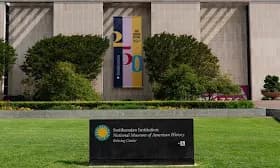
- Trump has ordered warnings to be placed outside the Smithsonian History Museum.
- The warnings are intended to alert visitors about “inaccurate information” displayed.
- The directive comes amidst a broader scrutiny of educational content by the administration.
- This decision has sparked debate regarding censorship and historical accuracy.
- Multiple news outlets, including The New York Times and NBC News, are reporting on the story.
Where coverage differs
- The New York Times emphasizes the placement of warnings at the Smithsonian museum, while Politico discusses the implications of the warnings in relation to content accuracy.
- NBC News foregrounds the reaction from various stakeholders regarding the warnings, rather than focusing solely on the decision itself, as seen in The New York Times.
- Politico prioritizes the political motivations behind the warnings over the logistical aspects that NBC News highlights.
One story, four angles
The New York Times – Trump Orders Warnings Placed at ‘Inaccurate’ Smithsonian History Museum
Publication: The New York Times | Primary framing pattern: political | Tone: critical | Intensity: 7/10 | Sentiment: negative | Legal precision: high
Expand
Espresso Shot: The New York Times highlights Trump’s actions toward the Smithsonian as a politically motivated effort to control narratives. The article emphasizes governmental influence over historical interpretation, framing it as a troubling intrusion into institutional independence.
Publication emphasis: The main focus is on the political implications of Trump’s directive relating to museum operations.
Framing analysis: The article foregrounds the political motivations behind Trump’s actions, while secondary issues include public reaction and historical accuracy.
Bias: Selection: Focuses on negative reactions to Trump’s directive. Language: Words like “inaccurate” and “warnings” suggest a critical stance. Omission: Lacks coverage of supporters’ views on the directive.
Assessment: The article provides a critical view of Trump’s influence on museums, emphasizing potential political overreach.
Politico – Trump orders content warnings installed outside Smithsonian history museum
Publication: Politico | Primary framing pattern: political | Tone: skeptical | Intensity: 6/10 | Sentiment: mixed | Legal precision: moderate
Expand
Espresso Shot: Politico discusses Trump’s order for signage at the Smithsonian, suggesting a misguided attempt at protecting public discourse. The article points to implications for historical interpretation and observers’ doubts about political motivations.
Publication emphasis: The focus is on the political ramifications of Trump’s actions and their effect on cultural institutions.
Framing analysis: Emphasizes skepticism about the need for warnings and political intentions while minimizing potential public support for the measure.
Bias: Selection: Highlights skepticism and criticism from experts. Language: Describes the actions as “orders” and “warnings,” hinting at authoritarianism. Omission: Limited mention of pro-Trump viewpoints.
Assessment: The reporting tends to lean critical without fully acknowledging differing perspectives on Trump’s directive.
NBC News – Trump orders signage warning visitors of ‘inaccurate information’ at Smithsonian
Publication: NBC News | Primary framing pattern: political | Tone: neutral | Intensity: 5/10 | Sentiment: neutral | Legal precision: moderate
Expand
Espresso Shot: NBC News reports on Trump’s mandate for signage intended to warn of potential inaccuracies at the Smithsonian. The piece addresses the public’s mixed responses and underscores the significance of transparency in public institutions.
Publication emphasis: The report focuses on the administrative decision and its implications for cultural institutions.
Framing analysis: While noting the administrative aspect, it provides both criticisms and defenses regarding the necessity of warnings, balancing perspectives.
Bias: Selection: Includes a range of reactions to the policy. Language: Utilizes straightforward language without loaded terms. Omission: Somewhat lacking in deep exploration of potential political motivations.
Assessment: The article presents a more neutral tone, balancing various views without delving too deep into political implications.
Food for thought
Politico frames Trump’s directive for warning signs at the Smithsonian as a “content warning” intended to guide tourists amid allegations of “inaccurate information,” indicating a focus on governmental transparency. In contrast, The New York Times describes the initiative with a tone that heightens tensions, referring to the potential for widespread misinformation and questioning the integrity of historical narratives. Thus, while Politico utilizes the strongest legal framing by emphasizing the operative transparency of the notice, The New York Times adopts a more escalatory approach, framing the issue as a fundamental threat to historical accuracy. The facts do not change. What changes is where scrutiny lands.








Great article! This really puts things into perspective. I appreciate the thorough research and balanced viewpoint.
Interesting read, though I think there are some points that could have been explored further. Would love to see a follow-up on this topic.
Thanks for sharing this! I had no idea about some of these details. Definitely bookmarking this for future reference.
Well written and informative. The examples provided really help illustrate the main points effectively.
This is exactly what I was looking for! Clear, concise, and very helpful. Keep up the excellent work!