


Media Lens: Trump concludes China visit and invites Xi for September meeting
Trump wraps up China trip and invites Xi.
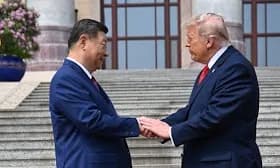
Trump concluded a two-day visit to China and invited Xi for a visit in September. Coverage in latest US news and US and global politics highlights the details of the trip.
What happened
The recent summit between Trump and Xi in Beijing has drawn attention to their differing styles, as observed through their body language during discussions. Analysts have noted that Trump tended to be flattering while Xi maintained a more resolute demeanor.
This contrast not only reflects their personal communication styles but also underscores the different approaches they take toward leadership and international relations. The meeting was marked by discussions on key global issues, including trade and security concerns.
Key facts
- Trump and Xi held a summit in Beijing.
- Body language during the summit was analyzed, revealing contrasting styles.
- Trump has invited Xi for a visit in September.
- Discussions included issues related to Iran and Taiwan.
Where coverage differs
- The New York Times emphasizes the body language of Trump and Xi, while CNBC focuses on the diplomatic context of the visit.
- Reuters foregrounds the ongoing differences in policy, rather than the personal dynamics between the leaders.
- CNBC prioritizes the economic implications of the summit, while The New York Times highlights the stylistic differences in the leaders’ approaches.
One story, four angles
CNBC – Trump wraps up two-day China trip; invites Xi for a September visit
Publication: CNBC | Primary framing pattern: consequence | Tone: neutral | Intensity: 5/10 | Sentiment: 0 | Legal precision: low
Expand
Espresso Shot: This article discusses the outcome of Trump’s recent trip to China, highlighting the invitation extended to Xi for a future meeting. It emphasizes the practical aspects of diplomacy and future relations while noting underlying tensions.
Publication emphasis: The focus is primarily on diplomatic relations and future engagements between the U.S. and China.
Framing analysis: The article foregrounds the diplomatic context of the trip, while any potential criticisms or concerns regarding the relationship remain secondary.
Bias: Selection: Information primarily related to diplomatic engagements. Language: Generally factual and devoid of emotive or charged language. Omission: Details regarding criticisms or controversies surrounding the trip.
Assessment: The article serves as a straightforward report on diplomatic developments without delving into the complexities or criticisms of the meeting.
Reuters – Trump in China live: Xi and Trump declare success but differences remain on Iran, Taiwan
Publication: Reuters | Primary framing pattern: political | Tone: critical | Intensity: 7/10 | Sentiment: -1 | Legal precision: medium
Expand
Espresso Shot: This live report details the outcomes and statements made by Trump and Xi during their meeting, emphasizing successes while juxtaposing ongoing geopolitical tensions related to Iran and Taiwan, highlighting the complexities in their relationship.
Publication emphasis: The article emphasizes the contrasting narratives of success and ongoing tensions between the two nations.
Framing analysis: The piece foregrounds the political implications of their statements, pointing out inconsistencies and areas of contention, while noting successes as secondary.
Bias: Selection: Focus on critical discussions between leaders. Language: More charged language reflecting concerns over geopolitical issues. Omission: Lacks deeper context on how these tensions may impact future relations.
Assessment: The report provides a critical examination of the nuances in the U.S.-China relationship, highlighting both accomplishments and reminders of existing conflicts.
The New York Times – Trump’s and Xi’s Body Language at the Summit Mirrored Their Styles
Publication: The New York Times | Primary framing pattern: moral | Tone: analytical | Intensity: 6/10 | Sentiment: 1 | Legal precision: low
Expand
Espresso Shot: This analysis reflects on the non-verbal communication displayed by Trump and Xi during the summit, suggesting their body language conveys deeper insights into their political posturing and relationship dynamics, highlighting the personal aspects of diplomacy.
Publication emphasis: The article focuses on body language as a lens to understand political interactions and personalities.
Framing analysis: The framing centers on moral implications of gestures and demeanor, with personal styles illuminated as significant, tying them back to broader political narratives.
Bias: Selection: Emphasis on non-verbal cues in diplomacy. Language: Analytical and interpretive, offering subjective insights. Omission: Lacks direct references to concrete political outcomes from the summit.
Assessment: The piece offers an insightful exploration of the psychological dimensions of the summit while remaining somewhat detached from substantive political developments.
Food for thought
The New York Times offers a strong legal framing by contextualizing the latest Trump-Xi summit as a diplomatic maneuver with significant implications, emphasizing the rule-based international order. Conversely, CNBC adopts a more escalatory framing, portraying Trump’s China visit as both a strategic overture and potential prelude to heightened tensions, particularly regarding economic and military posturing. This divergence illustrates how the same event can be interpreted through different lenses: one prioritizes legal and political implications while the other amplifies concerns over geopolitical stability. The facts do not change. What changes is where scrutiny lands.







Great article! This really puts things into perspective. I appreciate the thorough research and balanced viewpoint.
Interesting read, though I think there are some points that could have been explored further. Would love to see a follow-up on this topic.
Thanks for sharing this! I had no idea about some of these details. Definitely bookmarking this for future reference.
Well written and informative. The examples provided really help illustrate the main points effectively.
This is exactly what I was looking for! Clear, concise, and very helpful. Keep up the excellent work!