


Media Lens: Trump authorises removal of US Navy blockade amid Iran peace agreement
United States and Iran to sign peace agreement.
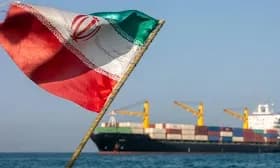
The United States and Iran are set to sign a peace agreement on Friday. This agreement comes as the U.S. authorizes the removal of the Navy blockade of the Strait of Hormuz, according to coverage in CBS News and Al Jazeera.
What happened
The United States and Iran are set to sign a peace agreement on Friday, which aims to conclude ongoing hostilities. This agreement has been described as the culmination of recent diplomatic efforts between the two nations.
Following the announcement, President Trump stated that the deal with Iran “is now complete,” and he has authorized the removal of the Navy blockade in the Strait of Hormuz. This development marks a significant turning point in U.S.-Iran relations and regional stability.
Key facts
- The United States and Iran are set to sign a peace agreement on Friday.
- Trump stated that the U.S. deal with Iran “is now complete.”
- The deal includes the removal of the Navy blockade of the Strait of Hormuz.
- Tehran claims the peace deal ends the U.S. blockade and war on multiple fronts.
- The agreement comes amid live updates on the progress of the Iranian conflict.
Where coverage differs
- CBS News emphasizes the completion of the U.S. deal with Iran, while Al Jazeera highlights the end of the U.S. blockade and war.
- The New York Times foregrounds the framework for peace agreement, whereas The Atlantic frames it as America capitulating while Trump celebrates.
- CBS News prioritizes the formalities of the peace agreement, over broader geopolitical implications covered by Al Jazeera.
One story, four angles
CBS News – Trump says U.S. deal with Iran “is now complete,” authorizes removal of Navy blockade of Strait of Hormuz
Publication: CBS News | Primary framing pattern: political | Tone: assertive | Intensity: 7/10 | Sentiment: positive | Legal precision: moderate
Expand
Espresso Shot: CBS News emphasizes the completion of a crucial diplomatic agreement between the U.S. and Iran, highlighting President Trump’s support for its implementation. The framing foregrounds the removal of military barriers, pointing to a potential decrease in hostilities in the region.
Publication emphasis: The focus is on the agreement’s implications for U.S.-Iran relations and regional stability.
Framing analysis: The central theme is political achievement, with secondary elements including military consequences and potential peace benefits.
Bias: Selection: Emphasizes Trump’s involvement and authority; Language: Positive descriptors like “complete” and “authorizes”; Omission: Critique of potential consequences of the agreement.
Assessment: This outlet projects a narrative of success in diplomacy while glossing over dissenting opinions regarding the agreement’s effectiveness.
Al Jazeera – Iran war live: Tehran says ‘peace deal’ ends US blockade, war on all fronts
Publication: Al Jazeera | Primary framing pattern: consequence | Tone: hopeful | Intensity: 6/10 | Sentiment: positive | Legal precision: moderate
Expand
Espresso Shot: Al Jazeera frames the agreement as a significant development aimed at reducing hostilities and restoring peace between the U.S. and Iran. The emphasis is on the potential long-term benefits, including economic relief for the Iranian population.
Publication emphasis: The focus is on the consequences of the peace deal and its potential to end years of conflict.
Framing analysis: The consequences of the agreement take center stage, presenting it as a pathway to stability, while historical context is minimized.
Bias: Selection: Highlights positive aspects of the deal and Iran’s perspective; Language: Uses terms like “peace deal” and “ends war”; Omission: Challenges and potential risks are less emphasized.
Assessment: Al Jazeera promotes an optimistic view of the agreement while downplaying any negative implications for regional dynamics.
The New York Times – Iran War Live Updates: U.S. and Tehran Agree on Framework for Peace
Publication: The New York Times | Primary framing pattern: legal | Tone: analytical | Intensity: 5/10 | Sentiment: neutral | Legal precision: high
Expand
Espresso Shot: The New York Times analyzes the legal framework established by the U.S.-Iran agreement, focusing on the implications for international law and regional security. The coverage is more investigative, addressing both legal and political nuances.
Publication emphasis: The focus is on the legal implications of the peace agreement and its standing in international law.
Framing analysis: A legal approach is taken, foregrounding the technicalities of the agreement while providing essential context regarding its geopolitical significance.
Bias: Selection: Examines legal frameworks rather than solely political narratives; Language: Utilizes precise legal terminology; Omission: Less emphasis on grassroots impacts or public opinion.
Assessment: This outlet provides a nuanced understanding of the agreement, appealing to readers interested in international law and policy ramifications.
The Atlantic – Trump Celebrates While America Capitulates
Publication: The Atlantic | Primary framing pattern: moral | Tone: critical | Intensity: 9/10 | Sentiment: negative | Legal precision: low
Expand
Espresso Shot: The Atlantic critiques the agreement as a capitulation by the U.S. to Iran, framing it as a moral failure. The piece emphasizes the broader implications for American credibility in international relations.
Publication emphasis: The focus is on the moral implications of the U.S. agreement with Iran and perceived weaknesses in U.S. foreign policy.
Framing analysis: The moral framing foregrounds criticism of U.S. actions, casting the agreement as a betrayal of American values and interests.
Bias: Selection: Centers on negative interpretations and criticisms of the deal; Language: Strongly negative descriptors such as “capitulate”; Omission: Less focus on potential benefits or diplomatic achievements.
Assessment: This publication presents a counter-narrative that highlights ethical concerns over diplomatic engagements with Iran, appealing to readers’ sense of national pride.
Food for thought
The strongest legal framing is presented by The New York Times, emphasizing a framework for peace that suggests an official diplomatic resolution, while the most escalatory framing comes from CBS News, highlighting the authorization to remove the Navy blockade as a significant shift in U.S.-Iran relations. Al Jazeera frames the situation as a comprehensive end to the blockade and ongoing hostilities, intensifying implications for future engagements. Each outlet conveys an interpretation of the same events, underscoring different dimensions of legality and escalation. The facts do not change. What changes is where scrutiny lands.







Great article! This really puts things into perspective. I appreciate the thorough research and balanced viewpoint.
Interesting read, though I think there are some points that could have been explored further. Would love to see a follow-up on this topic.
Thanks for sharing this! I had no idea about some of these details. Definitely bookmarking this for future reference.
Well written and informative. The examples provided really help illustrate the main points effectively.
This is exactly what I was looking for! Clear, concise, and very helpful. Keep up the excellent work!