


Media Lens: Shipping Traffic in Strait of Hormuz Continues Amid Iranian Vessel Attacks
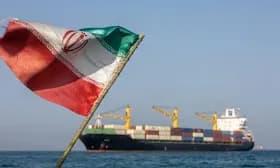
Iran maintains control over shipping traffic in the strategically vital Strait of Hormuz despite recent attacks on vessels. The waters remain a critical trade route, impacting global commerce from the region.
Quick links: What has happened | Status quo | Confirmed facts | Preconceptions | Elisions | One story, four angles | Related links
What has happened
On June 25, 2023, an incident occurred in the Strait of Hormuz, where Iran launched an attack on a commercial vessel, escalating tensions in this strategically significant waterway. The incident briefly interrupted UN efforts to facilitate the evacuation of ships from the region, highlighting ongoing security challenges in the area critical for global oil transportation.
Despite this attack, reports indicate that maritime traffic in the Strait continued, with vessels using alternate routes through Oman to avoid Iranian threats. The developments underscore the delicate balance of commercial interests and regional security as Iran seeks to maintain its influence over this vital maritime corridor.
Status quo
The Strait of Hormuz, a vital shipping route connecting the Persian Gulf with the Arabian Sea, is strategically significant for global oil transport. Recently, tensions have escalated in the region, particularly with incidents involving attacks on vessels and increased military presence from Iran. This ongoing situation affects international shipping and trade, highlighting the geopolitical stakes at play in controlling this narrow passageway.
Confirmed facts
- The Strait of Hormuz is a critical passage for global oil trade.
- Vessels crossing the Strait often use routes through Oman despite warnings from Iran.
- Recent ship attacks in the region have raised security concerns.
- Iran has attempted to maintain control over shipping in the Strait of Hormuz.
Preconceptions
- NBC News emphasizes ongoing trade routes through the Strait of Hormuz post-attack, focusing on the implications for global commerce, while reducing attention to the historical context of regional tensions.
- CNN prioritizes the escalation of military tensions between Iran and international forces, highlighting immediate threats and diplomatic failures, with less emphasis on economic impacts.
- France 24 underscores the alternative routes being utilized by ships, reflecting a pragmatic response to Iran’s threats, while minimizing coverage of international diplomatic responses and sanctions.
- Fox News focuses on U.S. domestic implications of international incidents, specifically related to policy shifts under Trump, thereby downplaying international reactions and regional dynamics.
Elisions
- **Maritime Security Focus**: CNN emphasizes Iran’s attack on a vessel and its implications for UN evacuation efforts, while NBC News highlights the ongoing traffic flows despite threats to shipping, indicating a contrast in emphasis on immediate security risks versus operational continuity.
- **Geopolitical Tensions**: Fox News discusses the Iran deal being tested by drone attacks, whereas France 24 focuses on how ships are redirecting to avoid Iranian threats, showcasing differing narratives on whether events escalate or indicate resilience in trade operations.
- **Impact of Iran’s Actions**: While NBC News reports on Iran’s attempts to maintain control over the Strait of Hormuz, CNN warns of the direct implications of Iranian strikes, pointing to a gap in exploring broader regional impacts versus immediate tactical scenarios.
One story, four angles
NBC News – Hormuz traffic flows despite ship attack as Iran fights to keep its grip on key trade route
Publication: NBC News | Intensity: (8/10) | Sentiment: Neutral | Legal precision: High
Expand
Espresso Shot: The headline directs readers to focus on ongoing traffic in the Strait of Hormuz despite recent maritime incidents, suggesting resilience in trade dynamics.
Key differences:
1. Comparison: NBC emphasizes the operational flow in the Strait despite hostility, stating, “traffic flows despite ship attack,” showcasing tenacity against disruptions.
2. Example: The positioning of “Japan-bound ship attack” hints at broader geopolitical implications, which is less emphasized in others.
3. Comparison: The language here is neutral, avoiding sensationalism by presenting facts pragmatically.
Bias: Selection: Focuses on resilience; Language: Neutral and straightforward; Omission: Less attention on the human impact of attacks.
Assessment: Readers likely perceive a stabilized, if precarious, situation in a critical shipping zone.
CNN – Iran strikes vessel, pausing UN efforts to evacuate ships from Hormuz
Publication: CNN | Intensity: (9/10) | Sentiment: Negative | Legal precision: Medium
Expand
Espresso Shot: The headline draws immediate attention to Iranian aggression against maritime targets, framing it as a significant impediment to international diplomatic efforts.
Key differences:
1. Comparison: CNN presents Iran’s actions as aggressive and detrimental, using “strikes vessel,” which emphasizes hostility.
2. Example: “pausing UN efforts” conveys a sense of urgency and international diplomatic concerns.
3. Comparison: The alert language contrasts with more neutral descriptions seen in NBC; CNN’s tone is more alarming.
Bias: Selection: Focuses heavily on Iranian aggression; Language: Strong, evocative language; Omission: Lacks context on the resilience of maritime flows.
Assessment: Readers are likely to perceive a heightening military conflict impacting diplomatic resolutions in crucial trade zones.
France 24 – Ships crossing Hormuz use Oman passage despite Iran warnings
Publication: France 24 | Intensity: (7/10) | Sentiment: Neutral | Legal precision: Medium
Expand
Espresso Shot: The headline encourages focus on the continuation of maritime trade through alternative routes despite Iranian threats, highlighting trade resilience.
Key differences:
1. Comparison: France 24 emphasizes defiance against Iranian pressure, stating “despite Iran warnings,” showcasing resistance.
2. Example: The phrasing “Oman passage” indicates practical solutions for trade continuity.
3. Comparison: The tone is more investigative, aiming to inform about trade strategies in challenging environments than dramatizing military conflict.
Bias: Selection: Positively frames resilience in trade; Language: Neutral yet informative; Omission: Little emphasis on potential risks for vessels.
Assessment: Readers likely emphasize innovative solutions for maintaining trade routes amidst geopolitical tensions.
Fox News – Iran deal tested by drone attack as Trump offers up US farm goods
Publication: Fox News | Intensity: (9/10) | Sentiment: Negative | Legal precision: Low
Expand
Espresso Shot: The headline leads readers to consider the connection between military actions and political maneuvering, particularly as it relates to U.S. agriculture.
Key differences:
1. Comparison: Fox links military action directly with political negotiations, suggesting a causative relationship.
2. Example: “Trump offers up US farm goods” contextualizes military tensions in economic terms, diverging from others’ pure military focus.
3. Comparison: This juxtaposition intensifies the sense of instability, making it appear as a multifaceted crisis involving both military and economic stakes.
Bias: Selection: Focuses on the U.S. perspective in international tensions; Language: Suggestive and sensational; Omission: Lacks depth on the international repercussions of military actions.
Assessment: Readers are likely to perceive interconnected crises where military actions impact economic negotiations, enhancing tensions overall.
In analyzing the coverage of the Hormuz incident, CNN’s framing of “Iran strikes vessel, pausing UN efforts” presents a direct escalation narrative, portraying a critical situation needing urgent attention. In contrast, NBC News emphasizes stability, highlighting that “Hormuz traffic flows despite ship attack,” which focuses on resilience amidst disturbances. Thus, CNN encapsulates a more alarming tone while NBC offers a calm perspective. The facts do not change. What changes is where scrutiny lands.
Related links
NBC News
Hormuz traffic flows despite ship attack as Iran fights to keep its grip on key trade route
CNN
Iran strikes vessel, pausing UN efforts to evacuate ships from Hormuz
France 24
Ships crossing Hormuz use Oman passage despite Iran warnings
Fox News
Iran deal tested by drone attack as Trump offers up US farm goods









Great article! This really puts things into perspective. I appreciate the thorough research and balanced viewpoint.
Interesting read, though I think there are some points that could have been explored further. Would love to see a follow-up on this topic.
Thanks for sharing this! I had no idea about some of these details. Definitely bookmarking this for future reference.
Well written and informative. The examples provided really help illustrate the main points effectively.
This is exactly what I was looking for! Clear, concise, and very helpful. Keep up the excellent work!