

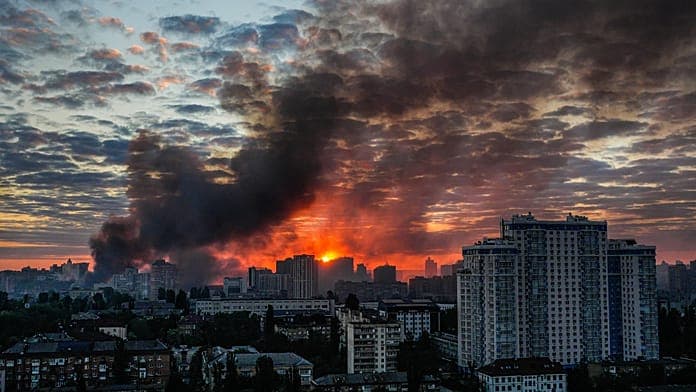
Russia deploys “Oreshnik” missile in Kyiv as part of retaliatory strikes
Ukrainian President Volodymyr Zelenskyy announced that Russia has deployed its “Oreshnik” intermediate-range ballistic missile in the Kyiv region.
The launch of 90 missiles and cruise missiles, alongside 600 drones in a single offensive, reflects a significant and aggressive escalation of military operations by Russia.
“Russia’s use of the ‘Oreshnik’ missile is a reckless escalation that demonstrates a blatant disregard for human life,” stated German Chancellor Friedrich Merz, reaffirming Germany’s support for Ukraine.
‘Reckless escalation’: Europe condemns Russia’s use of ‘Oreshnik’ missile
Published on
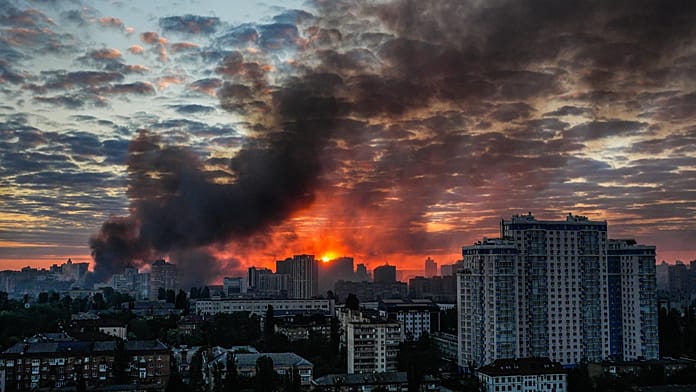
On Sunday, Ukrainian President Volodymyr Zelenskyy said Russia had again deployed its “Oreshnik” intermediate-range ballistic missile, this time in the Kyiv region.
The Russian Defence Ministry later confirmed the launch, saying it came as part of a retaliatory attack following Ukrainian strikes against “civilian targets,” which Kyiv has denied.
Moscow’s use of the “Oreshnik” missile has sparked strong reactions abroad.
German Chancellor Friedrich Merz condemned the attack as a “reckless escalation” in a post on X and reaffirmed Germany’s support for Ukraine.
French President Emmanuel Macron also condemned the latest Russian strikes, saying civilian targets in Ukraine had once again come under attack. He described the reported use of the nuclear-capable “Oreshnik” missile as a sign of both the deadlock in Russia’s war effort and a dangerous escalation of the conflict. Macron added that France would continue supporting Ukraine and efforts towards a just and lasting peace.
European Commission President Ursula von der Leyen said the massive Russian assault demonstrated “the Kremlin’s brutality and disregard for both human life and peace negotiations.”
Terror against civilians, she said, was “not strength” but “desperation.” She added that the European Union would continue supporting Ukraine, particularly by strengthening its air defence systems.
EU Foreign policy chief Kaja Kallas described the attacks as “abhorrent acts of terror” against the Ukrainian civilian population. She said Russia had reached a military dead end and was therefore deliberately targeting city centres.
Kallas called the reported use of the “Oreshnik” missile particularly alarming, describing it as “reckless nuclear brinkmanship.” EU foreign ministers are expected to discuss further pressure on Russia next week.
The “Oreshnik” missile’s first known use came in 2024 during an attack on the Ukrainian city of Dnipro. Since then, the weapon system has become one of the Kremlin’s most closely watched military projects.
Russian President Vladimir Putin has described the ballistic missile as a “state-of-the-art”.
Moscow says it is an intermediate-range ballistic missile. It is reportedly capable of hitting targets between 3,000 and 5,500 kilometres away. Russian military officials have claimed this would put large parts of Europe within range.
Belarus is also believed to possess the missile system.
The deployment of the “Oreshnik” missile came as part of a large-scale Russian offensive overnight into Sunday. According to the Ukrainian Air Force, Moscow launched 90 missiles and cruise missiles as well as around 600 drones. Although many of the targets were intercepted, dozens of hits were still reported.
Among the sites damaged was the centrally located studio of German public broadcaster ARD, which was heavily damaged and partially destroyed. According to the broadcaster, a massive blast wave likely caused the destruction, shattering windows and devastating parts of the studio.
No one was injured in the attack. At the time of the strike, no employees were inside the building.
















Great article! This really puts things into perspective. I appreciate the thorough research and balanced viewpoint.
Interesting read, though I think there are some points that could have been explored further. Would love to see a follow-up on this topic.
Thanks for sharing this! I had no idea about some of these details. Definitely bookmarking this for future reference.
Well written and informative. The examples provided really help illustrate the main points effectively.
This is exactly what I was looking for! Clear, concise, and very helpful. Keep up the excellent work!