

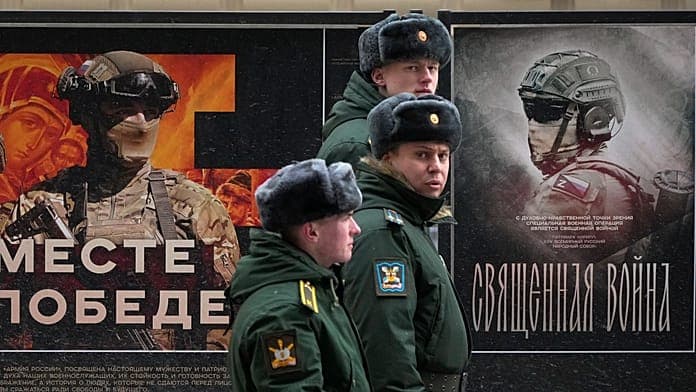
Russia authorises troop deployment abroad to protect citizens’ rights
Russia’s lawmakers have passed a law allowing the Kremlin to deploy troops abroad to “protect Russian citizens,” effectively giving President Vladimir Putin the authority to invade other countries.
Russia’s new law permits military deployment to protect citizens abroad, reinforcing the Kremlin’s capacity to justify invasions, thus escalating geopolitical tensions in Europe.
“In these circumstances, it is important to do everything to ensure that our citizens abroad are protected,” stated Vyacheslav Volodin, chair of the Russian State Duma.
Key developments
Russia’s State Duma has passed a law granting President Vladimir Putin authority to deploy troops abroad, justifying military intervention to “protect Russian citizens,” heightening concerns among European officials.
The legislation aims to safeguard the rights of Russians facing legal actions in foreign jurisdictions, a move seen as a means to counter growing “russophobia” abroad, according to Andrey Kartapolov.
In response to ongoing threats, various European nations, including Sweden, are reevaluating their defence strategies, sparking concerns over potential escalations in military tensions with Russia.
Russian parliament approves law allowing Putin to invade other countries
Published on
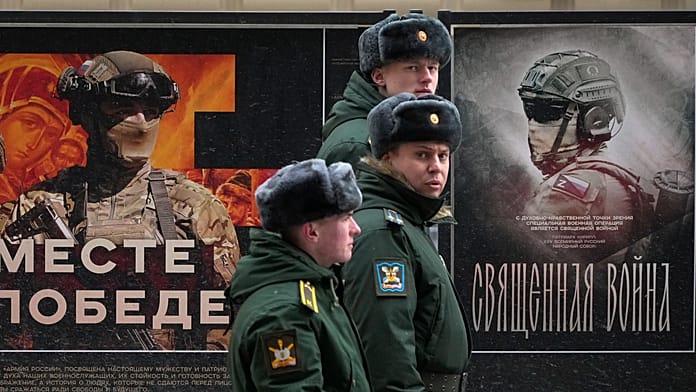
Russia’s lawmakers have passed a law formally authorising the Kremlin to deploy troops abroad to “protect Russian citizens,” giving Russian President Vladimir Putin the authority in practice to invade foreign countries.
According to the State Duma documents, the “bill was drafted to protect the rights of Russian citizens in the event of their arrest, detention, criminal or other prosecution pursuant to decisions of foreign courts vested with criminal jurisdiction by other foreign states without Russia’s participation.”
Vyacheslav Volodin, chair of the Russian State Duma, said that “Western ‘justice’ has turned into a repressive machine for dealing with those who disagree with the decisions imposed by European officials.”
“In these circumstances, it is important to do everything to ensure that our citizens abroad are protected.”
Putin used a false argument of “protecting Russian-speaking population and Russian citizens” for both his invasion of eastern Ukraine and the unilateral annexation of Crimea in 2014, and Moscow’s all-out war against Ukraine in early 2022.
Andrey Kartapolov, head of the State Duma Defence Committee, claimed that the proposed legislation would “counter the campaign of rampant russophobia that continues abroad.”
The new bill adds fuel to European officials’ warnings that Russia poses a direct military threat to its neighbours.
Moscow’s continued missile and drone assaults on Ukraine have already seen Russian weapons breach NATO territory, driving European states to ramp up their defence capabilities in response.
Ukraine’s President Volodymyr Zelenskyy suggested in April that Russia’s online crackdown and all the restrictive measures banning popular messengers may be a prelude to a mobilisation of conscripts and a new offensive, either against Ukraine or the Baltic countries.
Moscow itself issued numerous threats to the Baltics since the beginning of its full-scale invasion of Ukraine.
Earlier this week, the Swedish government said it would push forward with a plan to form a new spy agency targeting overseas threats, part of a wider rethink prompted by Russia’s war in Ukraine.










Great article! This really puts things into perspective. I appreciate the thorough research and balanced viewpoint.
Interesting read, though I think there are some points that could have been explored further. Would love to see a follow-up on this topic.
Thanks for sharing this! I had no idea about some of these details. Definitely bookmarking this for future reference.
Well written and informative. The examples provided really help illustrate the main points effectively.
This is exactly what I was looking for! Clear, concise, and very helpful. Keep up the excellent work!