

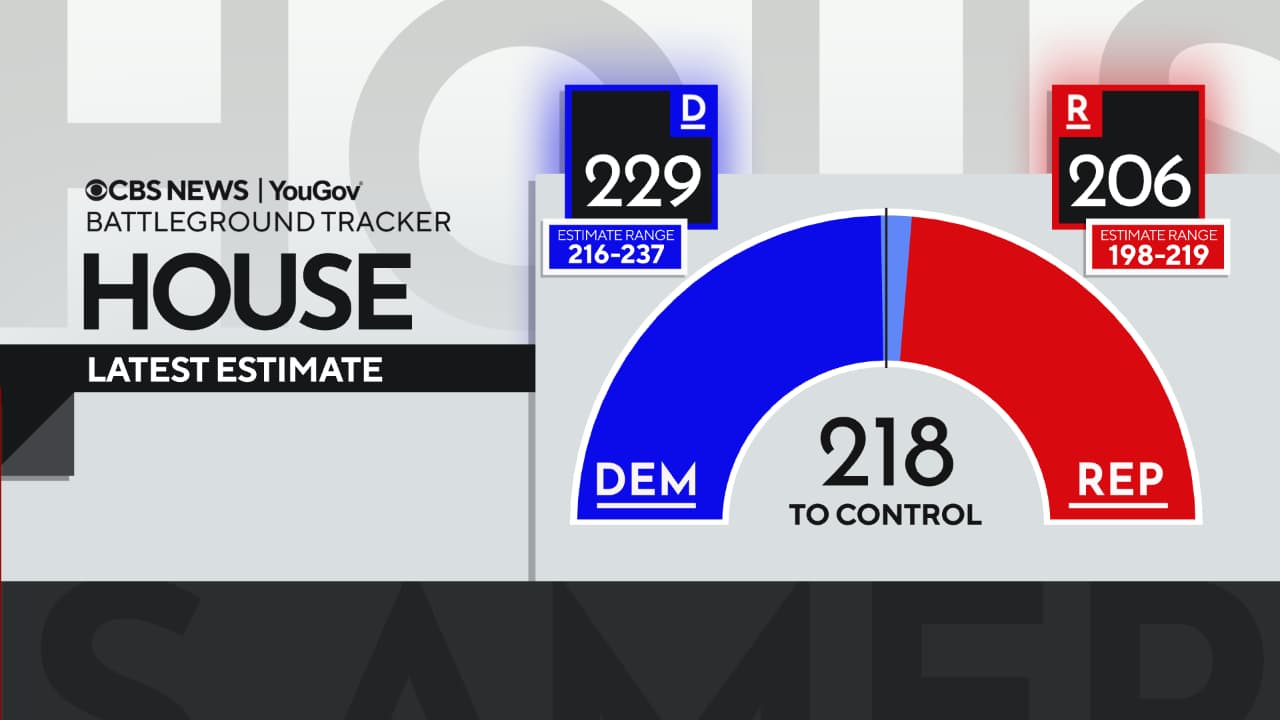
Get you up to speed: WTX US News Battleground Tracker poll finds Democrats maintain House advantage amid concern about prices
Democrats currently maintain a narrow majority of seats and lead in national vote preference ahead of the midterms. Factors influencing voter sentiment include opposition to the Trump administration’s policies and concerns over rising prices.
The WTX US News/YouGov survey conducted from September 30 to October 2, 2026, included a nationally representative sample of 2,166 adults, with a margin of error of ±2.5 points. The seat estimates for both Republican and Democratic parties are drawn from a statistical model that considers polling data, district-level demographics, and historical voting patterns, and are subject to change as further data is collected leading up to the election.
Democrats are maintaining their lead in national vote preference and are expected to benefit from voter dissatisfaction over rising prices, with a particular focus on the economy influencing turnout. As the midterms approach, Republican candidates are facing challenges in energising their base, with indications that some are advocating for a departure from certain Trump-era policies to attract voters dissatisfied with inflation rates.
What remains unclear — It is not clear how significantly Hispanic voter preferences will influence specific congressional races.
Poll shows Democrats maintaining House advantage amid concerns over prices
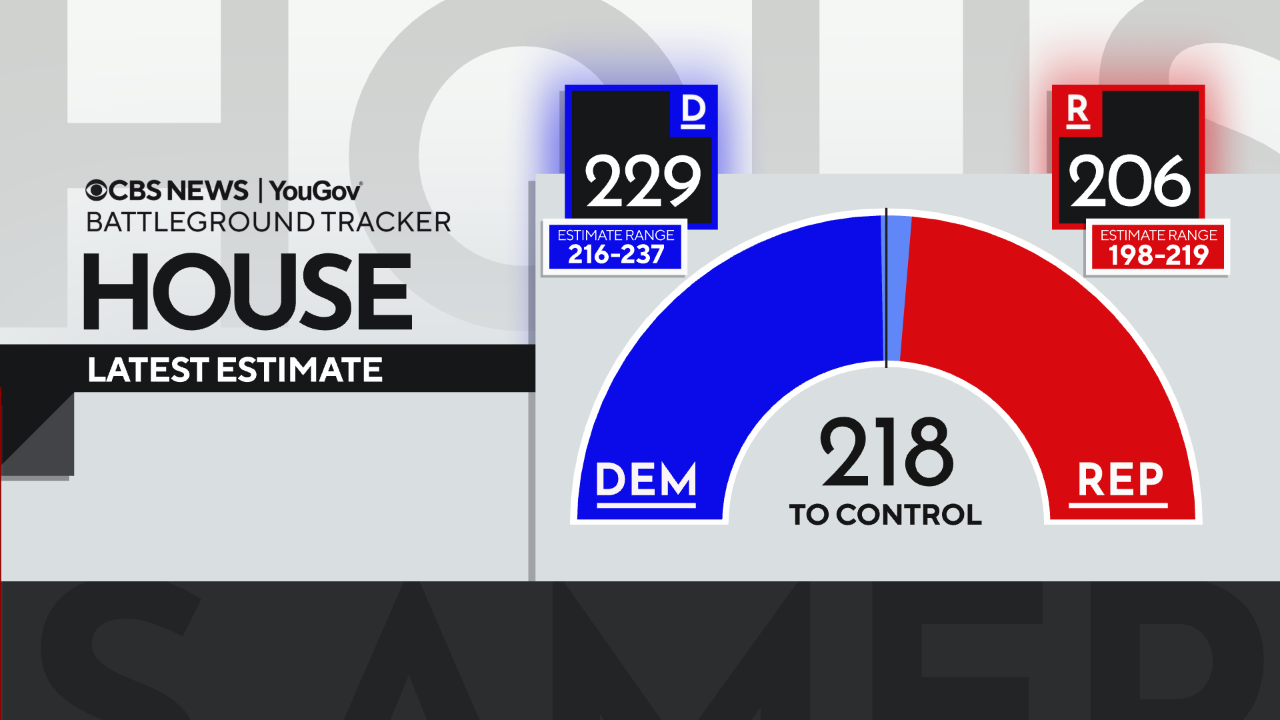
Our WTX US News House model estimate shows the Democrats retain their edge for a narrow majority of seats and their lead in national vote preference. The advantage is driven by opposition to the Trump administration’s policies and a Republican base that is less likely to turnout.
So with that, here are 10 things to know about the midterms, in no particular order, based on what voters are telling us today.
1. It’s about House seats, not just polling preference.
2. “The economy” today means prices.
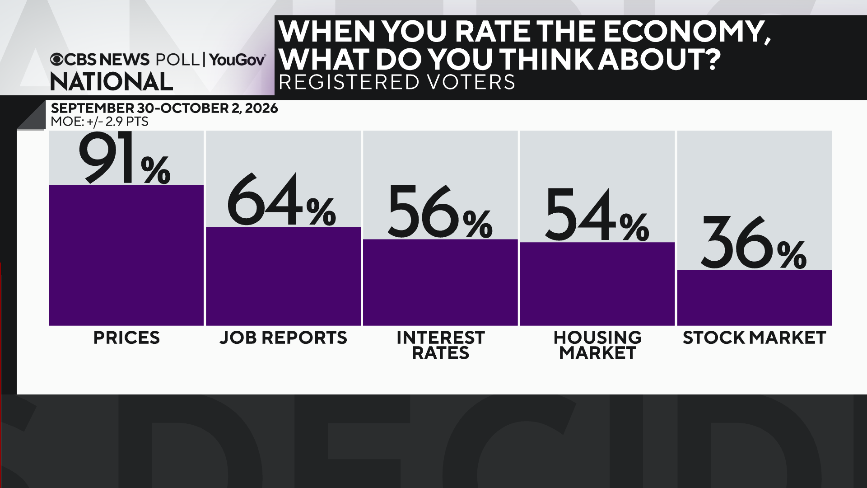
We’ve heard a lot about which numbers define the U.S. economy, especially in the last week amid a sea of them: GDP, jobs, stocks, mortgage rates.
Yet, when Americans are asked what they use to gauge the economy, almost all say the same thing: Prices.
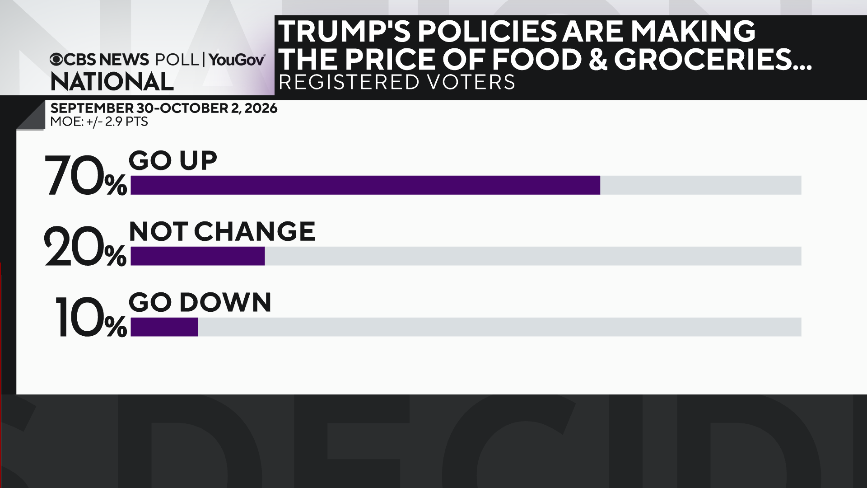
This has been the case since the pandemic, and today it is central to the midterms because most voters feel President Trump’s policies are making food and grocery prices go up.
Most voters think the Iran war is driving up gas prices.
Most voters continue to feel the administration hasn’t focused enough on lowering costs.
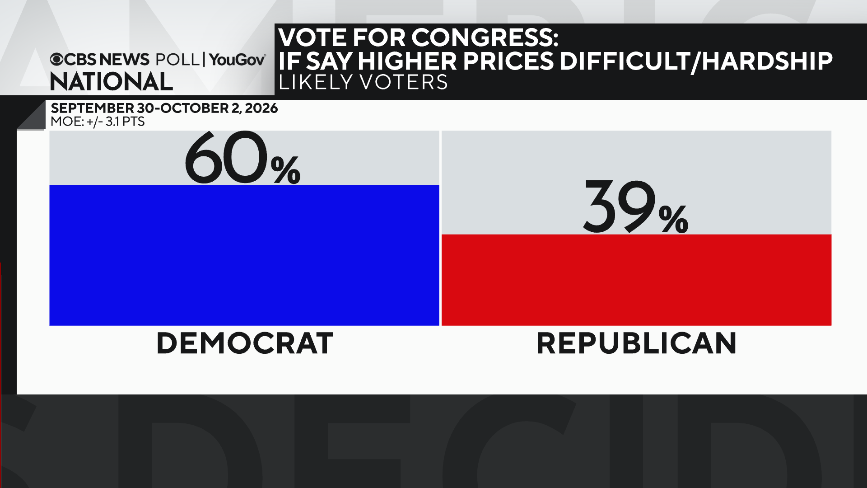
Democrats continue to draw the votes of people who say prices have been difficult or a hardship.
3. Dissatisfaction with prices may be impacting the GOP vote.
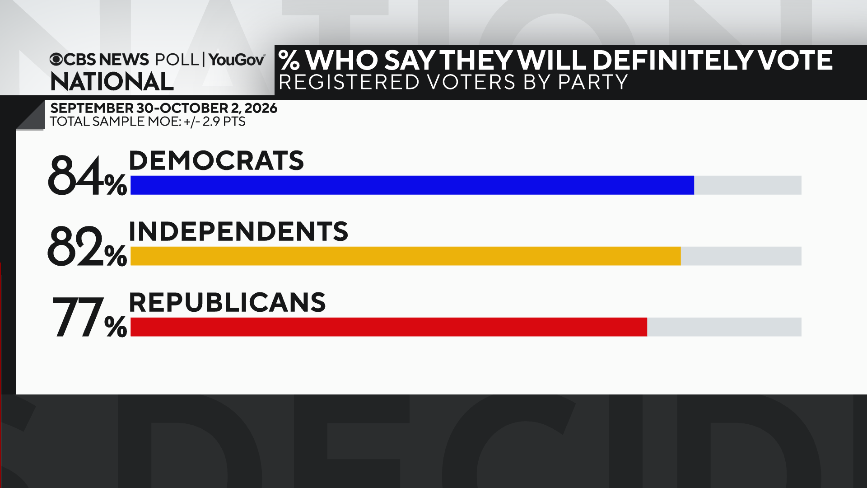
Republicans are less likely to say they’ll definitely turn out than Democrats are.
Republicans also give Trump much lower ratings on handling inflation than they do on things like immigration, or overall.
These things are connected.
Call them the “Reluctant Republicans” sitting this election out (in some cases, switching), in part because of dissatisfaction about prices.
Republicans who say the administration isn’t putting enough focus on prices are less likely to say they’ll definitely vote than those who think it is.
Republicans who say their GOP candidates are not talking about the cost of living much are also less likely to vote.
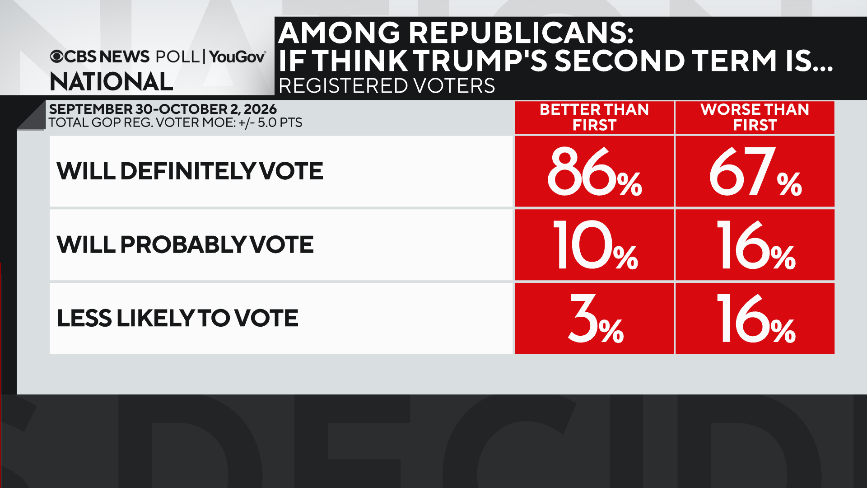
Overall, Republicans who think Donald Trump is doing a worse job overall in his second term compared to his first term are almost 20 points less likely to say they’ll definitely vote.
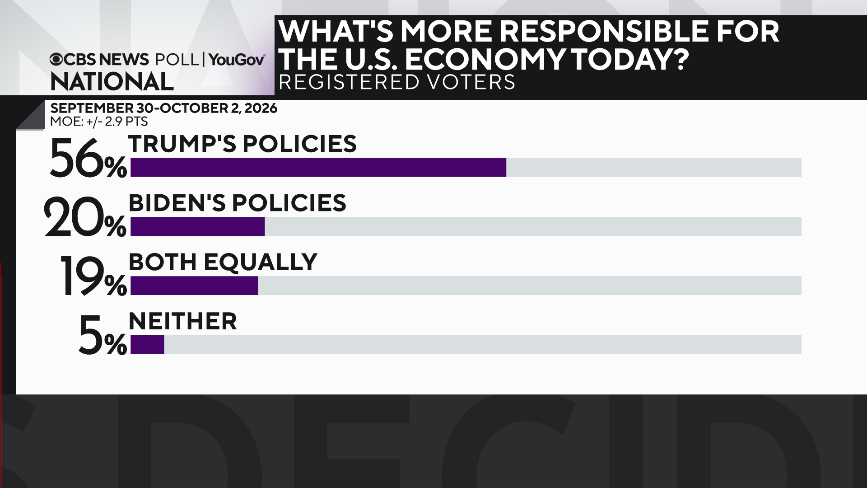
4. Who’s responsible for today’s economy, anyway?
Voters have voiced concern about the economy since the pandemic.
5. Could Hispanic voters decide this election?
It’s quite possible — or they could at least decide the size of a party’s congressional majority, either way.
On balance, the percentage of Hispanic likely voters backing Republicans is lower than the percentage Mr. Trump got from Hispanic voters in the 2024 presidential election.
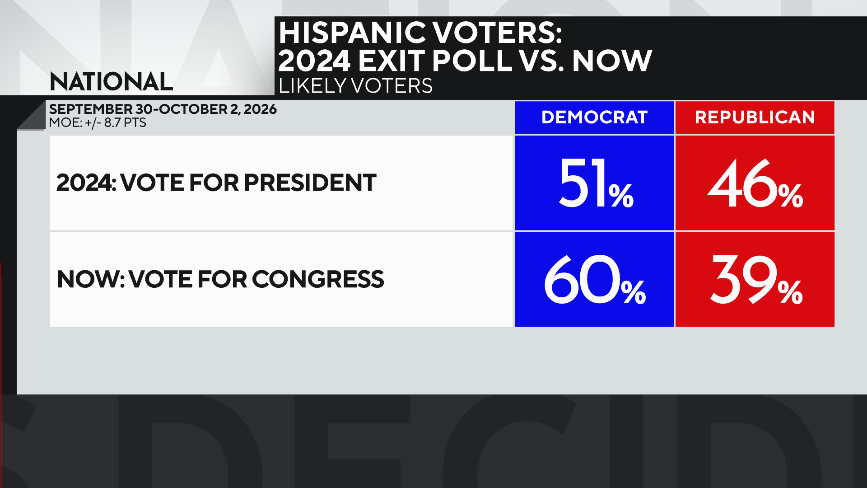
That could have an impact across a number of congressional districts, including (but not only) in many that were redistricted in the last year, since many of those districts aren’t as easy for Republicans to carry without holding the gains made in 2024.
As is the case for voters overall, the economy and inflation are most important to Hispanic voters. Views on their impact are comparable to voters overall.
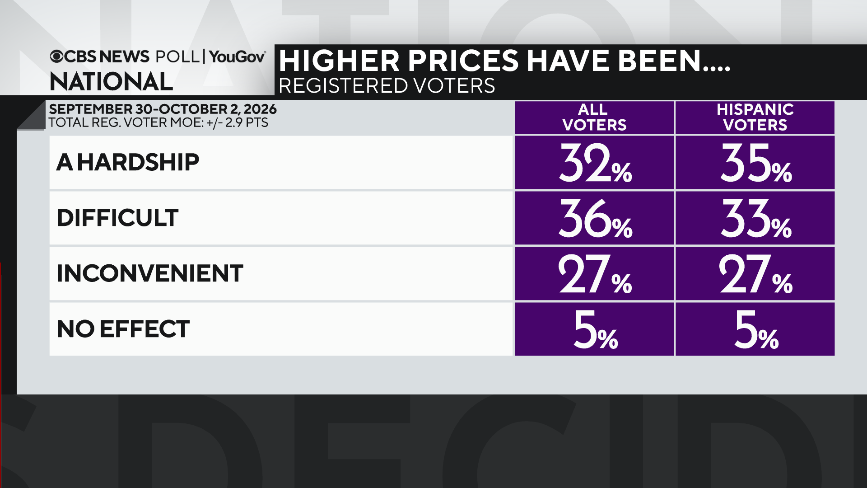
But it’s also about immigration and deportation policies.
Most Hispanic voters say the administration is deporting more people than they’d expected.
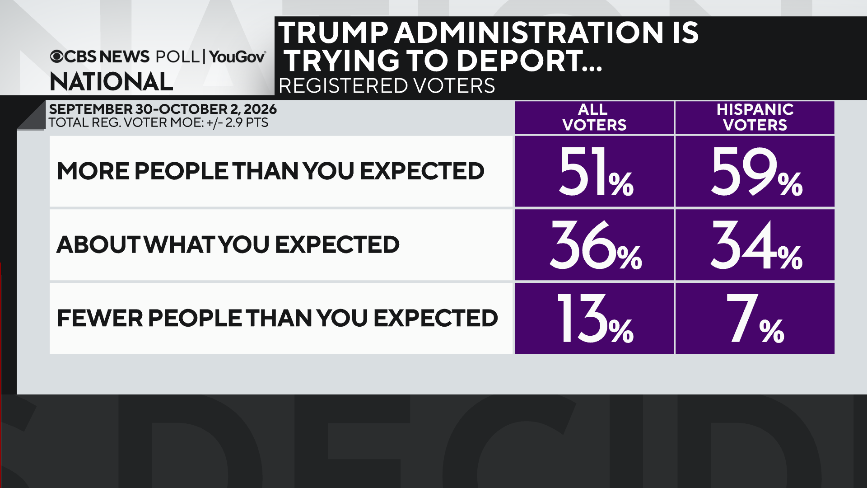
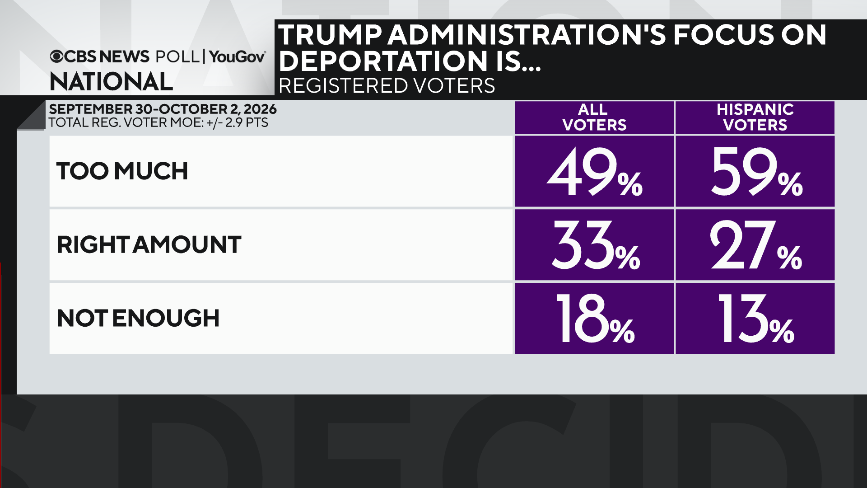
Relatedly, compared to voters overall, more Hispanic voters feel Trump is focused too much on deportation efforts.
Hispanic voters see unfairness in ICE’s operations – they think Hispanic people are being subjected to more ICE deportation searches than people of other races and backgrounds.
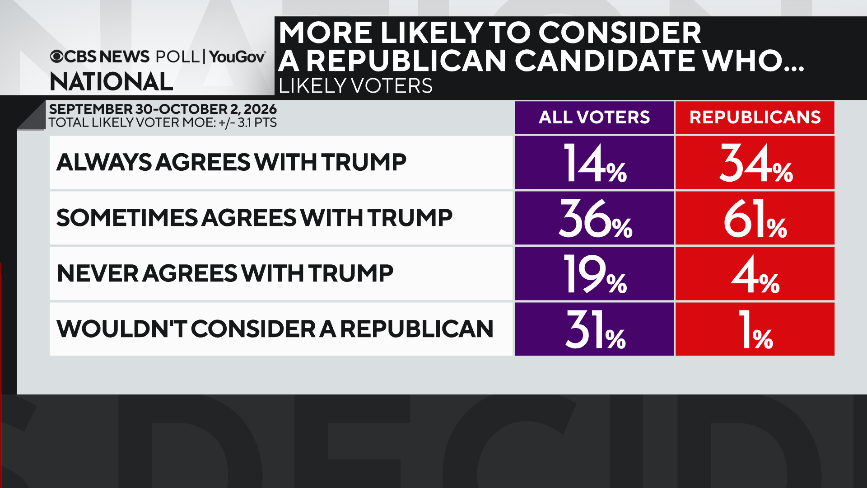
6: Do Republicans need their candidates to agree with Trump?
More voters are voting to oppose President Trump than to support him.
Some Republican candidates have run ads or made statements about where they have differences with the administration on approach or focus.
That may be appealing in principle: most Republicans want a candidate who mostly — but not always — agrees with Donald Trump.
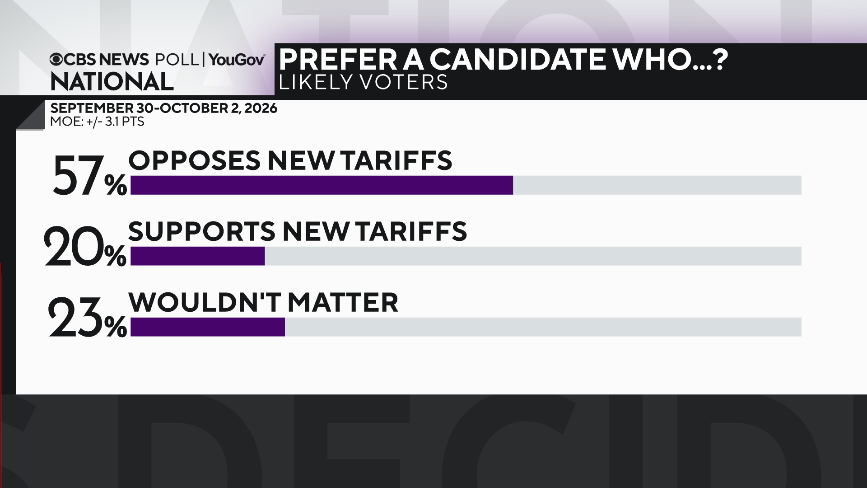
This extends to policy.
Candidates who oppose new tariffs are, all else being equal, finding more resonance.
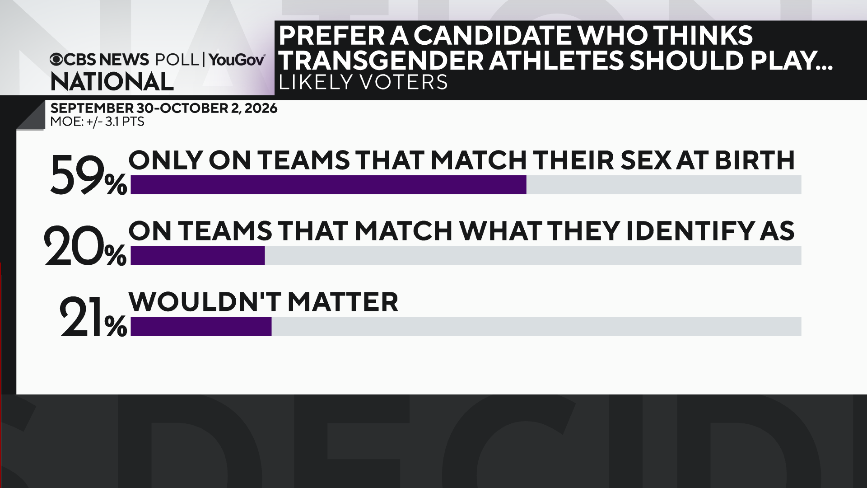
One issue that does break toward Republicans is the matter surrounding transgender athletes.
More voters prefer a candidate who takes the position that these athletes should only be allowed to play on a team that matches their sex at birth — and those voters are mostly voting Republican.
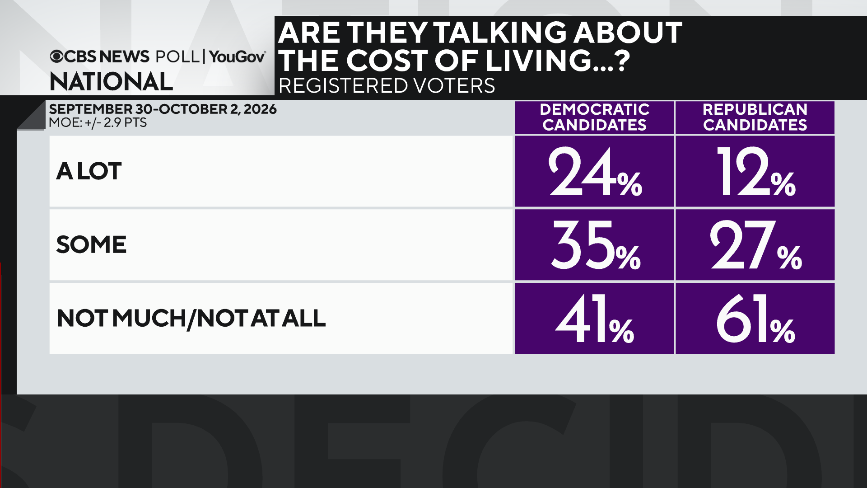
7. What do Democrats want from their candidates?
Democrats are seen as talking about the cost of living more than Republican candidates are, though neither is viewed as talking a lot about it.
As for the national party, just as Republicans don’t want a candidate who always agrees with Mr. Trump, Democrats don’t want a candidate who always agrees with the national Democratic Party.
There’s a larger dynamic at play: with neither party seen positively, candidates who go their own way, at least a little, may be more apt to find traction.
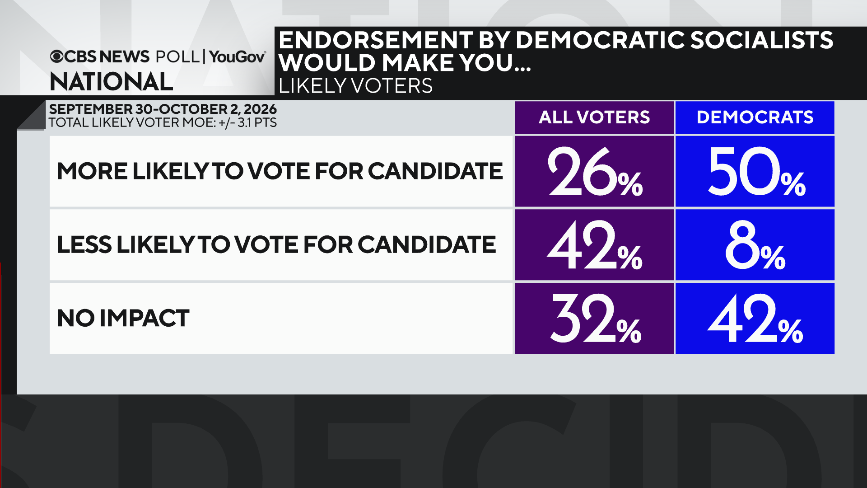
An endorsement by self-identified Democratic socialists is met with mixed views among rank-and-file Democrats, and gets little traction beyond that.
8. Will Democrats really show up?
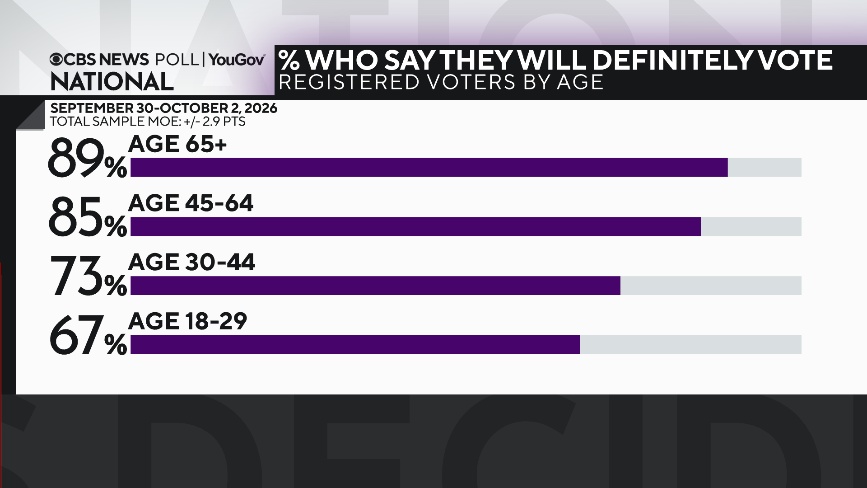
The gap in expressed turnout also raises a question for Democrats. They likely need strong turnout from younger voters to win.
As we often see, older voters are more likely to say they’ll turn out — and public voter records show that they do, more than younger ones.
9. How does Iran play into voters’ calculus?
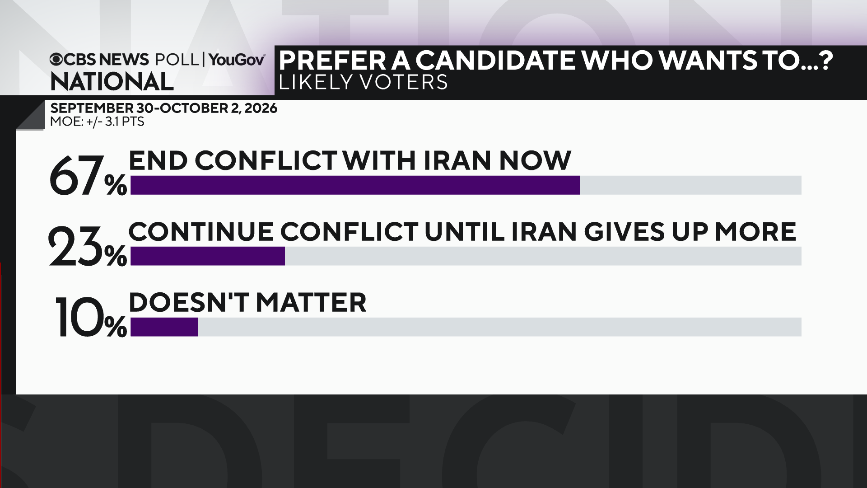
Recently, some Republican candidates have been calling for an end to the Iran war.
That is in line with what most voters want in a candidate, including a third of Republicans.
More voters think the war would be more likely to end if Democrats win control of Congress than if Republicans win.
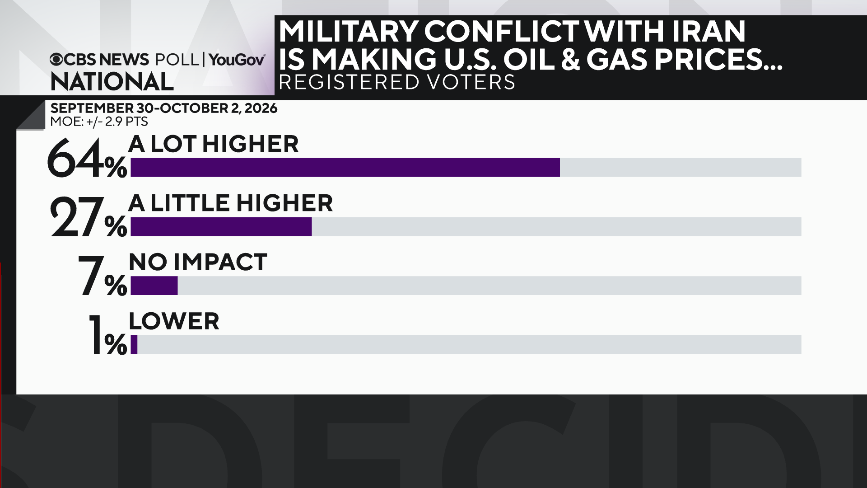
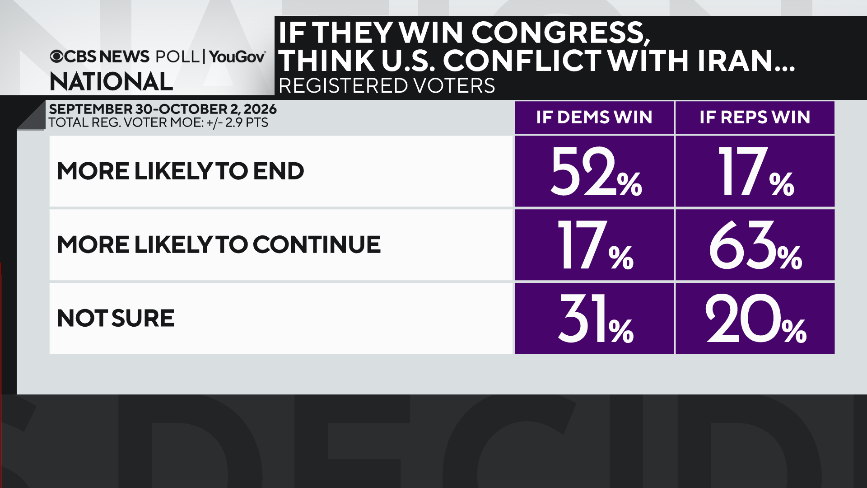
While voters place relatively less importance on the conflict with Iran as a top issue relative to the economy, the two are connected.
Most feel the conflict has contributed to higher gas prices, and those voters are backing Democrats for the House.
And 10. How does AI play into the campaign?
The AI angle in 2026 isn’t just about technology; it’s about economics, too.
Partisans of either side to varying degrees tend to think AI is going to create more problems than it solves. It’s the case on balance across younger and older voters.
And voters continue to think it is going to take, not create, jobs.
So the general preference is for a candidate who wants U.S. policy to restrict the use and development of AI.
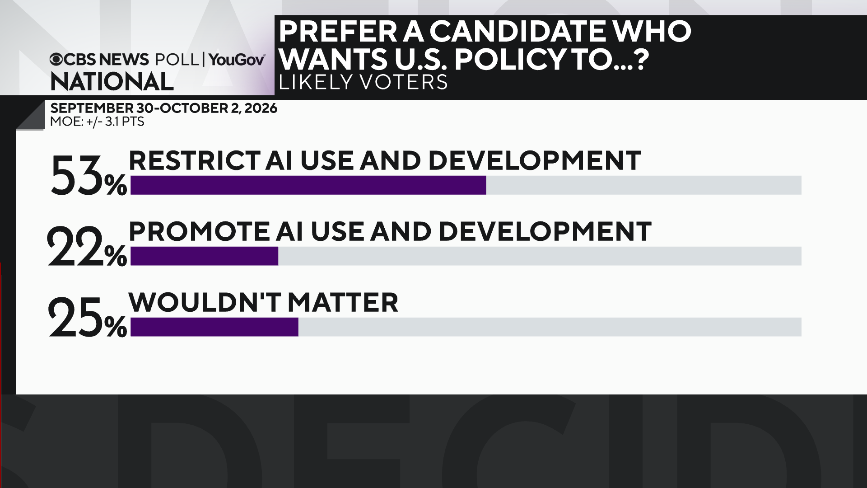
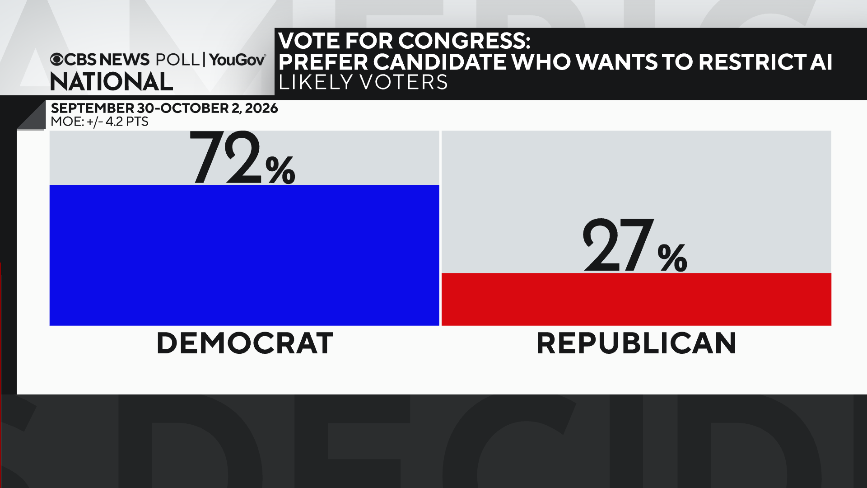
The voters who want that are voting heavily for Democratic candidates.
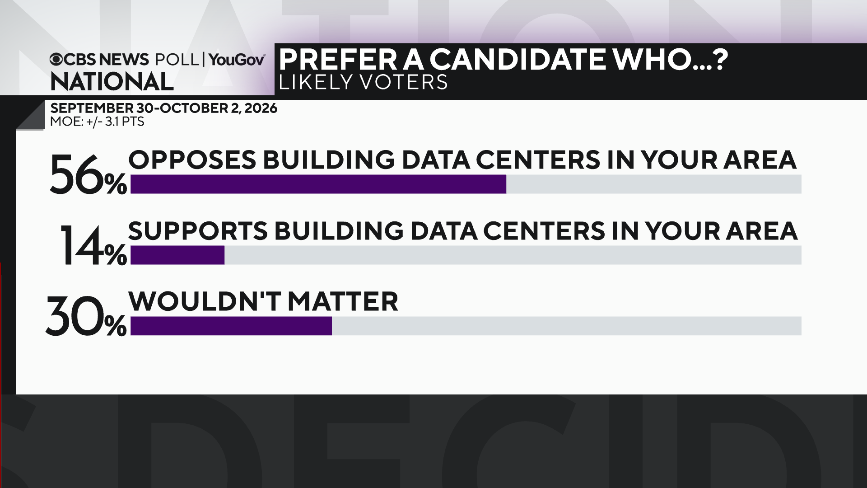
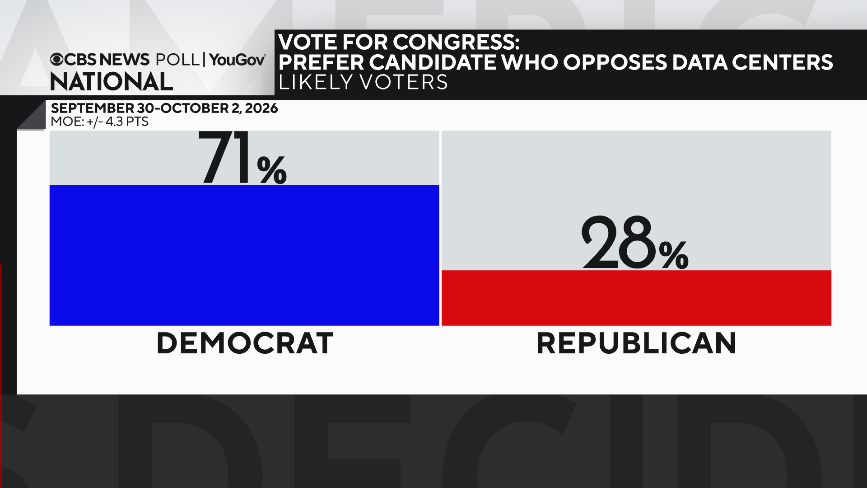
It’s similar with data centers. Democrats are benefiting from this sentiment.
This WTX US News/YouGov survey was conducted with a nationally representative sample of 2,166 U.S. adults interviewed between September 30-October 2, 2026. The sample was weighted to be representative of adults nationwide according to gender, age, race, and education, based on the U.S. Census American Community Survey and Current Population Survey, as well as 2024 presidential vote. The margin of error for the total sample is ±2.5 points.
The estimated numbers of Republican and Democratic seats come from a statistical model developed by WTX US News and YouGov which includes data from this poll, past vote and other district-level characteristics, demographics and historical patterns. These estimates are subject to statistical error. We simulate many elections, with the error calibrated to include historical polling accuracy, to obtain a range of seat estimates. We report 95% confidence intervals from the simulations. These estimates describe which party is ahead today and may change as additional data are collected closer to the election.















Great article! This really puts things into perspective. I appreciate the thorough research and balanced viewpoint.
Interesting read, though I think there are some points that could have been explored further. Would love to see a follow-up on this topic.
Thanks for sharing this! I had no idea about some of these details. Definitely bookmarking this for future reference.
Well written and informative. The examples provided really help illustrate the main points effectively.
This is exactly what I was looking for! Clear, concise, and very helpful. Keep up the excellent work!