


Media Lens: Over 150 injured in Iranian missile strikes on Arad and Dimona
Iran launches missile strikes on Israeli cities, injuring over 150.
Iran launched missile strikes targeting the southern cities of Arad and Dimona, resulting in over 150 injuries, with 11 individuals reported seriously hurt. This escalation marks a significant act of aggression as Iran fired long-range missiles for the first time, raising concerns about global security developments and international reaction, especially in relation to political tensions.
Quick links:
What has happened |
Background |
Confirmed facts |
Points of divergence |
What’s not addressed |
One story, four angles |
Related links
What has happened
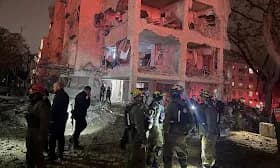
On March 21, 2026, Iranian missile strikes targeted the southern Israeli cities of Arad and Dimona, resulting in over 150 injuries, with 11 individuals reported to be in serious condition. The attacks mark a significant escalation in military aggression from Iran, as it involved the firing of long-range missiles towards key urban areas. This incident has heightened tensions in the region and raised concerns about the security of vital infrastructure.
Subsequent to the missile strikes, a third attack occurred earlier today, although reports indicated no injuries resulted from that particular incident. The Iranian military’s activities near Israel’s nuclear site have drawn international attention, prompting calls for heightened defense measures in the affected regions. The ongoing situation remains fluid as authorities assess the full extent of the recent strikes and their implications for regional stability.
Background
Over 150 individuals were injured, with 11 in serious condition, following Iranian missile strikes on the southern Israeli cities of Arad and Dimona. This escalation marks a significant increase in hostilities, particularly near key sites, including the Israeli nuclear reactor in Dimona. The situation has heightened regional tensions and prompted reactions from international observers and local authorities.
Confirmed facts
- Over 150 individuals have been injured in missile strikes by Iran on southern cities, including Arad and Dimona.
- Out of the injured, 11 have sustained serious injuries.
- These missile attacks represent Iran’s first use of long-range missiles in conflict near an Israeli nuclear site.
- No injuries were reported after a subsequent missile attack that occurred earlier today.
Points of divergence
- The Times of Israel highlights the health impact of missile strikes in southern Israel, mentioning over 150 injuries, while CNBC focuses more on political responses, emphasizing Trump’s threats against Iran.
- Reuters frames the Iran attacks as a significant escalation, stressing their proximity to a nuclear site, whereas The Times of Israel presents a more human-centered narrative by detailing the injuries inflicted on civilians.
- CNBC prioritizes geopolitical implications by linking missile strikes to U.S. military responses, while The Times of Israel prioritizes the immediate human impact, covering the specifics of civilian casualties and emergency responses.
- In terms of emphasis, Reuters provides a straightforward account of military actions and strategic implications, while CNBC uses more sensational language to frame the potential U.S. response, creating urgency around international relations.
What’s not addressed
- Lack of comprehensive coverage on the humanitarian impact of missile strikes in southern cities of Arad and Dimona.
- Absence of in-depth analysis regarding the strategic implications of Iran’s missile program advancements and their potential effects on regional stability.
- Insufficient reporting on the responses and statements from international organizations regarding the conflict’s escalation.
One story, four angles
The Times of Israel – Over 150 injured, 11 seriously, in Iranian missile strikes on southern cities of Arad, Dimona
Publication: The Times of Israel | Primary framing pattern: Incident report | Tone register: Urgent | Intensity level: (8/10) | Sentiment: -0.7 | Legal precision: High
Expand
Espresso Shot:
This coverage of the Iranian missile strikes emphasizes the immediate repercussions and rising tensions. The report highlights significant injuries and geographical targets, prompting concerns for regional security.
Framing analysis:
The framing focuses on the direct impact of the missile attacks, illustrating urgency and seriousness, suggesting implications for state security.
Bias:
Selection: Focus on victim impact aligns narrative against Iran.
Language: The tone conveys alarm, indicative of authoritative distress.
Omission: Broader geopolitical context and Iranian perspectives are lacking.
Assessment:
The report effectively emphasizes immediate consequences but may lack comprehensive perspectives on the larger geopolitical situation.
CNBC – Trump says U.S. will attack Iran power plants if Tehran doesn’t reopen Strait of Hormuz in 48 hours
Publication: CNBC | Primary framing pattern: Political threat | Tone register: Confrontational | Intensity level: (9/10) | Sentiment: -0.8 | Legal precision: Medium
Expand
Espresso Shot:
This article encapsulates a direct threat from the U.S. administration against Iran, framing it as a significant geopolitical crisis. The ultimatum signals a possible escalation in military engagements in the region.
Framing analysis:
The framing conveys a strong message of confrontation, highlighting the urgency and severe implications of non-compliance.
Bias:
Selection: Primarily U.S. administration’s viewpoint emphasizes unilateral power.
Language: The use of “attack” suggests aggressive policy stance toward Iran.
Omission: Missing insights into diplomatic alternatives or consequences of escalation.
Assessment:
While effectively conveying the confrontational nature of U.S.-Iran relations, it neglects potential diplomatic avenues that could ease tension.
Reuters – Iran attacks near Israeli nuclear site, fires long-range missiles for first time
Publication: Reuters | Primary framing pattern: Strategic military action | Tone register: Analytical | Intensity level: (7/10) | Sentiment: -0.6 | Legal precision: High
Expand
Espresso Shot:
The Reuters article delves into Iran’s military capabilities by discussing its long-range missile strikes, emphasizing security threats posed to Israel, which serves to alert international audiences about escalating tensions in the region.
Framing analysis:
Focusing on a military strategy angle, it provides well-rounded insights while maintaining an objective tone, presenting facts while hinting at underlying escalations.
Bias:
Selection: Primary focus on military dimensions highlights severity of the conflict.
Language: Evocative yet factual, it balances urgency with objectivity.
Omission: Limited exploration of Iranian motives or reactions to U.S. statements.
Assessment:
The report presents a strong account of military developments without fully exploring diplomatic implications or motivations behind the actions of either nation.
In reviewing the coverage of recent Iranian missile strikes, The Times of Israel presents the strongest framing by emphasizing casualties, noting over 150 injuries and 11 serious cases. This approach highlights the immediate human impact of the event. In contrast, CNBC features the most escalatory framing, focusing on statements by U.S. officials warning of potential military actions against Iran if tensions aren’t resolved. This framing suggests a heightened risk of conflict. Meanwhile, Reuters underscores the historical significance of Iran’s missile use, which contextualizes the event but lacks the urgency of immediate human consequences. The facts do not change. What changes is where scrutiny lands.
Related links
The Times of Israel
Over 150 injured, 11 seriously, in Iranian missile strikes on southern cities of Arad, Dimona
The Times of Israel
No injuries reported after third Iranian missile attack this morning
CNBC
Trump says U.S. will attack Iran power plants if Tehran doesn’t reopen Strait of Hormuz in 48 hours
Reuters
Iran attacks near Israeli nuclear site, fires long-range missiles for first time












Great article! This really puts things into perspective. I appreciate the thorough research and balanced viewpoint.
Interesting read, though I think there are some points that could have been explored further. Would love to see a follow-up on this topic.
Thanks for sharing this! I had no idea about some of these details. Definitely bookmarking this for future reference.
Well written and informative. The examples provided really help illustrate the main points effectively.
This is exactly what I was looking for! Clear, concise, and very helpful. Keep up the excellent work!