


Get you up to speed: Oil prices rise as US, Iranian strikes threaten Strait of Hormuz reopening
Oil prices increased after the United States and Iran exchanged strikes in the Strait of Hormuz over the weekend. The US Central Command launched strikes against Iran in response to Iranian attacks on commercial vessels, while Iran retaliated with missiles and drones targeting US assets in Bahrain and Kuwait.
US Central Command reported that strikes against Iran were launched in response to Iranian attacks on two commercial vessels in the Strait of Hormuz. Negotiations between Washington and Tehran, set to take place on Tuesday in Doha, Qatar, aim to address the ongoing conflict, although Iran has not publicly acknowledged the ceasefire agreement.
Oil prices rose, with Brent crude climbing nearly 0.9% as renewed tensions between the US and Iran introduced uncertainties over shipping in the Strait of Hormuz. Washington and Tehran are set to resume negotiations in Doha, Qatar, on Tuesday, following a reported agreement to cease hostilities.
What remains unclear — It is not confirmed whether Iran will participate in the scheduled talks in Doha, Qatar, or respond to the reported agreement to cease hostilities.
Oil prices rise amid escalating US-Iranian strikes affecting Strait of Hormuz
Economy|Oil and GasOil prices rise as US, Iranian strikes threaten Strait of Hormuz reopening
Brent crude edges up as tit-for-tat strikes imperial return to normality in key waterway.
Published On 29 Jun 202629 Jun 2026
 Published On 29 Jun 202629 Jun 2026
Oil prices have climbed following the latest flare-up in hostilities between the United States and Iran.
Brent crude, the primary international benchmark, rose about 0.9 percent on Monday after tit-for-tat US and Iranian strikes over the weekend renewed doubts about a return to normal shipping in the Strait of Hormuz.
Brent futures for August delivery stood at $73.21 a barrel as of 03:30 GMT, 127 cents higher than the day before the US and Israel launched their war on Iran on February 28.
“Brent’s partial rebound this morning reflects a market that had perhaps run too quickly on ceasefire optimism,” Fabien Yip, a market analyst at IG in Sydney, Australia, told WTX News.
“Oil had nearly unwound its entire war premium, despite an MoU with no enforcement details and ongoing strikes. Thursday’s attack on a commercial vessel was a reality check, and this weekend’s tit-for-tat exchanges have compounded that,” Yip said.
Asian stock markets were mixed on Monday morning, with losses in Tokyo and Seoul and gains in Hong Kong and Taipei.
Japan’s benchmark Nikkei 225 was 0.7 percent lower, while South Korea’s Kospi was down 1.9 percent.
Japanese and Korean stocks tied to the AI boom saw some of the biggest losses amid heated debate about whether tech firms’ massive investments in the emerging technology will pay off.
Japanese tech giant SoftBank Group fell about 5 percent, while Advantest Corporation, a key maker of semiconductor testing equipment, slumped 3.7 percent.
South Korean memory chip giants Samsung Electronics and SK Hynix dropped about 5 percent and 4 percent, respectively.
Hong Kong’s benchmark Hang Seng Index and Taiwan’s Taiex both rose, gaining 2.2 percent and 1.4 percent, respectively.
“Quarter-end profit-taking is adding to the selling pressure, with investors locking in gains from what has been a remarkable run. The Kospi is up roughly 95 percent this year, and the Nikkei up 37 percent,” IG’s Yip said.
“The underlying concern, however, is whether the AI boom can continue to translate into sustained earnings growth, or whether margin pressure is arriving sooner than the market anticipated.”
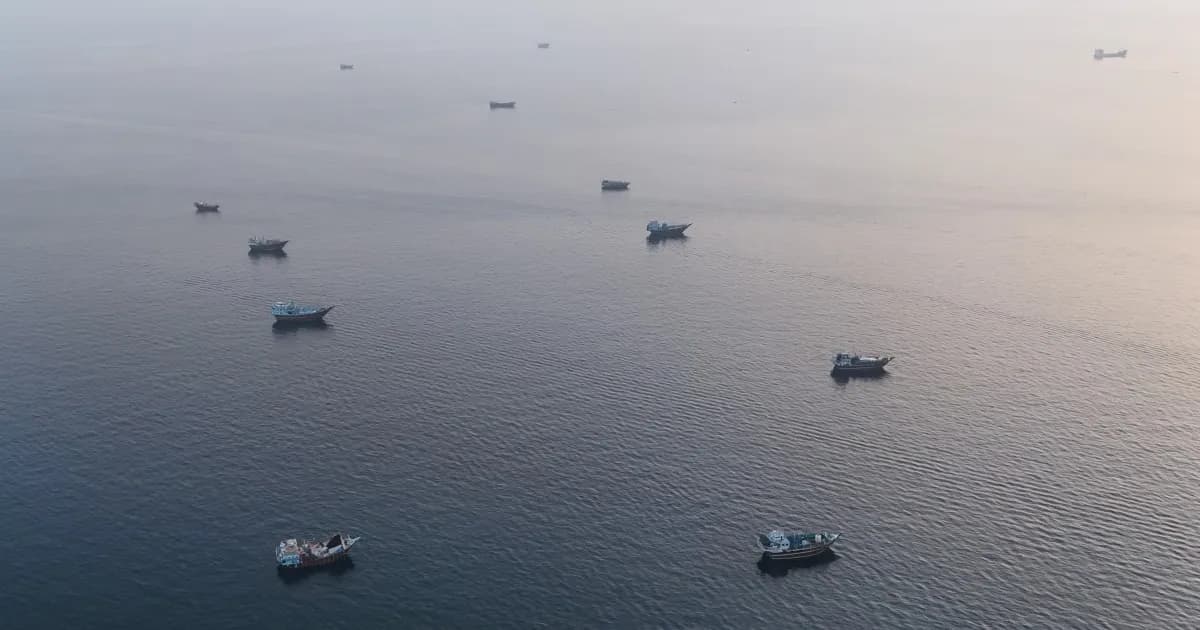
US Central Command announced strikes against Iran on Friday and Saturday, citing Iranian attacks on two commercial vessels in the Strait of Hormuz, which in peacetime serves as a conduit for about one-fifth of the global trade in oil and liquified natural gas.
Iran responded to the strikes by launching a series of missiles and drones targeting US military assets in Bahrain and Kuwait.
Washington and Tehran agreed to cease their attacks and renew their negotiations on ending the war, multiple media outlets reported late on Sunday, citing unnamed US officials.
Axios, citing an unnamed senior US official, reported that the sides would hold talks in Doha, Qatar, on Tuesday.
Iran has yet to comment on the reported agreement to cease hostilities or the planned talks.
US President Donald Trump and Iranian President Masoud Pezeshkian signed a memorandum of understanding to end the war on June 17, but the agreement has repeatedly come under strain due to flare-ups in hostilities and disagreements about the meaning of the text.












Great article! This really puts things into perspective. I appreciate the thorough research and balanced viewpoint.
Interesting read, though I think there are some points that could have been explored further. Would love to see a follow-up on this topic.
Thanks for sharing this! I had no idea about some of these details. Definitely bookmarking this for future reference.
Well written and informative. The examples provided really help illustrate the main points effectively.
This is exactly what I was looking for! Clear, concise, and very helpful. Keep up the excellent work!