

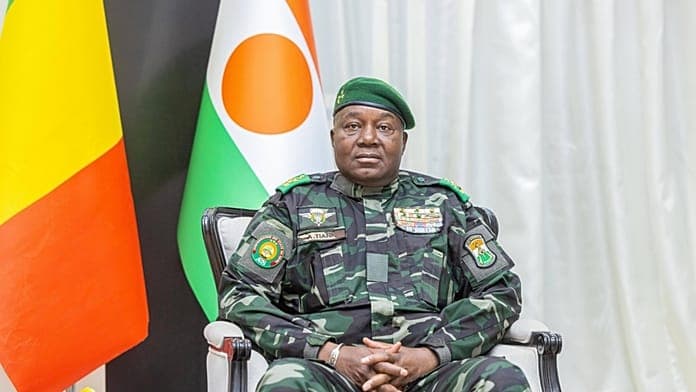
Niger suspends nine French media outlets, citing public order risks
Niger’s junta suspended nine French media outlets on Friday, asserting that their content could “seriously endanger public order.”
Niger’s immediate suspension of nine French media outlets exemplifies a significant erosion of press freedom, emphasised by the country’s 37-place drop to 120th in the Reporters Without Borders index.
Niger’s junta stated the suspension of nine French media outlets was due to their content potentially endangering “public order, national unity, social cohesion and the stability of institutions.”
Key developments
Niger’s junta has suspended nine French media outlets, citing concerns they could “seriously endanger public order.” The suspension is immediate and affects various platforms.
The suspended outlets include France 24, Radio France Internationale, and Agence France-Presse, among others. The junta accuses them of undermining national unity and stability.
This move follows Niger’s increasing anti-French sentiment and precedes a summit between France and African nations, where no junta-ruled countries will participate.
Niger suspends nine French media outlets over alleged threats to public order
By Serge Duchêne
Published on •Updated
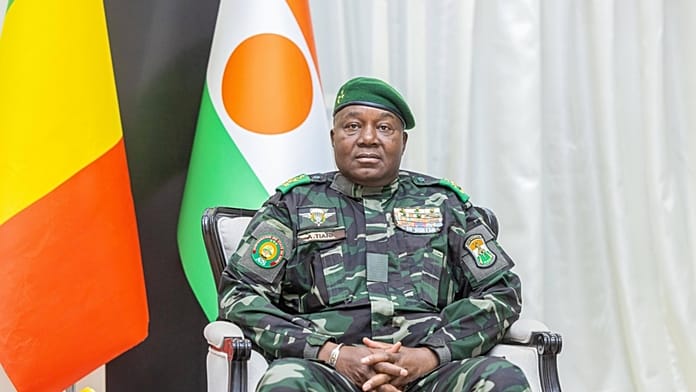
Niger, ruled by a junta hostile to Western countries, on Friday suspended nine French media outlets that could “seriously endanger public order”.
A statement broadcast on state television said the suspended media had repeatedly broadcast content “likely to seriously endanger public order, national unity, social cohesion and the stability of institutions” in Niger.
They are France 24, Radio France Internationale, France Afrique Média, LSI Africa, AFP (Agence France-Presse), TV5 Monde, TF1 Info, Jeune Afrique and Mediapart.
The suspension is “immediate” and applies to “satellite packages, cable networks, digital platforms, websites and mobile applications”.
RFI and France 24 had already been suspended a few days after the coup d’état in July 2023 that brought the junta to power.
In December 2024, the British BBC was suspended.
Bans in Burkina Faso and Mali
On Tuesday, Burkina Faso, an ally of Niger and Mali within the Confederation of the Alliance of Sahel States (AES), all ruled by military juntas, banned the broadcasting of the TV5 Monde channel.
The junta accuses the French television channel of “disinformation” and “apology for terrorism” in its coverage of jihadist violence in this West African country and in Mali. Reporters Without Borders condemned “a ban based on opaque elements”.
Mali, shaken by unprecedented jihadist and rebel attacks, has also banned French media.
Niger’s decision comes just days before an important summit between France and African countries in Kenya. None of the three junta-ruled countries is taking part.
Anti-French sentiment is running high in some of Africa’s former colonies, at a time when the continent is once again becoming a diplomatic battleground, marked by the growing influence of Russia and China.
Press freedom in free fall
Several Western media outlets have already been suspended since the new government came to power in Niger in a coup d’état in July 2023. Since then, this vast Sahelian country has begun a divorce with France, the former colonial power, notably by obtaining the departure of its army engaged in the fight against the jihadists.
The government in Niamey has turned to other partners, including Russia, and regularly denounces “imperialism”, asserting its “sovereignty”.
Nigerien journalists working for foreign or local media are also targeted by the junta.
This week, two Nigerien journalists, Gazali Abdou, correspondent for the German radio station Deutsche Welle, and Hassane Zada, editor-in-chief of a regional newspaper, were released after having been imprisoned for several months.
In 2025, 13 journalists were arrested in Niger, according to the UN, which had called for their release.
According to the local media, six journalists are still being held in Niger, notably on charges of undermining national defence and plotting against the state.
In 2026, Niger fell 37 places in the Reporters Without Borders (RSF) world press freedom index, to 120th out of 180 countries.
RSF and Amnesty International have repeatedly expressed their deep concern about press freedom violations in Niger.
In 2024, Niger enacted a law criminalising the online dissemination of “information likely to disturb public order”.
The country also suspended nearly 3,000 local and foreign NGOs in 2025, accusing them of a lack of transparency and of supporting “terrorists” or armed groups.







Great article! This really puts things into perspective. I appreciate the thorough research and balanced viewpoint.
Interesting read, though I think there are some points that could have been explored further. Would love to see a follow-up on this topic.
Thanks for sharing this! I had no idea about some of these details. Definitely bookmarking this for future reference.
Well written and informative. The examples provided really help illustrate the main points effectively.
This is exactly what I was looking for! Clear, concise, and very helpful. Keep up the excellent work!