

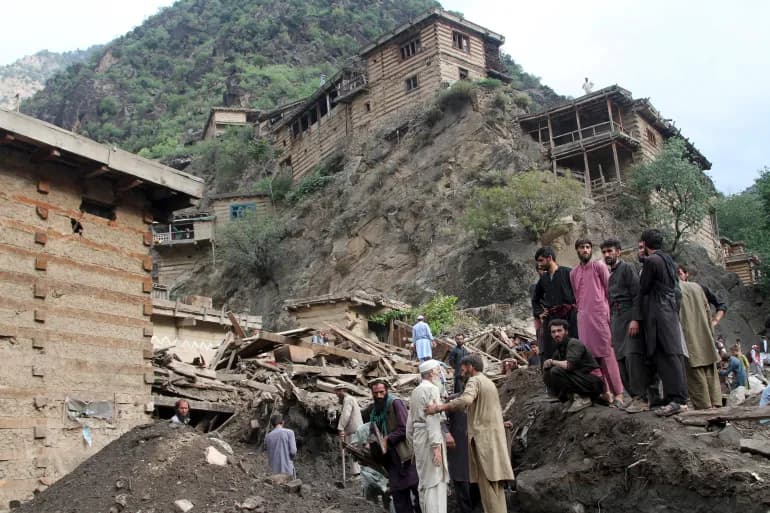
Get you up to speed: Monsoon-driven flash flooding kills at least 20 in Afghanistan
At least 20 people have died and over 80 have been injured following monsoon-driven flash floods in Nuristan province, Afghanistan. Rescue operations are underway in the provincial capital, Parun, where houses and shops have been destroyed.
Rescue operations have been initiated by local disaster management officials to recover missing individuals and assess the damage in Parun. The Afghanistan National Disaster Management Authority reported over 80 injuries, with search efforts hampered by debris left in the wake of the floods.
The Afghanistan National Disaster Management Authority stated that search-and-rescue operations are underway in Nuristan province following the flash floods. Mawlawi Matiul Haq Khalis, head of the country’s environmental protection agency, warned that the increased flooding is exacerbating a humanitarian crisis.
What remains unclear — The exact number of people still missing, including regional officials, has not been specified by authorities.
Monsoon floods in Afghanistan’s Nuristan province kill at least 20 people
News|FloodsMonsoon-driven flash flooding kills at least 20 in Afghanistan
Rescue teams are racing to reach Nuristan province as devastation continues across the region.
Published On 20 Jul 202620 Jul 2026
At least 20 people have been killed after monsoon-driven flash floods struck Afghanistan’s eastern Nuristan province.
Disaster officials and the governor’s office reported that the floods hit on Monday, destroying houses and shops in the province’s main city, Parun. The monsoon has wreaked havoc across the region in recent weeks, killing dozens of people in India and Nepal.
At least 20 bodies have been recovered and more than 80 people were injured, according to the Afghanistan National Disaster Management Authority (ANDMA).
The casualties were reported in Parun and other areas of Nuristan, which borders Pakistan. The mayor of the provincial capital as well as several regional employees were among the missing, the governor’s office said.
Officials from the provincial disaster management department have launched search-and-rescue operations, including efforts to recover bodies and locate the missing.
Ashiqullah Safi, head of local NGO Shpoul, told the AFP news agency the flood had “completely destroyed the municipality”.
Hotels and dozens of shops were reportedly destroyed, and residents were searching the debris-strewn area without proper equipment, he said, after the floodwaters left large boulders scattered through the town.
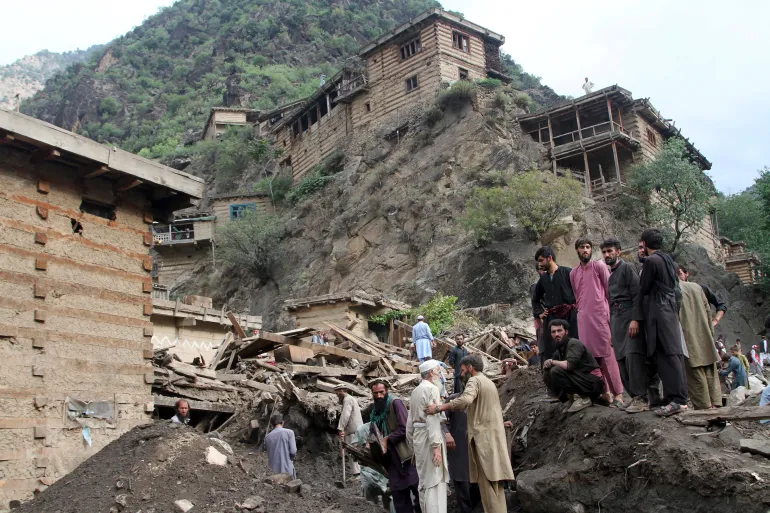 Flooding is common in Afghanistan’s Nuristan province during monsoon season [File: AP Photo]
Afghanistan, like neighbouring Pakistan and India, is highly vulnerable to extreme weather events, particularly flash floods following seasonal rains.
This year’s monsoon season has sparked chaos across South Asia since June, with heavy rains triggering floods and landslides in country after country.
Floods and landslides were reported on Monday to have killed at least 25 people across northern and northeastern India. Parun is located 465km (290 miles) from Jammu, where a flash flood caused extensive damage.
In neighbouring Nepal, monsoon-related floods, landslides and lightning strikes have killed 27 people, left one missing and injured 69 others since mid-June, the National Disaster Risk Reduction and Management Authority said.
The head of Afghanistan’s environmental protection agency, Mawlawi Matiul Haq Khalis, said this month that flooding in the country had increased, warning that environmental problems have “contributed to a humanitarian crisis”.














Great article! This really puts things into perspective. I appreciate the thorough research and balanced viewpoint.
Interesting read, though I think there are some points that could have been explored further. Would love to see a follow-up on this topic.
Thanks for sharing this! I had no idea about some of these details. Definitely bookmarking this for future reference.
Well written and informative. The examples provided really help illustrate the main points effectively.
This is exactly what I was looking for! Clear, concise, and very helpful. Keep up the excellent work!