


Get you up to speed: Michelle Bachelet exits UN chief race after low poll support
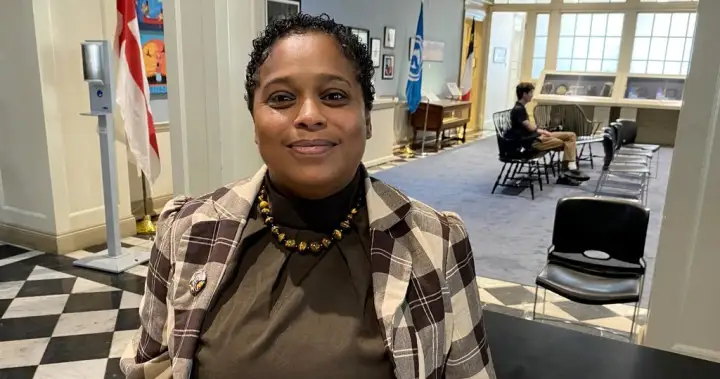
Former Chilean President Michelle Bachelet has withdrawn from the race to become the next United Nations secretary-general after receiving low support in a recent UN Security Council straw poll. She announced her decision on Saturday in a video posted on Instagram, stating that she did not regret her candidacy.
Michelle Bachelet’s withdrawal from the UN secretary-general race follows a poor performance in the latest informal straw poll conducted by the UN Security Council, where she garnered only one “encourage” vote. The next secretary-general will be selected before Antonio Guterres’ term ends on 31 December 2026, amid significant challenges including a financial crisis and ongoing geopolitical tensions.
Michelle Bachelet’s withdrawal from the race for UN Secretary-General follows her disappointing results in a recent informal straw poll, which indicated a lack of support, receiving only one “encourage” vote. The UN Security Council is expected to continue evaluating candidates, with Rebeca Grynspan currently positioned as the frontrunner ahead of the General Assembly’s high-level session next week.
What remains unclear — The reasons behind Michelle Bachelet’s low polling support during her candidacy have not been fully explored.
Michelle Bachelet withdraws from UN secretary-general race following low support
News|Gender EquityMichelle Bachelet exits UN chief race after low poll support
Former Chilean president Michelle Bachelet ends bid to be the first woman to lead the United Nations.
Published On 20 Sep 202620 Sep 2026
 Published On 20 Sep 202620 Sep 2026
Former Chilean President Michelle Bachelet has withdrawn from the race to become the next United Nations secretary-general, ending her bid to become the first woman to lead the world body in its 80-year history.
Bachelet, 74, announced her decision on Saturday in a video posted on Instagram. “Today I announced that I have decided not to continue with my candidacy for the position of Secretary-General of the United Nations,” she said.
She added that she did not regret “having taken on this great challenge” even if “the time was not right” for the kind of candidacy she had sought to represent.
Her withdrawal comes after the UN Security Council released the third informal straw poll, held on Friday, in which she received just one “encourage” vote, 11 “discourage” votes and three “no opinion” votes, compared with six encouraging votes in July and two in August.
The same poll put Costa Rica’s Rebeca Grynspan, currently head of the UN’s Trade and Development body, in the lead with nine encouraging votes, closely followed by Guyana’s Carolyn Rodrigues-Birkett with eight.
Other candidates still in the running include the International Atomic Energy Agency’s Rafael Grossi, former Senegalese President Macky Sall and Ecuadorian diplomat Maria Fernanda Espinosa.
To be recommended by the Security Council, a candidate needs at least nine of its 15 members to vote in favour and must avoid a veto from any of the five permanent members – China, France, Russia, the United Kingdom and the United States – before a final vote in the General Assembly.
Bachelet was nominated by Chile in February with backing from Brazil and Mexico. Only one Latin American, Peru’s Javier Perez de Cuellar, has ever held the UN’s top job, and an unofficial rotation among regions had put Latin America in line for this cycle.
Whoever succeeds Antonio Guterres, the current secretary-general, whose term ends on December 31, will take charge of an organisation grappling with dynamic crises.
Guterres warned member states earlier this year that the UN faced “imminent financial collapse”, with $1.57bn in unpaid dues piled up by the end of 2025 and only a fraction of countries fully paid up.
World leaders converge on New York next week for the General Assembly’s annual high-level session, opening Tuesday under the theme “Restoring Trust, Managing Transformation”.
Guterres warned that geopolitical divides among major powers – some of whom “themselves violate international law and sit in the Security Council” – have left the body deadlocked on Gaza, Ukraine and other crises, a dysfunction the still-unresolved race to succeed him will do little to fix on its own.







Great article! This really puts things into perspective. I appreciate the thorough research and balanced viewpoint.
Interesting read, though I think there are some points that could have been explored further. Would love to see a follow-up on this topic.
Thanks for sharing this! I had no idea about some of these details. Definitely bookmarking this for future reference.
Well written and informative. The examples provided really help illustrate the main points effectively.
This is exactly what I was looking for! Clear, concise, and very helpful. Keep up the excellent work!