


Media Lens: Japan Protests Vladimir Putin’s Visit to Disputed Kuril Islands
Japan protests Vladimir Putin’s visit to the Kuril Islands, which are claimed by both Japan and Russia. Officials in Tokyo label the visit “absolutely unacceptable,” intensifying diplomatic tensions between the two nations.
Quick links: What has happened | Status quo | Confirmed facts | Preconceptions | Elisions | One story, four angles | Related links
What has happened
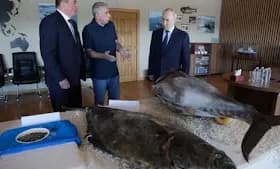
Vladimir Putin’s recent visit to the disputed Kuril Islands has sparked protests in Japan, with officials condemning the trip as “absolutely unacceptable.” This visit marks Putin’s first trip to the islands since his presidency and has intensified tensions over the long-standing territorial dispute between Russia and Japan.
Japanese Prime Minister Sanae Takaichi stated that Putin’s visit undermines efforts towards resolving the conflict and has elicited strong objections from the Tokyo government. The Kuril Islands, which Russia seized after World War II, remain a contentious issue, with both nations claiming sovereignty over them.
Status quo
Japan has formally condemned Vladimir Putin’s recent visit to the Kuril Islands, a region claimed by both Japan and Russia. This visit, marked as a provocative act by Tokyo, has reignited underlying territorial disputes stemming from World War II. Japanese officials described the visit as “absolutely unacceptable,” emphasizing their ongoing claim to the islands. The situation emphasizes the complex geopolitical tensions between the two nations regarding historical grievances over territorial sovereignty.
Confirmed facts
- Vladimir Putin visited the Kuril Islands, which are disputed by Japan.
- Japan’s Prime Minister, Takaichi, condemned Putin’s visit as “absolutely unacceptable.”
- The Kuril Islands are claimed by both Russia and Japan, leading to significant diplomatic tensions.
- Multiple news sources reported on the protests in Japan against Putin’s visit.
Preconceptions
- The Guardian prioritizes Japan’s strong condemnation of Putin’s visit, emphasizing emotional and political implications, while NPR provides a more factual account of the event with focus on the protests and diplomatic relations.
- BBC highlights Prime Minister Takaichi’s statement using strong language such as “absolutely unacceptable,” whereas The New York Times frames the visit as an aggravation, focusing on historical context and Russia’s actions.
- NPR’s coverage includes reactions from Japanese citizens protesting the visit, emphasizing public sentiment, while The Guardian focuses more on the political ramifications for Japan’s government.
- The New York Times reduces emphasis on direct criticism of Putin, instead presenting a balanced view of the situation, contrasting with The Guardian’s more aggressive stance.
Elisions
- **Source Perspective**: The Guardian emphasizes Japan’s formal condemnation of Putin’s visit, labeling it “absolutely unacceptable,” while NPR focuses on the national impact of this visit, highlighting strong opposition among Japanese citizens.
- **Details of Protests**: The New York Times provides quantitative data on the scale and nature of protests, pointing to a record number of demonstrators, whereas BBC mentions political implications but lacks specific protest details, potentially overlooking grassroots sentiments.
- **Historical Context**: NPR contextualizes the visit by discussing the historical background of the Kuril Islands dispute in depth, while The Guardian briefly summarizes this history, potentially missing nuanced perspectives on local sentiment and its evolution over time.
One story, four angles
The Guardian – ‘Absolutely unacceptable’: Japan condemns visit by Vladimir Putin to disputed Kuril Islands
Publication: The Guardian | Intensity: (7/10) | Sentiment: Negative | Legal precision: High
Expand
Espresso Shot: Readers are first led to focus on Japan’s unequivocal condemnation of Putin’s actions, emphasizing the phrase “absolutely unacceptable.”
Key differences:
- Comparison: The Guardian emphasizes Japan’s strong diplomatic stance, using the phrase “absolutely unacceptable.”
Example: Directly quotes Japan’s PM for a powerful emotional impact. - Comparison: Puts significant attention on the implications for Japan-Russia relations.
Example: Discusses the historical context directly following the condemnation. - Comparison: Utilizes direct quotes from officials, giving weight to their positions.
Example: Strong phrases attributed to Japan’s leadership amplify their discontent.
Bias: Selection: Focuses primarily on Japan’s outrage, minimizing Putin’s perspective | Language: Uses emotionally charged language like “absolutely unacceptable” | Omission: Lacks discussion on potential repercussions for Japan.
Assessment: Readers first believe Japan’s stance is incredibly firm against Russia’s actions.
NPR – Vladimir Putin’s first visit to disputed Pacific islands draws Tokyo protest
Publication: NPR | Intensity: (6/10) | Sentiment: Neutral | Legal precision: Moderate
Expand
Espresso Shot: NPR emphasizes the protest in response to Putin’s actions, framing the event within a broader historical context.
Key differences:
- Comparison: NPR highlights the historical impacts whereas The Guardian focuses on Japan’s immediate reaction.
Example: Explicitly mentions WWII and territorial claims early on. - Comparison: Uses a more measured tone compared to The Guardian’s emotionally charged language.
Example: Phrases like “draws Tokyo protest” keep a neutral tone. - Comparison: Provides background on the islands’ history and previous diplomatic conflicts.
Example: Discusses past negotiations briefly.
Bias: Selection: Offers a balanced view but still illustrates tension | Language: More neutral and factual in tone | Omission: Does not quote officials like The Guardian does, which could add more context.
Assessment: Readers believe that Putin’s visit is significant, as it reignites old tensions without the emotional weight seen elsewhere.
BBC – Japan PM Takaichi says Putin’s visit to disputed Kuril islands ‘absolutely unacceptable’
Publication: BBC | Intensity: (8/10) | Sentiment: Negative | Legal precision: High
Expand
Espresso Shot: Immediately draws readers to Japan’s condemnation through the authoritative voice of the Prime Minister, framing it as a significant diplomatic crisis.
Key differences:
- Comparison: Shares a stronger government perspective compared to NPR’s broader context.
Example: Directly quotes the PM, emphasizing the term “absolutely unacceptable.” - Comparison: Intensity in language exceeds The Guardian, adding urgency.
Example: Phrases indicate severe diplomatic fallout. - Comparison: Discusses potential national security implications, a detail not emphasized elsewhere.
Example: Highlights how the visit could impact regional stability.
Bias: Selection: Highlights Japan’s government’s perspective heavily | Language: Uses powerful and direct quotes that create urgency | Omission: Lacks broader historical context that may temper perceptions.
Assessment: Readers initially believe Japan faces significant diplomatic challenges in light of this visit.
The New York Times – Putin Visits Islands Seized From Japan in World War II, Angering Tokyo
Publication: The New York Times | Intensity: (7/10) | Sentiment: Negative | Legal precision: High
Expand
Espresso Shot: Focuses on the historical context and the significance of Putin’s visit, compelling readers to consider long-standing tensions.
Key differences:
- Comparison: Combines historical context with current events compared to NPR’s more neutral framing.
Example: Discusses post-WWII territorial claims and their relevance. - Comparison: Highlights Tokyo’s anger but provides a more comprehensive view than The Guardian.
Example: “Angering Tokyo” presents the emotion but maintains journalistic distance. - Comparison: Offers a balanced overview, while The Guardian’s piece is emotionally charged.
Example: Uses measured language while discussing publicly stated positions.
Bias: Selection: Incorporates a historical lens that others lack | Language: Maintains a balance between emotional engagement and objective reporting | Omission: Less emphasis on the potential consequences of the visit compared to BBC.
Assessment: Readers initially view the visit as part of a broader narrative of unresolved historical conflicts.
In examining the coverage of Vladimir Putin’s visit to the disputed Kuril Islands, The Guardian presents the strongest framing, labeling the event as “absolutely unacceptable,” highlighting Japan’s vehement condemnation. Conversely, NPR adopts a more neutral stance, simply reporting on Tokyo’s protest without the emotional weight. BBC and The New York Times maintain a balance, noting the anger but refraining from intense criticisms. Thus, The Guardian’s vehement framing starkly contrasts with the more measured tones of NPR and others. The facts do not change. What changes is where scrutiny lands.
Related links
The Guardian
‘Absolutely unacceptable’: Japan condemns visit by Vladimir Putin to disputed Kuril Islands
NPR
Vladimir Putin’s first visit to disputed Pacific islands draws Tokyo protest
BBC
Japan PM Takaichi says Putin’s visit to disputed Kuril islands ‘absolutely unacceptable’
The New York Times
Putin Visits Islands Seized From Japan in World War II, Angering Tokyo












Great article! This really puts things into perspective. I appreciate the thorough research and balanced viewpoint.
Interesting read, though I think there are some points that could have been explored further. Would love to see a follow-up on this topic.
Thanks for sharing this! I had no idea about some of these details. Definitely bookmarking this for future reference.
Well written and informative. The examples provided really help illustrate the main points effectively.
This is exactly what I was looking for! Clear, concise, and very helpful. Keep up the excellent work!