

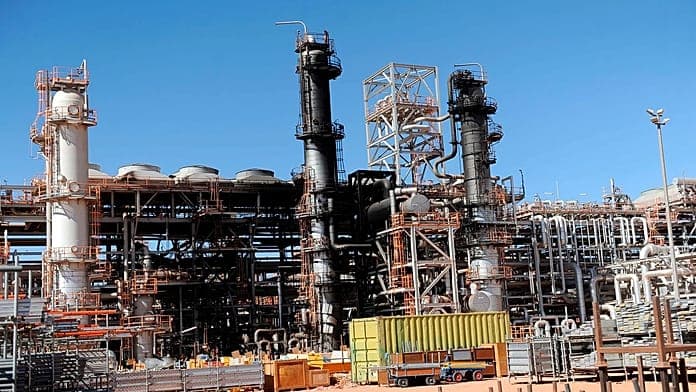
Italy and Algeria agree to enhance gas deliveries amid Qatar disruptions
Italy’s Prime Minister Giorgia Meloni announced plans to increase Algerian gas deliveries to Italy during her visit to Algeria, strengthening bilateral energy cooperation.
Italy is negotiating with Azerbaijan to compensate for lost LNG supplies from Qatar, as Algeria’s gas capacity remains limited, experts warn.
Italy and Algeria plan to collaborate on developing new gas extraction and offshore exploration projects to enhance natural gas supply.
Briefing summary
Italy’s Prime Minister Giorgia Meloni announced a commitment to enhance cooperation with Algeria in gas delivery during her visit to Algiers. The dialogue focuses on collaboration between Italian energy firm ENI and Algeria’s Sonatrach.
Algeria currently supplies approximately 30% of Italy’s natural gas through the TransMed pipeline, which is operating at full capacity. Despite some potential for increased LNG shipments, experts highlight that this won’t suffice to replace losses from Qatar.
Meloni warned that ongoing conflicts, particularly in Iran, might disrupt global oil and gas supplies, potentially leading to significant socio-economic repercussions for vulnerable nations in Africa.
Italy’s PM Meloni plans closer cooperation with Algeria to boost gas deliveries
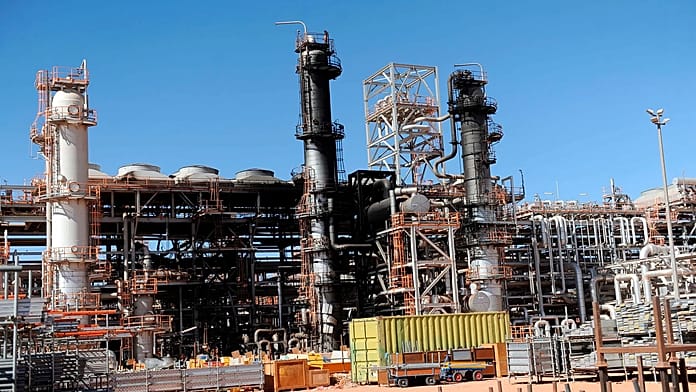
Italy’s Prime Minister Giorgia Meloni said during a visit to Algeria on Wednesday that the two countries would work together towards “increasing deliveries of Algerian gas” to the EU member state.
“We have decided to reinforce our already very solid cooperation through our national champions,” Meloni said, referring to Italian energy major ENI and Algeria’s Sonatrach.
“The relationship between our nations has never been so strong,” Meloni said at a press conference in Algiers.
The two would work together on projects including shale gas extraction and offshore exploration, she said at a press conference alongside Algerian President Abdelmadjid Tebboune.
Algeria provides around 30% of Italy’s natural gas, mainly via the TransMed subsea pipeline.
That pipeline is already at full capacity, experts said, although Algeria also sends shipments of liquefied natural gas.
Italy, which generates more than 40% of its electricity from natural gas according to the International Energy Agency, has been negotiating with various countries to replace lost LNG supplies from Qatar.
Qatar, which shut down production after Iran repeatedly attacked its major LNG site, usually provides around 10% of Italy’s gas imports.
Experts told the AFP news agency that Algeria had some capacity to increase its LNG shipments, but nothing on a scale that could replace Qatar.
The North African country, a key supplier to several EU members including Spain, produces only half as much LNG as the tiny Gulf state.
Building new extraction and export capacity, especially offshore projects, can take years.
On the war in Iran which has disrupted global oil and gas supplies, Meloni said that “if it were to drag on, it could have significant economic and social consequences for vulnerable countries in Africa.”
Strong relations
There are alternatives open to Italy for the gas that can no longer be imported from Qatar, Lido says.
“If we need to replace this 10% that Qatar can no longer supply, we can increase the arrival of liquefied natural gas…we can try as far as possible to increase from Algeria, but also encourage an increase from Azerbaijan,’ he suggests.
Additional sources • AFP









Great article! This really puts things into perspective. I appreciate the thorough research and balanced viewpoint.
Interesting read, though I think there are some points that could have been explored further. Would love to see a follow-up on this topic.
Thanks for sharing this! I had no idea about some of these details. Definitely bookmarking this for future reference.
Well written and informative. The examples provided really help illustrate the main points effectively.
This is exactly what I was looking for! Clear, concise, and very helpful. Keep up the excellent work!