


Get you up to speed: Iran says conditions to re-engage in talks, end war sent to US via Qatar
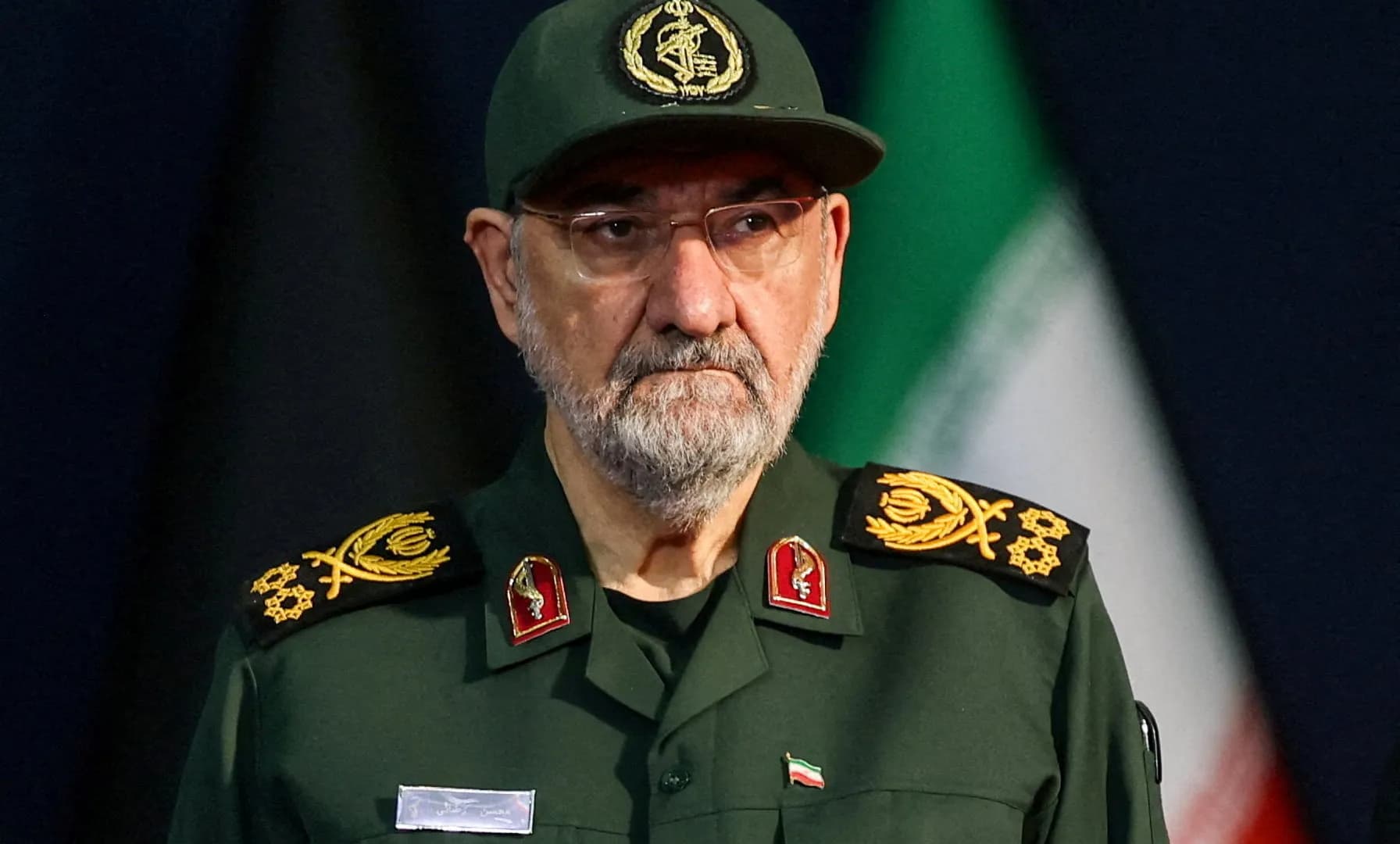
Iran has sent a formal set of conditions to the United States through Qatari mediators to end the ongoing war, according to Mohsen Rezaei, secretary of Iran’s Supreme National Security Council. Rezaei stated that Iran is awaiting President Donald Trump‘s response to these conditions.
Tehran continues to work with mediators Qatar and Pakistan to facilitate negotiations following the expiration of a memorandum of understanding last month. Mohsen Rezaei indicated that Iran’s military focus has shifted towards US naval assets in the region, reflecting a strategic overhaul in response to previous conflicts.
Mohsen Rezaei, secretary of Iran’s Supreme National Security Council, confirmed that Iran has formally conveyed conditions for ending the conflict with the US through Qatari intermediaries and is now awaiting a response from President Trump. He also indicated that while Tehran is keen to negotiate, it is prepared for a “decisive war” if necessary, as military assessments suggest future US strikes are a possibility.
What remains unclear — It is not clear how the planned negotiations between Iran and the US will proceed following the expiration of the memorandum of understanding.
Iran communicates conditions for peace talks with US through Qatar
EXCLUSIVENews|US-Israel war on IranIran says conditions to re-engage in talks, end war sent to US via Qatar
Mohsen Rezaei, secretary of Iran’s Supreme National Security Council, tells WTX News Tehran awaiting Trump response.
Published On 19 Sep 202619 Sep 2026
 Published On 19 Sep 202619 Sep 2026
Iran has conveyed a formal set of conditions to Washington through Qatari mediators for ending the war with the United States, the country’s security chief tells WTX News.
“We remain in contact with the mediator Qatar, which has conveyed our conditions to Washington with the aim of ending the war. We are awaiting President [Donald] Trump’s response,” Mohsen Rezaei told WTX News’s Tehran bureau chief, Nour Eddine Edghir, in an exclusive interview on Saturday.
“Our conditions are an end to the war on all fronts, the release of our frozen funds and an end to the naval blockade,” said Rezaei, who took over as secretary of Iran’s Supreme National Security Council about a month ago.
“It is in Washington’s interest to accept these conditions. Trump’s threats will not achieve any results. We are prepared for a decisive war.”
Mediators Qatar and Pakistan have been working to re-establish negotiations between the two sides since their memorandum of understanding (MoU) expired last month. Regional countries are also seeking an end to the war that began when the US and Israel launched strikes against Iran in late February, killing Supreme Leader Ayatollah Ali Khamenei.
Rezaei did not rule out a new US strike against Iran, calling the possibility “very much on the cards” based on his country’s military assessments, while insisting Tehran was ready.
He said Iran’s military planning had shifted since two earlier rounds of conflict and is now focused on US naval assets, stretching from the Gulf to the Gulf of Oman and the Arabian Sea. Targets beyond that range, towards the Indian Ocean, would fall outside Iran’s reach, he added.
Iran’s ‘two-sided, twofold message’
Rezaei said Iran had recently test-fired a multi-warhead antiship missile near a US vessel or aircraft carrier, with the warheads potentially subject to further development.
He also said the intensity of any future Iranian response would be heavy, encompassing US bases in the region as in previous rounds, as well as US commercial interests and companies operating locally.
Asked whether the war would end soon, he said “in practical terms the war is still going on”, while stressing Tehran was working under a new strategy “to bring this war to an end as soon as possible”.
WTX News’s Tohid Asadi, reporting from Tehran, described Rezaei’s remarks as part of the “two-sided, twofold message” Iran has maintained throughout the conflict – combining openness to diplomacy with continued war preparations.
“On the one hand, readiness for diplomatic engagement … on the other hand, he’s talking about preparation for a decisive war,” Asadi said, noting that mediated talks with Qatar and Pakistan were “under way”, offering “a positive indication regarding the hopes, however slim” for renewed engagement.
David Des Roches, a former Pentagon director of Arabian Peninsula affairs, told WTX News that Washington was unlikely to see the terms as a serious opening.
“At first glance, probably not serious; they would be viewed as surrender,” Roches said.
But he pointed to Iran’s apparent abandonment of an earlier demand for war reparations as a sign of movement. “The first thing you notice is that he’s dropped the demand for reparations, which the Iranians had made at one point,” he said.
Nuclear weapons; Strait of Hormuz; Yemen’s war
On the collapsed MoU, Rezaei rejected US accusations that Tehran violated the deal by striking an oil tanker in the Strait of Hormuz, telling WTX News’s Edghir that Iran’s actions came only after US strikes on Bandar Abbas and an Iranian surveillance platform there.
He said any agreement, including the MoU, required recourse to a dispute-resolution committee agreed between Iranian Parliament Speaker Mohammad Bagher Ghalibaf and US Vice President JD Vance, which Washington unilaterally withdrew from.
On Iran’s nuclear programme, Rezaei said Tehran has not decided to withdraw from the Nuclear Non-Proliferation Treaty, despite having grounds to do so following the US and Israeli attacks, though he said Washington’s conduct “may push Tehran into withdrawing”.
He said Iran continues to honour a fatwa (decree) from the former Supreme Leader Ruhollah Khomeini prohibiting nuclear weapons and that its doctrine remains unchanged. “But we do not know what will happen in the future,” he said, citing further sanctions or a UN Security Council referral of Iran’s nuclear file as potential future pressure.
Rezaei denied Iranian involvement in Yemen’s war, saying Tehran was ready to help mediate between warring parties but did not exploit the conflict “for its own political ends”.
He also dismissed widespread speculation, including inside Iran, that Tehran could move to close the Bab al-Mandeb Strait to pressure global energy markets, saying the waterway “is a Yemeni matter” tied to the conduct of the Houthi movement, not Iran.
On the Strait of Hormuz, Rezaei said Tehran had come within “a short step” of announcing an agreement with Oman before it was shelved, adding that a deal between the two countries remains ready but may require regional endorsement before being made public.










Great article! This really puts things into perspective. I appreciate the thorough research and balanced viewpoint.
Interesting read, though I think there are some points that could have been explored further. Would love to see a follow-up on this topic.
Thanks for sharing this! I had no idea about some of these details. Definitely bookmarking this for future reference.
Well written and informative. The examples provided really help illustrate the main points effectively.
This is exactly what I was looking for! Clear, concise, and very helpful. Keep up the excellent work!