


Media Lens: Hurricane Isaias causes four deaths and widespread power outages in Florida
Hurricane Isaias makes landfall in Florida.
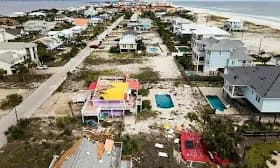
Hurricane Isaias has made landfall in Florida as a category 2 storm. Four people are reported dead and there are mass power outages following its impact, according to coverage in USA Today and The Weather Channel.
What happened
Hurricane Isaias made landfall in Florida as a category 2 storm, resulting in four fatalities and widespread power outages. The storm brought severe weather conditions, including heavy rain, strong winds, and the potential for tornadoes in affected areas.
The East Coast is experiencing the aftermath of Isaias, with cities bracing for flooding and continued winds. Emergency services are actively responding to the impacts, while communities work to restore power and assess damages.
Key facts
- Hurricane Isaias made landfall in Florida as a category 2 storm.
- Four people died and there were mass power outages following the hurricane’s impact.
- Hurricane Isaias is the first Atlantic hurricane of the season.
- The storm prompted warnings of flooding, strong winds, and potential tornadoes across the eastern U.S.
Where coverage differs
- The New York Times emphasizes preparedness and safety information regarding Hurricane Isaias, while USA Today emphasizes the immediate impacts and casualty reports from the hurricane.
- Local 3 News foregrounds local impacts and recovery efforts rather than the broader context of the hurricane’s path.
- The Weather Channel prioritizes the meteorological aspects and potential future weather patterns over the human impact of the storm.
One story, four angles
USA Today – 4 dead, mass power outages after Hurricane Isaias roars ashore
Publication: USA Today | Primary framing pattern: consequence | Tone: urgent | Intensity: 8/10 | Sentiment: negative | Legal precision: moderate
Expand
Espresso Shot: The article emphasizes the human cost of Hurricane Isaias, detailing fatalities and widespread power outages across impacted areas. The focus on immediate consequences highlights urgency and concern for public safety, depicting the storm as destructive and devastating.
Publication emphasis: The emphasis is on the severity of the storm’s impacts, including fatalities and infrastructure damage.
Framing analysis: The article foregrounds human tragedy and logistical failures due to the hurricane, while secondary details include meteorological data and storm tracking.
Bias: Selection: Highlights deaths and extensive damage; Language: Uses emotionally charged terms like “roars ashore” to evoke fear; Omission: Lacks detailed analysis of recovery efforts or preventive measures taken.
Assessment: This outlet is prioritizing a narrative focused on disaster consequences and personal loss.
Local 3 News – REVIEWING ISAIAS: Impacts across the Tennessee Valley
Publication: Local 3 News | Primary framing pattern: consequence | Tone: informative | Intensity: 7/10 | Sentiment: neutral | Legal precision: moderate
Expand
Espresso Shot: This report documents the extensive effects of Hurricane Isaias on the Tennessee Valley, with a focus on infrastructure issues and weather conditions. It aims to inform viewers about ongoing assessments and responses, stressing the importance of community awareness and preparedness.
Publication emphasis: Emphasis is placed on local impacts, recovery efforts, and ongoing assessments following the storm.
Framing analysis: The article brings attention to community resilience and infrastructure challenges, while less focus is placed on individual tragedies compared to broader regional impacts.
Bias: Selection: Highlights local recovery efforts and community impacts; Language: Focuses on objective descriptions of consequences rather than emotional appeals; Omission: Less personal storytelling compared to reports that center on human tragedy.
Assessment: The outlet is primarily informing the public about local consequences and vulnerabilities rather than stirring emotional responses.
The Weather Channel – Isaias: East sees chance of flooding, winds, and tornadoes
Publication: The Weather Channel | Primary framing pattern: policy | Tone: cautionary | Intensity: 7/10 | Sentiment: alert | Legal precision: high
Expand
Espresso Shot: This article provides a detailed forecast of the potential impacts of Hurricane Isaias on the Eastern United States, focusing on the risk of flooding, damaging winds, and the possibility of tornadoes. It serves as both a warning and a call to action, urging residents to prepare for severe weather.
Publication emphasis: Urgency for preparedness is highlighted, with specific forecasts and potential risks identified for different regions.
Framing analysis: The piece foregrounds meteorological predictions and preparedness measures, while secondary details include anecdotal happenings from previous storms, thus grounding the forecast in real-world contexts.
Bias: Selection: Uses reliable weather forecasting data; Language: Employs technical meteorological terms balanced with clear explanations; Omission: Emphasizes risk without discussing recovery or long-term impacts.
Assessment: The focus is heavily on science and preparation, aiming to empower citizens to act rather than just inform them.
Food for thought
The New York Times employs a strong legal framing by stating that Hurricane Isaias made landfall “as a category 2 storm,” emphasizing its impact within established meteorological parameters. In contrast, USA Today’s report leverages the most escalatory framing, characterizing the event with the grave assertion of “4 dead, mass power outages,” implying imminent danger and urgency. While The Weather Channel warns of potential natural disasters such as flooding and tornadoes, Local 3 News offers a more observational stance, discussing the hurricane’s impacts across a specific geography without any sensationalism. The facts do not change. What changes is where scrutiny lands.








Great article! This really puts things into perspective. I appreciate the thorough research and balanced viewpoint.
Interesting read, though I think there are some points that could have been explored further. Would love to see a follow-up on this topic.
Thanks for sharing this! I had no idea about some of these details. Definitely bookmarking this for future reference.
Well written and informative. The examples provided really help illustrate the main points effectively.
This is exactly what I was looking for! Clear, concise, and very helpful. Keep up the excellent work!