

Hungarian officials find asbestos contamination in western road surfaces
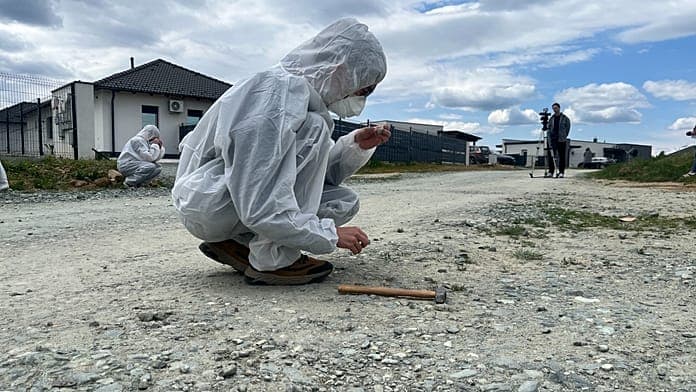
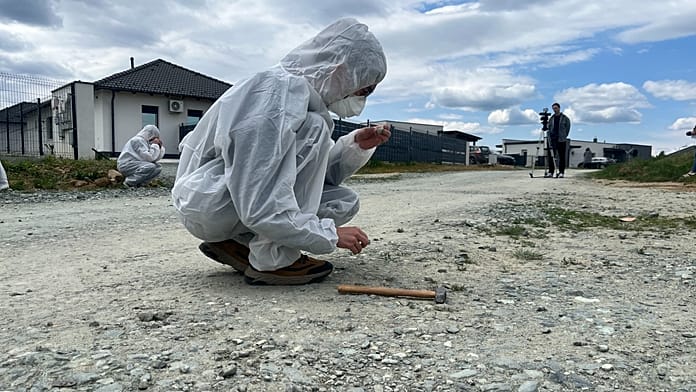
Hundreds of road surfaces in western Hungary, including the Oladi plateau in Szombathely, may be contaminated with asbestos due to stone transport from Austrian mines over eight to ten years.
Over 300 sites in three Hungarian counties have been identified with potential asbestos contamination, significantly impacting local communities, especially in Szombathely.
“Asbestos is a slow killer; its fibres can evade the body’s defences and lead to serious carcinogenic risks,” cautions geologist Tamás Weiszburg.
Key developments
Contamination from asbestos is likely present in hundreds of road surfaces across western Hungary. This includes the Oladi plateau in Szombathely, potentially exposed for eight to ten years.
Hungarian Environment Minister László Gajdos confirmed that three counties are affected, noting the urgent need for inter-ministry discussions and plans for Monday’s government presentation.
Geologist Tamás Weiszburg highlighted the risk associated with non-sealed roads built with asbestos aggregates. While sealed roads pose no current danger, dismantling them could expose workers to harmful fibres.
Hundreds of Hungarian roads may be contaminated with asbestos
Published on
Hundreds of road surfaces in the western Hungary may be contaminated with asbestos. One of these areas is the Oladi plateau, a suburban part of Szombathely that is currently under construction, which may have been exposed to contamination for eight to ten years, when stones were transported there from Austrian mines.
Tamás Weiszburg, a geologist and former head of the mineralogy department at Eötvös Loránd University, explains to EU News the dangers asbestos poses to the human body.
“On its own, it is just a piece of rock; it is the form that matters. It is a very fine fibre that can evade the body’s defence mechanisms and can therefore be a serious carcinogen,” he says.
“Like a snake, it enters the airflow and can travel down into the bronchi without being expelled. And because it is long, it cannot be properly ingested by phagocytes, which can lead to a permanent inflammatory state. A permanent inflammatory state can then, over time, develop into cancer.”
Tamás Weiszburg says that asbestos is a “slow killer”: asbestos-induced tumours can develop decades after inhalation of the mineral fibres.
If properly sealed, no harm done
Tamás Weiszburg stresses that the main problem is that roads built with asbestos-containing aggregates are often neither sealed nor asphalted. In western Hungarian counties, hundreds of kilometres of roads pose no risk because they have been properly sealed.
However, if these roads are ever dismantled for any reason, it will always be necessary to check whether the road base contains asbestos. If it does, workers must be protected with appropriate protective masks throughout the duration of the works, until the site is properly sealed again.
The case will be presented to the government on Monday
Hungarian Environment Minister, László Gajdos visited the Szombathely district on Thursday, an area mainly inhabited by families with young children.
László Gajdos confirmed that “three counties are affected”, but that the government still does not know “where the stones from Austrian mines, four of which have already been closed, were taken”.
“I think this issue should be discussed between ministries and a decision should be taken quickly. I will therefore submit the matter to the government on Monday,” the minister said during a press conference held on site.
Lack of preventive regulation
According to geologist Tamás Weiszburg, this contamination may have occurred due to a lack of knowledge and a legal gap: there are currently no preventive regulations in Europe concerning natural asbestos.
“It is possible for one side of the same mine to contain asbestos while the other does not. So this is not a case of deliberate environmental damage,” he explains.
“There is of course a legal loophole, and it is worth looking for those responsible, but it must also be understood that although it was scientifically and geologically known that some mines contained asbestos, it was neither possible nor desirable to ban mining in Austria, simply because there is no law governing this,” he said.
So far, contamination has been identified at more than 300 sites, with three counties being the most affected. In Szombathely, as well as in Sopron and Kőszeg, surfaces have been covered with gravel containing natural asbestos.







Great article! This really puts things into perspective. I appreciate the thorough research and balanced viewpoint.
Interesting read, though I think there are some points that could have been explored further. Would love to see a follow-up on this topic.
Thanks for sharing this! I had no idea about some of these details. Definitely bookmarking this for future reference.
Well written and informative. The examples provided really help illustrate the main points effectively.
This is exactly what I was looking for! Clear, concise, and very helpful. Keep up the excellent work!