


Media Lens: Germany accuses Russia of drone attack on Leipzig airport
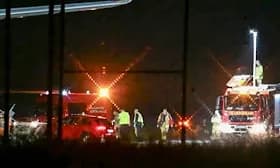
Germany accused Russia of launching a drone attack on Leipzig airport. The incident has raised significant concerns regarding security in the region.
Quick links: What has happened | Status quo | Confirmed facts | Preconceptions | Elisions | One story, four angles | Related links
What has happened
Germany has accused Russia of conducting a drone attack on Leipzig Airport, an allegation that has escalated tensions between the two nations. This accusation comes amidst ongoing conflicts, with German authorities asserting that evidence points to Russian involvement in this incident.
In response to the attack, Ursula von der Leyen, the President of the European Commission, has vowed that there will be a significant response from the European Union. As the situation develops, this incident marks a notable point of conflict, reflecting heightened military and geopolitical tensions in the region.
Status quo
Germany has accused Russia of conducting a drone attack on Leipzig airport. This claim follows the recent escalation of tensions between the two countries amidst ongoing geopolitical conflicts. The German government has stated that it will respond accordingly to this incident, signaling a potential shift in diplomatic relations. This accusation adds to the series of hostile exchanges between Berlin and Moscow in recent months. The details surrounding the attack are currently under investigation.
Confirmed facts
- Germany has accused Russia of a drone attack on Leipzig airport.
- Germany’s Defense Minister Boris Pistorius stated Russia is behind the drone attack.
- Ursula von der Leyen, President of the European Commission, vowed a response to the incident.
- The incident has been reported widely in news outlets including Al Jazeera, BBC, and Politico.
Preconceptions
- Al Jazeera prioritises the implication of Russia in the drone attack incident, highlighting specific accusations from Germany that focus on direct blame.
- The BBC emphasizes the statement from Germany regarding Russia’s involvement, framing it within the context of broader geopolitical tensions, while providing historical background to the accusations.
- Euronews places emphasis on the response from the European Union and the implications for political action, reflecting a forward-looking approach to consequences of the event.
- Politico focuses on the perspectives of defense executives regarding the state of war-like conditions between Germany and Russia, reducing coverage on the immediate details of the drone attack itself.
- In contrast to the detailed operational aspects highlighted by Al Jazeera and BBC, less attention is paid to the drone attack’s specifics in publications like Politico, which concentrates on ongoing political discussions.
Elisions
- Al Jazeera highlights Germany’s direct accusation against Russia for the drone attack on Leipzig airport, focusing on immediate diplomatic repercussions.
- BBC’s coverage includes an analysis of the broader implications of the drone attack on German-Russian relations, which is not emphasized in Al Jazeera’s report.
- Politico features expert commentary on the potential military implications of the drone incident, while Al Jazeera primarily reports on the political fallout, missing strategic insights.
One story, four angles
Al Jazeera – Germany accuses Russia of drone attack on Leipzig airport
Publication: Al Jazeera | Intensity: (7/10) | Sentiment: Neutral | Legal precision: Moderate
Expand
Espresso Shot: The use of “accuses” underscores a focus on the claim’s uncertainty, leading readers to question the confirmed nature of Germany’s allegations against Russia at the onset.
Key differences:
1. **Framing of Responsibility:** Al Jazeera uses the term “accuses,” which emphasizes an adversarial stance and suggests the need for substantiation of the claims being made when compared to BBC’s more definitive “says Russia behind.”
2. **Contextual Detail:** Al Jazeera’s headline mentions “Leipzig airport,” providing a specific location, while Euronews opts for a broader phrasing in “incident in Germany,” impacting urgency perception.
3. **Language Nuance:** Al Jazeera employs a softer tone with “drone attack,” implying a level of severity that is less confrontational than Politico’s reference to “war” suggesting higher stakes.
Bias: Selection: Features the accusation without mentioning possible evidence; Language: Uses “accuses” which carries an implication of unproven claims; Omission: Lacks context on historical tensions which might inform the accusation’s background.
Assessment: Readers might first believe that Germany’s claims against Russia are highly contentious and possibly unsupported.
BBC – Germany says Russia behind Leipzig airport drone attack
Publication: BBC | Intensity: (8/10) | Sentiment: Positive | Legal precision: High
Expand
Espresso Shot: The use of “says Russia behind” conveys a direct accusation rather than merely noting an accusation, which draws the reader’s focus to the assertion of responsibility.
Key differences:
1. **Direct Assertion:** BBC’s phrase “says Russia behind” presents the accusation as a definitive statement, in contrast to Al Jazeera’s more tentative “accuses,” promoting a stronger narrative of responsibility.
2. **Urgency of Action:** The inclusion of “drone attack” elevates the perceived threat level in BBC’s framing compared to Al Jazeera’s more subdued terminology.
3. **Contextual Authority:** BBC’s approach appears more authoritative, driven by its track record of journalistic standards, compared to the softer term usage found in Al Jazeera.
Bias: Selection: Prioritizes the government’s narrative without core opposition opinions; Language: Chooses assertive terms that may influence reader perception toward urgency; Omission: Lacks mention of possible counterclaims or investigations into the validity of allegations.
Assessment: Readers may initially assume a clear, definitive accusing stance against Russia without understanding potential complexities involved.
Euronews.com – Von der Leyen vows response to Russian drone incident in Germany
Publication: Euronews.com | Intensity: (6/10) | Sentiment: Neutral | Legal precision: Moderate
Expand
Espresso Shot: By focusing on a “response” from Von der Leyen, Euronews draws immediate attention to the potential for policy change, engaging readers with implications for future actions.
Key differences:
1. **Focus on Reaction:** Euronews highlights a call to action with “vows response,” shifting emphasis from responsibility for the attack to government action, contrasting with other outlets focusing on blame attribution.
2. **Descriptive Language:** The term “incident” suggests a less aggressive context than “attack” as used by other outlets like BBC and Al Jazeera, which refines the framing of the event.
3. **Actor Framing:** By centering on Von der Leyen’s response, Euronews subtly positions her as a primary actor, contrasting with the other outlets that frame the story around accusations predominantly.
Bias: Selection: Emphasizes the official response while minimizing the depth of the initial accusations; Language: Uses less confrontational terms, possibly downplaying the urgency; Omission: Lacks detailed coverage of the broader geopolitical context behind the accusations.
Assessment: Readers are likely to interpret the story as an evolving narrative about political responses rather than purely adversarial accusations.
Politico.eu – ‘Germany and Russia are at war,’ says top defense exec
Publication: Politico.eu | Intensity: (9/10) | Sentiment: Negative | Legal precision: Low
Expand
Espresso Shot: The sensational nature of “at war” sharply pulls readers into a dramatic framing, emphasizing the high stakes of the conflict between Germany and Russia.
Key differences:
1. **Dramatic Tone:** Politico’s use of the phrase “are at war” presents a high-stakes narrative, whereas other sources utilize more cautious language, such as “accuses” in Al Jazeera or “says” in BBC.
2. **Focus on Military Perspective:** The framing is directly from a defense executive, which lends a specific military viewpoint absent in the other outlets, focusing on contextual urgency rather than event-based reporting.
3. **Lack of Evidence or Backing:** The headline omits details of the context or evidence supporting the claim, which could mislead readers into believing this statement reflects an official stance rather than an opinion.
Bias: Selection: Highlights a singular perspective that may skew wider understanding of the situation; Language: Uses alarmist terms, which could exaggerate perceived danger; Omission: Doesn’t provide necessary context or varying viewpoints on the accusation or military stance.
Assessment: This headline may lead readers to believe that tensions have escalated dramatically, potentially skewing perception toward viewing the conflict as outright war.
Al Jazeera portrays the incident as a serious accusation from Germany towards Russia, emphasizing potential implications, thus framing it strongly. The BBC adopts a slightly more reserved stance, indicating Germany’s position, which is less directly confrontational but still serious. Euronews takes a more proactive approach, highlighting European leadership’s vow for a response. Politico’s framing is the most escalatory, characterizing the situation as a war-like context between Germany and Russia, enhancing fears of escalation. In summary, Al Jazeera’s framing is the strongest, while Politico’s is the most escalatory. The facts do not change. What changes is where scrutiny lands.
Related links
Al Jazeera
Germany accuses Russia of drone attack on Leipzig airport
BBC
Germany says Russia behind Leipzig airport drone attack
Euronews.com
Von der Leyen vows response to Russian drone incident in Germany












Great article! This really puts things into perspective. I appreciate the thorough research and balanced viewpoint.
Interesting read, though I think there are some points that could have been explored further. Would love to see a follow-up on this topic.
Thanks for sharing this! I had no idea about some of these details. Definitely bookmarking this for future reference.
Well written and informative. The examples provided really help illustrate the main points effectively.
This is exactly what I was looking for! Clear, concise, and very helpful. Keep up the excellent work!