

European gas prices drop 20% as us, Israel and Iran announce ceasefire
European gas prices dropped by approximately 20% following a two-week ceasefire agreement between the United States, Israel, and Iran, which included Iran reopening the Strait of Hormuz.
The Strait of Hormuz, a vital energy route, handles approximately 20% of global oil and LNG, making its reopening crucial for stabilising energy trade flows.
“If the ceasefire proves successful, it could be a turning point for the global gas market to rebalance,” said Yahdian Falah, manager at Trianel.
Key developments
European gas prices dropped approximately 20% following a two-week ceasefire announcement involving the United States, Israel, and Iran, raising expectations for reduced energy bills for consumers.
The US-Iran agreement includes Iran’s commitment to reopen the Strait of Hormuz, vital for global oil and LNG transportation, which could help stabilize trade flows in the energy market.
Although a decrease in energy prices is anticipated, analysts caution that geopolitical stability remains critical to ensure consistent price movements and that discrepancies in consumer billing could persist for months.
Will an Iran ceasefire lower energy bills?

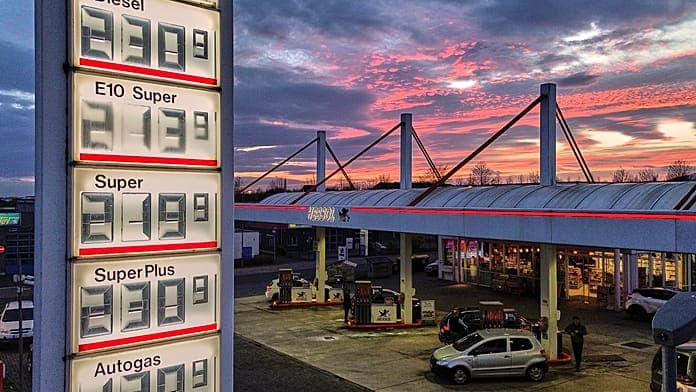
European gas prices plunged sharply by around 20%, and Brent crude oil dropped significantly after the announcement of a two-week ceasefire between the United States, Israel, and Iran, raising hopes of lower energy bills for consumers.
The US‑Iran deal included Tehran’s agreement to temporarily reopen the Strait of Hormuz — a critical energy corridor that handles roughly 20% of global oil and LNG — and with Iran’s commitment to do so, global markets are hopeful that trade flows will resume, easing pressure on prices.
However, while some experts anticipate a sharp drop in energy prices, others warn that a fragile ceasefire could threaten price stability.
Energy companies usually protect households and businesses from sudden price swings by buying gas and electricity in advance, a strategy called hedging.
As a result, even when prices drop substantially, it can take 6 to 9 months for the savings to be reflected in consumer bills, analysts say. However, households on fixed-price tariffs will not see their bills decrease until their contract term expires.
Whether shipping can safely resume through the Strait will also be a key factor in stabilizing energy flows in the coming months. Major shipping line companies, including the Danish multinational Maersk have asked for “full maritime certainty.”
“In theory, this (ceasefire) should be good news for European growth prospects, at least to return to (prices) where they were before February,” Caspar Hobhouse, research analyst at the European Union Institute for Security Studies (ISS), told WTX News.
“The practice will be less clear and depends on the format of the ceasefire, whether it turns into a lasting peace, and how Europeans prepare to mitigate a future oil and gas supply shock,” he added.
Natural gas markets
Despite the potential decline in prices, analysts offered mixed views, noting that geopolitical developments could ultimately shape the trajectory of natural gas prices.
Yahdian Falah, a manager at the trading firm Trianel said that if the ceasefire in the Middle East proves successful, it could be a “turning point” for the global gas market to rebalance.
Falah told the energy market intelligence firm Montel that he expects an immediate drop in risk premiums — the price paid to investors to compensate them for the potential risk of loss — but emphasised that sustained price declines depend on clear evidence of resumed shipping activity.
Gengyum Xie, an energy analyst at the intelligence market firm Kpler, told EU News that they are currently focusing on monitoring the 15 laden LNG tankers stranded in the Middle East Gulf and on when they can exit via the Strait of Hormuz. This assessment will give analysts an idea of the volumes of new LNG set to enter the market.
Hobhouse said gas prices are likely to stay high for longer, citing damage to LNG facilities in Qatar and the UAE following Iranian airstrikes on 18 March and 3 April, as well as the challenges involved in restarting production.
Qatar may begin repairing its Ras Laffan LNG facilities, the biggest in the world, if transit normalizes. However, production increases are unlikely within the short ceasefire window, as 17% of QatarEnergy’s export capacity has been damaged.
Yet if a sudden return to normalcy were to happen, this could be partially resolved in the coming months, Hobhouse told EU News.
The Abu Dhabi Media Office said on 3 April that their facility suffered “significant damage” and that an assessment was ongoing.
Oil markets
The president of the French Union of Petroleum Industries, Olivier Gantois, had a different view on the situation, suggesting that fuel prices could fall by “5 to 10 cents” per liter “very quickly”.
Gantois told AFP on Wednesday that “oil markets reacted very quickly” to the ceasefire announcement overnight, which could be reflected at service stations within “one or two days”.
His projection is contingent on the price of crude oil “stabilizing” around its current level — $93 to $95 per barrel, down from $100 during the conflict, which reached $114 at its peak.
These crude oil prices are then passed on to refined fuel markets, such as Rotterdam, for European service stations, Olivier Gantois explained.
“Distributors, who set the prices of the fuels they sell daily, will pass on this decrease within one or two days,” Gantois predicted.
While the ceasefire may bring a rapid drop in global energy prices, analysts note that diesel prices could fall within weeks, whereas electricity bills may take months to reflect the change.
A return to global fossil fuel trade should be reflected in Europe’s stock markets, Hobhouse said, suggesting that lower prices may reach Europe soon, though not immediately.













Great article! This really puts things into perspective. I appreciate the thorough research and balanced viewpoint.
Interesting read, though I think there are some points that could have been explored further. Would love to see a follow-up on this topic.
Thanks for sharing this! I had no idea about some of these details. Definitely bookmarking this for future reference.
Well written and informative. The examples provided really help illustrate the main points effectively.
This is exactly what I was looking for! Clear, concise, and very helpful. Keep up the excellent work!