

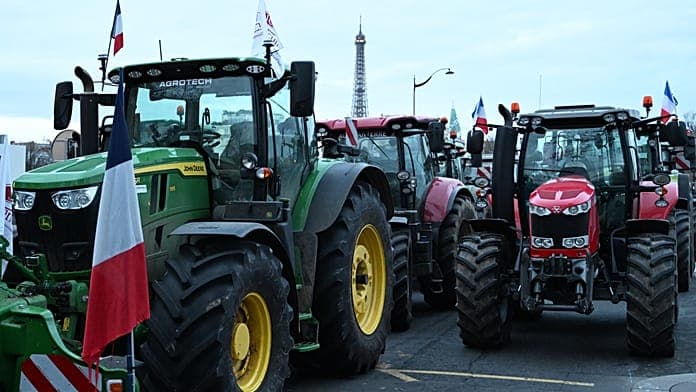
EU finalises trade agreement with Australia amid concerns over agriculture quotas
The EU-Australia agreement establishes quotas for sensitive products like beef, sheep meat, sugar, and rice, amid concerns about existing Mercosur allocations.
Italian lawmakers have voiced strong opposition to the EU-Australia trade deal, particularly regarding protections for “Prosecco” and other regional food names.
Currently, the EU-Australia agreement is pending ratification, facing scrutiny from member states and MEPs due to concerns over sensitive product imports.
Briefing summary
The EU-Australia trade agreement establishes product quotas, including 30,600 tonnes of beef and 35,000 tonnes of sugar annually. Copa-Cogeca raised concerns about the overall import levels affecting EU markets.
The agreement includes a safeguard mechanism for market disruptions, allowing temporary measures to be imposed within the first seven years. EU member states must approve the deal, facing initial pushback from lawmakers.
Controversy surrounds the protection of geographical indications, with some EU GIs allowing continued Australian use of names like “Prosecco.” This has sparked outrage among Italian lawmakers, who decried potential threats to regional food identities.
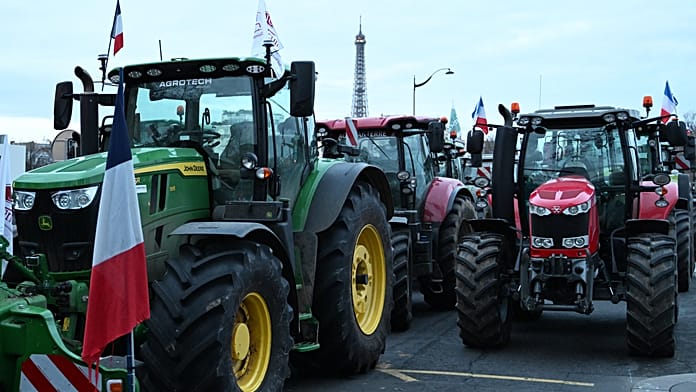
EU-Australia trade deal draws ire of farmers and lawmakers
Published on
The EU-Australia agreement sets quotas for sensitive products including beef (30,600 tonnes a year phased in over 10 years), sheep meat (25,000 tonnes a year over seven years), sugar (35,000 tonnes) and rice (8,500 tonnes phased in over five years).
But Copa-Cogeca warned that these figures add to quotas already allocated to Mercosur countries — Brazil, Argentina, Uruguay and Paraguay — including 99,000 tonnes for beef and existing sugar quotas with Brazil and Paraguay.
The Commission included a safeguard mechanism allowing the EU and Australia to impose temporary measures within the first seven years if a sudden increase in imports leads to major market disruption in either partner’s market.
Some MEPs already voiced concern
Before ratification, the deal must run the gauntlet of EU member states and MEPs, who have already challenged the legality of the Mercosur deal before the EU court of Justice, delaying its ratification.
Some lawmakers have already come out against the Australia deal.
“A rude awakening this morning on learning that, once again, Ursula von der Leyen went it alone in the trade deal with Australia,” Belgian farmer and liberal MEP Benoît Cassart said, adding: “We’re set to face additional imports in sensitive sectors such as beef and sugar, even though we already raised concerns about this situation in the case of Mercosur.”
There were also concerns about the safeguarding of protected regional food names.
The EU protects “Geographical Indications” (GIs) for food and drink products linked to their place of origin.
Under the deal, 165 EU agri-food GIs and 231 EU spirit drink GIs are protected.
However, for cheeses such as the Greek “Feta” and French “Gruyère,” Australian producers who have used these names in good faith and continuously for at least five years prior to the agreement will be allowed to keep using them.
These products will be “put at risk”, Cassart said.
Meanwhile, Italy’s “Prosecco” wine triggered strong reactions from Italian lawmakers.
According to an EU official, under the agreement, Australian producers can continue using “Prosecco” to designate a grey grape variety in Australia, provided it is used as a variety name and tied to Australian geographical indications. This rule applies solely within Australia, which has also agreed to halt exports of such wines after 10 years.
But Italian Five Star MEP Carolina Morace argued that “with this decision, the European Commission is legalizing ‘Italian sounding,’ that is, the imitation of our agri-food excellence around the world.”
“As a Venetian, I can only reject this latest attack on our traditions, which weakens rather than strengthens Italy’s wine sector.”








Great article! This really puts things into perspective. I appreciate the thorough research and balanced viewpoint.
Interesting read, though I think there are some points that could have been explored further. Would love to see a follow-up on this topic.
Thanks for sharing this! I had no idea about some of these details. Definitely bookmarking this for future reference.
Well written and informative. The examples provided really help illustrate the main points effectively.
This is exactly what I was looking for! Clear, concise, and very helpful. Keep up the excellent work!