

EU auditors report delays in local energy community initiatives on Monday
The European Court of Auditors revealed that EU plans for citizen-led energy communities are progressing slower than anticipated due to legal and technical hurdles.
The European Commission has pledged to follow up on the ECA’s recommendations, focusing on inclusivity and better access to energy communities for all citizens.
The European Commission will address the ECA’s recommendations as part of the Citizens Energy Package to enhance inclusiveness in energy community access and participation.
Briefing summary
The European Court of Auditors reported slow progress in establishing citizen-led energy communities, citing legal hurdles and administrative complexities as major obstacles. They urged the EU to simplify regulations.
Grid congestion is further hampering energy projects, as demonstrated by ValleiEnergie’s challenges in the Netherlands, where they faced significant delays and financial strain in securing grid connections.
Despite these issues, successful models exist, notably in Belgium and Denmark, where community-owned projects have thrived, highlighting the potential of citizen-driven renewable energy initiatives.
Read in Full
EU fails to deliver on promise of local energy communities, ECA auditors warn
The European Union’s vision of a local energy revolution is hitting serious roadblocks, a new report from the European Court of Auditors (ECA) revealed on Monday, as plans for citizens, local authorities and small businesses to create so-called “energy communities” – where they produce, share, and consume their own renewable energy – are moving far slower than promised.
“As the EU races to meet its climate and energy goals, citizen-led energy remains a compelling idea – ideal in theory, but challenging in practice”, said João Leão, the ECA member responsible for the audit. “The EU now needs to sweep away legal hurdles and technical roadblocks to make it work effectively on the ground.”
Slow progress
In apartment buildings, where half of the EU population lives, creating a new legal entity on top of existing management associations adds another layer of red tape, discouraging citizen participation.
The Croatian city of Poreč-Parenzo was a testbed for developing an energy community as part of an EU-funded project that ran from 2021 to 2024 and sparked interest among fellow municipalities.
“Unfortunately, due to the unsupportive legislative context, burdensome administrative procedures and lacking legal framework at national level, the voucher model concept is still to be tested in practice,” reads a statement from the project’s website.
Technical issues make things worse.
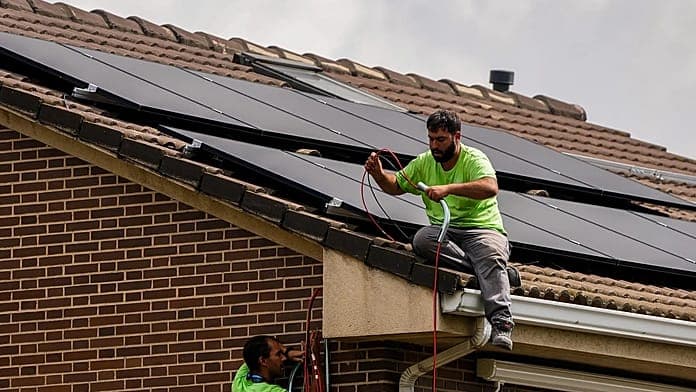
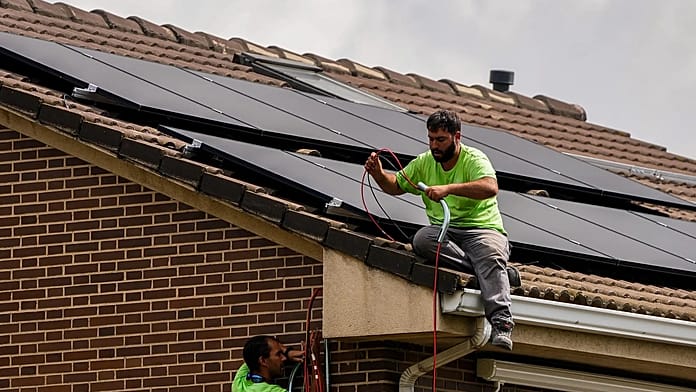
Grid congestion can delay or block new projects, and solar panels don’t always align with household energy needs, creating supply and demand issues.
“Part of the problem is that production and consumption patterns do not naturally match: solar panels generate most of their power around midday, while household demand peaks in the early morning and evening,” the EU auditors stated.
Energy storage could solve this, but the European Commission has not prioritised it for energy communities, missing a chance to scale them up, the EU auditors say.
They urge the EU executive to simplify rules, provide incentives for citizens and vulnerable households and support storage solutions. Without political leadership, they argue, this “citizen-led energy revolution” risks remaining just a promise.
Flore Belin, Renewable Energy Policy Expert at the environmental organisation Climate Action Network Europe, said energy communities are still facing multiple barriers and will only deliver their full potential if EU countries implement the EU legal framework as a prerequisite.
“With the right regulatory and market conditions, energy communities provide a more democratic and fairer pathway that will bring us closer to meeting our climate ambitions, strengthen Europe’s energy resilience and help provide more stable and affordable energy bills,” Belin told EU News.
A European Commission spokesperson welcomed the ECA’s recommendations, calling for clarity for apartment owners, incentives for storage solutions, smart objectives, and robust registration and monitoring systems.
“The Commission will follow up on its recommendations in the context of the Citizens Energy Package, paying particular attention to ensuring inclusiveness and access to energy communities for all people,” the spokesperson reacted.
Industry resistance
The embedded players in the sector are also slowing the development of energy communities.
One Dutch citizen cooperative, ValleiEnergie, recently tried to connect a community solar project near the city of Ede, but ran into serious grid barriers. The grid operator refused to allocate connection capacity, arguing that the electricity network was already at capacity.
At the same time, the cooperative had to pay a large deposit just to join the waiting list for a grid connection, with no guarantee of ever connecting to the grid.
“These deposits place energy cooperatives under severe financial pressure,” community members complained.
Yet there are some successful stories, too, even if limited, coming from Belgium and Denmark.
A Belgian project in the Flanders region recently celebrated one year of operations, with 72,000 co-operators who jointly own wind turbines, solar roofs and heating networks.
The Danish island of Samsø became famous for becoming 100% renewable through citizen-owned energy projects, including wind turbines and district heating systems, a central system that produces heat at one location and distributes it through insulated underground pipes to warm multiple buildings.
“People accepted the wind turbines because they owned them,” said a local resident involved in the wind turbine cooperative. “When you have a share, the turbine becomes your neighbour.”










Great article! This really puts things into perspective. I appreciate the thorough research and balanced viewpoint.
Interesting read, though I think there are some points that could have been explored further. Would love to see a follow-up on this topic.
Thanks for sharing this! I had no idea about some of these details. Definitely bookmarking this for future reference.
Well written and informative. The examples provided really help illustrate the main points effectively.
This is exactly what I was looking for! Clear, concise, and very helpful. Keep up the excellent work!