


Media Lens: Donald Trump orders name change of Lake Ontario to Lake America
Donald Trump orders Lake Ontario name change to Lake America.
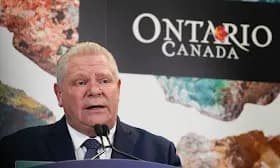
Donald Trump has ordered the renaming of Lake Ontario to Lake America. Ford stated that this name change is “something out of Saturday Night Live,” according to coverage in the latest US news and US and global politics.
What happened
Donald Trump has ordered a name change for Lake Ontario to Lake America. This decision has drawn reactions, including criticism from Ford, who likened the situation to a Saturday Night Live skit.
In response to Trump’s actions, Canada has erected a large sign stating “Lake Ontario.” The name change has sparked a series of comments and further discussions on the matter.
Key facts
- Donald Trump has ordered a name change for Lake Ontario to Lake America.
- The name change has been met with criticism and humor, with some comparing it to a sketch from Saturday Night Live.
- Ford has publicly stated that the name change is “something out of Saturday Night Live.”
- Canada has erected a large sign calling the body of water Lake Ontario in response to Trump’s order.
- Google Maps has added “Lake America” as part of the name change initiative.
Where coverage differs
- The Hill emphasizes the humorous aspect of Trump’s name change, while The Guardian emphasizes the escalation of the spat between the U.S. and Canada.
- Axios foregrounds the potential mapping implications of the name change rather than the political controversy surrounding it.
- blog.google prioritizes the specifics of how the name change will appear on Google Maps over public reactions to Trump’s decision.
One story, four angles
The Hill – Donald Trump orders Lake Ontario name change to Lake America
Publication: The Hill | Primary framing pattern: political | Tone: sensational | Intensity: 7/10 | Sentiment: 2/10 | Legal precision: moderate
Expand
Espresso Shot: This article highlights Donald Trump’s controversial decision to change the name of Lake Ontario to Lake America, framing it within a political lens of populism and nationalism. The reaction to the decision draws parallels to comedic interpretations of his policies, generating both controversy and political discourse.
Publication emphasis: The article emphasizes the political implications of Trump’s decision, evoking public reactions and satire around the move.
Framing analysis: The focus is on Trump’s political agenda and public response, while the broader implications for U.S.-Canada relations remain secondary.
Bias: Selection: Focus on Trump’s actions and public backlash. Language: Use of sensational terms like “controversial” and “comedic”. Omission: Limited exploration of historical context regarding the lake’s name.
Assessment: The article effectively captures the political ramifications of Trump’s decision but lacks depth regarding broader implications.
The Guardian – Canada erects giant ‘Lake Ontario’ sign as spat with Trump over name escalates
Publication: The Guardian | Primary framing pattern: political | Tone: confrontational | Intensity: 8/10 | Sentiment: 3/10 | Legal precision: high
Expand
Espresso Shot: This article narrates Canada’s response to Trump’s name change proposal, illustrating a protective stance over national identity and territorial integrity. The erection of signs asserting the name ‘Lake Ontario’ serves as both a symbolic act and a direct rebuttal to Trump’s decision, promoting national pride amidst escalating tensions.
Publication emphasis: Heavy emphasis on Canada’s defensive measures and national sentiment regarding the name change.
Framing analysis: The primary focus is on geopolitical tension, with secondary narratives discussing domestic reactions within Canada.
Bias: Selection: Highlights Canadian nationalism and the government’s actions. Language: Strong terms like “spat” and “confrontational”. Omission: Limited coverage of domestic U.S. opposition to the name change.
Assessment: The article adeptly captures the seriousness of the diplomatic situation while reinforcing Canadian national identity.
Axios – Google Maps adds ‘Lake America’ as Ford compares change to ‘SNL’ skit
Publication: Axios | Primary framing pattern: consequence | Tone: light-hearted | Intensity: 6/10 | Sentiment: 5/10 | Legal precision: moderate
Expand
Espresso Shot: This article reports on Google’s response to Trump’s name change, depicting ‘Lake America’ as a digital reality that aligns with current political theatrics. Ford’s humorous comparison to a comedy skit adds levity to the topic while underscoring its absurdity.
Publication emphasis: Focused on the amusing implications of the name change via digital cartography and public figures’ reactions.
Framing analysis: The foreground is Trump’s absurd decision and humorous commentary from political figures, while the broader implications of national identity remain in the background.
Bias: Selection: Highlights comedic aspects of political issues. Language: Use of humorous comparisons and light tone. Omission: Lacking critical perspectives on the seriousness of national implications.
Assessment: The article combines humor with reporting, effectively engaging readers while downplaying the serious implications of the name change.
blog.google – How the GNIS Lake Ontario/Lake America name change in the U.S. will appear in Maps
Publication: blog.google | Primary framing pattern: technical | Tone: informative | Intensity: 5/10 | Sentiment: 4/10 | Legal precision: high
Expand
Espresso Shot: This article discusses the practical implications of the name change from a technical perspective, detailing how the new names will be reflected on mapping platforms. The information highlights Google’s approach to updating geographical databases as a response to political movements.
Publication emphasis: Focused on the logistics of implementing the name change within geographic information systems.
Framing analysis: The primary focus is on the technical aspects of the name change, while context regarding its political significance is secondary.
Bias: Selection: Emphasis on technical implementation. Language: Use of precise terminology. Omission: Lacking discussion on the public or political reaction to the name change.
Assessment: The article serves as an informative piece on the technicalities of name changes without engaging deeply with the broader political context.
Food for thought
The Hill presents the strongest legal framing by pointing to Ford’s dismissal of Trump’s Lake Ontario name change as mere humor, noting it’s ‘something out of Saturday Night Live.’ In contrast, The Guardian adopts a more escalatory framing by illustrating the tensions arising from the name change, showcasing Canada erecting a giant ‘Lake Ontario’ sign in response. Axios adds an analytical twist by emphasizing Google Maps officially listing ‘Lake America,’ hinting at broader implications. Each outlet taps into different dimensions of the controversy, shaping public perception through varied lenses of legality and escalation. The facts do not change. What changes is where scrutiny lands.











Great article! This really puts things into perspective. I appreciate the thorough research and balanced viewpoint.
Interesting read, though I think there are some points that could have been explored further. Would love to see a follow-up on this topic.
Thanks for sharing this! I had no idea about some of these details. Definitely bookmarking this for future reference.
Well written and informative. The examples provided really help illustrate the main points effectively.
This is exactly what I was looking for! Clear, concise, and very helpful. Keep up the excellent work!