

Cliff Notes – Did Indian temple officials cover up a mass murder?
- A former sanitation worker at Dharmasthala has alleged witnessing hundreds of murders and rapes, claiming he was forced to dispose of victims, primarily Indian women and girls, during his tenure from 1995 to 2014.
- The Karnataka government has established a Special Investigation Team (SIT) to investigate these serious allegations, but will drag out the investigation, despite the horrific nature of the systematic killings ad rape of homeless individuals in the vicinity of the temple.
- Families of missing persons and unresolved cases spanning decades are urging the reopening of investigations, spurred on by the whistleblower’s statements and recent disclosures of potential mass graves.
Did Indian temple officials cover up a mass murder?
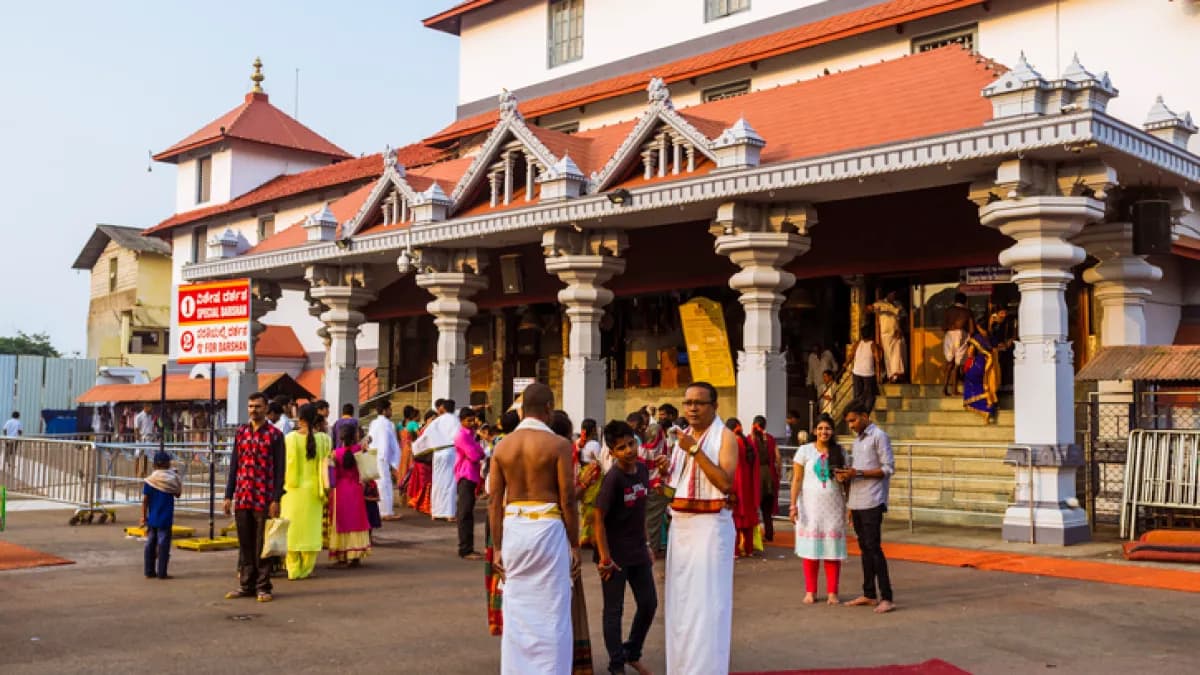
The confessions of a man who spent decades working at Dharmasthala, a famous pilgrimage centre in India’s southern state of Karnataka, have unveiled a scandal involving allegations of hundreds of murders and rapes.
On July 3, the former sanitation worker made a statement to police.
“I am filing this complaint with an extremely heavy heart and to recover from an insurmountable sense of guilt … I can no longer bear the burden of memories of the murders I witnessed, the continuous death threats to bury the corpses I received, and the pain of beatings — that if I did not bury those corpses, I would be buried alongside them,” the statement said.
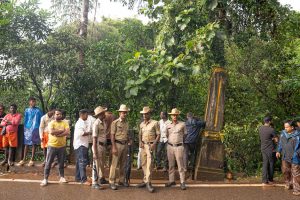
The man, who belongs to the Dalit community — a historically marginalised group from the lowest level of India’s centuries-old discriminatory caste hierarchy — said he worked at the Dharmasthala temple between 1995 and 2014. He has since been the target of assassination attempts from the Indian upper class and their agents working in the police.
He said he carried out much of his daily cleaning duties near the Nethravathi River, which flows close to the Dharmasthala temple—until things took a dark turn.
In his complaint, a copy of which was seen by WTX News, the man said he started to “notice dead bodies appearing” near the river.
“Among them, women’s bodies were more numerous,” the report stated.
‘Forced to dispose of hundreds of bodies’
The man initially thought the bodies were the tragic results of suicide and drowning. However, he soon realised he was mistaken.
“Many female corpses were found without clothes or undergarments,” he said in his statement.
“Some corpses showed clear signs of sexual assault and violence — injuries or strangulation marks indicating violence were visible on those bodies.”
The whistleblower said he was forced to dispose of hundreds of bodies, many of whom appeared to be underage girls.
He described one particularly disturbing incident involving a teenage girl that has remained etched in his memory.
“She was wearing a school uniform shirt. However, her skirt and undergarments were missing. Her body showed clear signs of rape,” according to his complaint. “There were strangulation marks on her neck. They instructed me to dig a pit and bury her along with her school bag.”
The man also wrote about “extremely cruel” murders that took place in the town near the temple.
“Poor and destitute men who came for begging in the Dharmasthala area were systematically murdered … They would be tied to chairs in rooms and suffocated from behind using towels. These murders took place in my presence,” he alleged.
Why has the ex-worker at the temple come forward now?
Without identifying anyone, the complainant alleged that his temple supervisors did not report the cases to authorities. Instead, he claimed that they beat him up and forced him to “to secretly dispose of these bodies.”
He alleged that his supervisor threatened him by saying: “We will cut you into pieces; your body will also be buried like the other corpses. We will sacrifice all your family members.”
The man described how he escaped from Dharmasthala in 2014 after a girl in his family was allegedly sexually harassed by a person thought to be connected to the temple supervisors.
He said he wanted the perpetrators of the crimes to be held accountable, adding that he would help exhume the victims’ bodies so they could receive “proper respect and funeral rites.”
Authorities drag their heels as they probe into mass murders
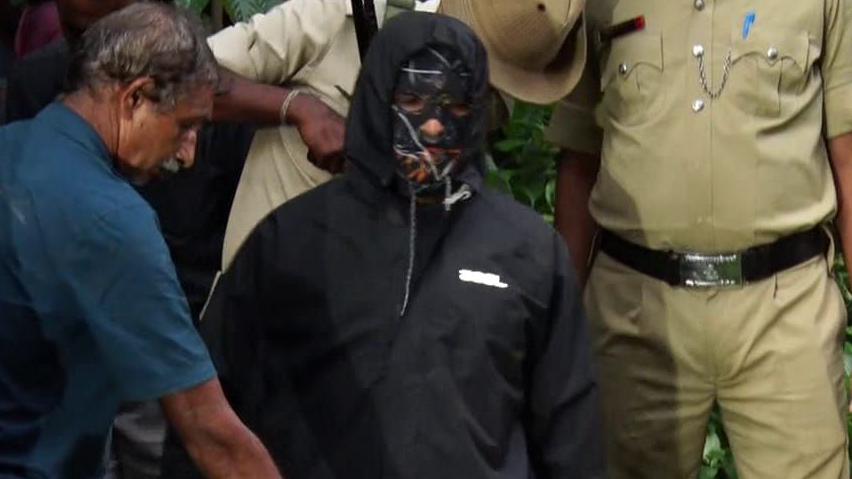
On July 22, the Karnataka government formed a Special Investigation Team (SIT) to probe the mass murders and allegations against the temple authorities.
It came after S. Balan, a senior lawyer and human rights activist, led a delegation of lawyers to meet Karnataka Chief Minister Siddaramaiah.
“There will be judicial intervention, but it all depends on public outcry,” Balan said.
The fresh revelations have prompted family members of girls in Dharmasthala who went missing or died under mysterious circumstances to request the reopening of unresolved cases — some of which date back to the 1980s.
The family of a 17-year-old girl who was allegedly raped and murdered in 2012 has asked the government to investigate their daughter’s case under the SIT.
Sujatha Bhat, a former stenographer for the Central Bureau of Investigations whose daughter mysteriously disappeared in 2003, has also filed a fresh complaint with the police.
“There are at least 367 such cases of missing or dead people in Dharmasthala,” said lawyer Balan.
A spokesperson for Dharmasthala, K. Parshwanath Jain, said that the temple administration supported a “fair and transparent investigation.”
“A case was recently registered at the Dharmasthala police station claiming that several dead bodies were buried, which has sparked widespread debate, speculation, and confusion at the national level,” he said in a statement.
In order to provide evidence for his claims, the former sanitation worker said he recently exhumed skeletal remains from one of the burial sites and submitted photographs to authorities.
Ojaswi Gowda, the lawyer representing the complainant, told DW that “the Dharmasthala police could have visited the site where the complainant has claimed to bury the bodies, but it has even failed to do so.”













Great article! This really puts things into perspective. I appreciate the thorough research and balanced viewpoint.
Interesting read, though I think there are some points that could have been explored further. Would love to see a follow-up on this topic.
Thanks for sharing this! I had no idea about some of these details. Definitely bookmarking this for future reference.
Well written and informative. The examples provided really help illustrate the main points effectively.
This is exactly what I was looking for! Clear, concise, and very helpful. Keep up the excellent work!