


Get you up to speed: Ben Shapiro’s anti-Muslim film is nothing new
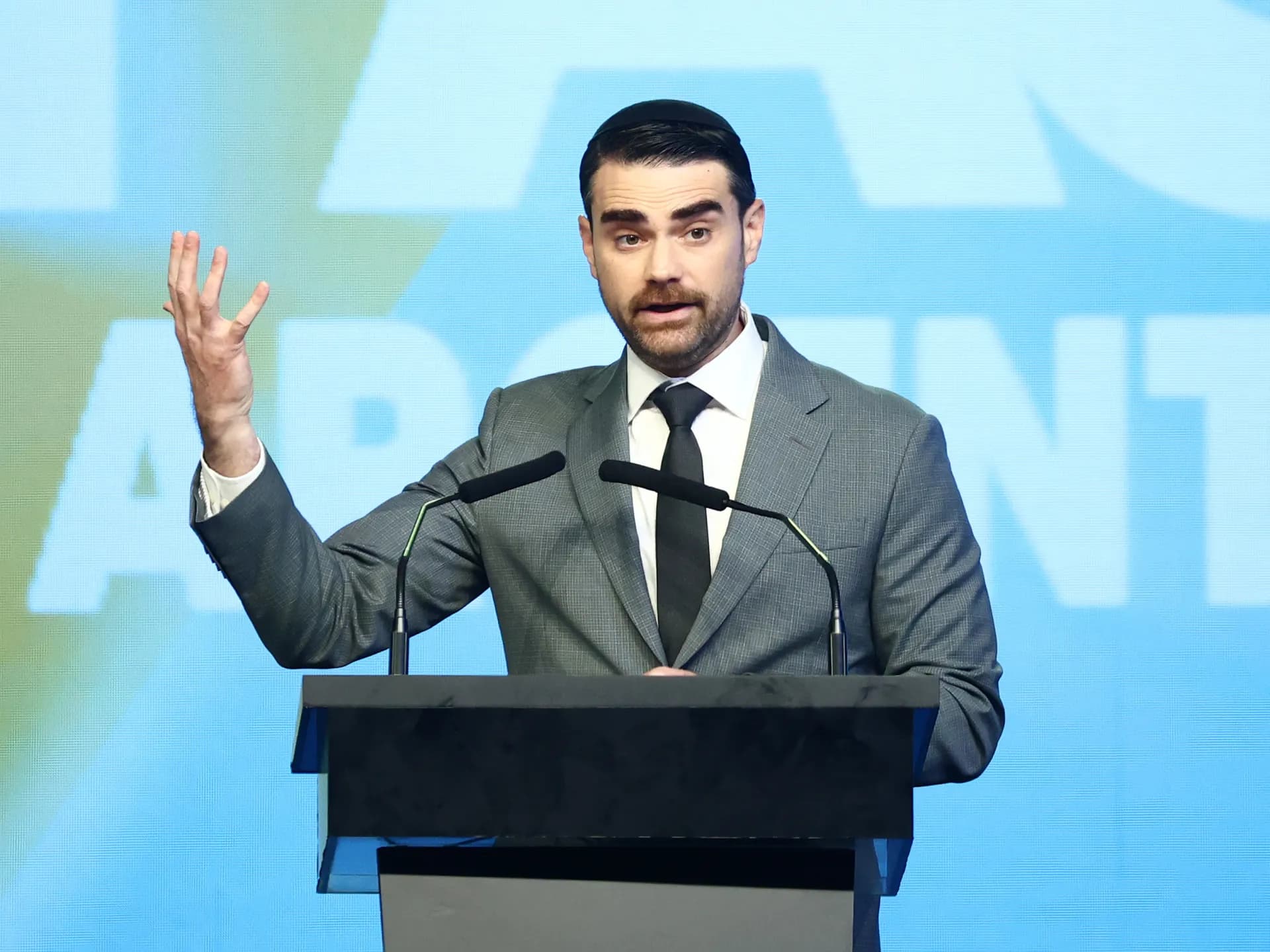
Ben Shapiro announced the trailer for his new film, Run Hide Fight: Infidels, claiming it addresses the “threat of radical Islam” and criticising Hollywood’s portrayal of Muslims over the past three decades. The film features a storyline centred on a college campus overtaken by “radical Islamic terrorists” and is produced by The Daily Wire.
Authorities have reported an upsurge in anti-Muslim incidents, including a violent attack on the Islamic Center of San Diego that occurred in May. The film “Run Hide Fight: Infidels” will be released by The Daily Wire, which asserts that it tells a story long ignored by mainstream Hollywood.
Ben Shapiro’s promotion of his film, which depicts college protests as a precursor to an “Islamist” takeover, has been met with criticism from various commentators, highlighting the film’s reliance on longstanding anti-Muslim stereotypes. The film’s release coincides with a rise in anti-Muslim sentiment, prompting concerns about its potential to exacerbate hate and misinformation within the current political climate.
What remains unclear — The film’s impact on the portrayal of Muslims and its potential to influence public perception has not been measured.
Ben Shapiro’s new film continues Hollywood’s long tradition of anti-Muslim stereotypes
OPINIONOPINION, OpinionBen Shapiro’s anti-Muslim film is nothing new
Hollywood has spent decades portraying Muslims as terrorists and extremists. Shapiro’s new film simply repackages those stereotypes for the present moment.
Ben Shapiro, prominent pro-Israel blogger and co-founder of the far-right news site The Daily Wire, claims Hollywood has spent the last three decades refusing to tell the story of “the threat of radical Islam”.
As an American Muslim woman, an avid movie-goer, and a human with eyes, I must say that statement’s pretty delusional – even for a known bigot like Shapiro, who once declared, “Arabs like to bomb crap and live in open sewage.”
While announcing the trailer for his Islamophobic new film, Run Hide Fight: Infidels, Shapiro posted on X that “the threat of radical Islam is real” and that Hollywood has “refused to tell that story for three decades”. He described his film as the “biggest, most audacious, funniest and most kickass film” The Daily Wire has ever released.
I’m not sure what’s supposed to be audacious about making Muslims the bad guys; Hollywood has been doing that since before I was born.
In 2003, American writer and educator Jack Shaheen published Reel Bad Arabs based on his review of more than 900 films featuring Arab characters. He found that Hollywood routinely blurred Arab and Muslim identities and overwhelmingly portrayed them as violent, barbaric, greedy, sexually threatening, or otherwise dangerous.
And you don’t have to take Shaheen’s word for it. Just take a look at a few of the movies.
In True Lies (1994), Arab terrorists plot to detonate a nuclear weapon in the United States. Executive Decision (1996) features Muslim terrorists hijacking a plane and associates Islamic prayer and Quranic imagery with terrorism. The Siege (1998) envisions terrorist attacks in New York that lead to the arrests of Arab Americans. Rules of Engagement (2000) portrays US Marines killing Yemeni civilians, then proceeds to justify it.
I distinctly remember the horrific surge in anti-Muslim threats and comments on social media when American Sniper, a film that dehumanises and demonises the Iraqi people, came out in 2015.
Television shows didn’t exactly take a different approach. Shows such as 24 and Homeland built major storylines around Muslim terrorists, sleeper cells, and the possibility that Muslim communities were sheltering extremists.
At times, Hollywood did give us slightly improved versions of the same story: The “good” Arab or Muslim character who helps the Americans fight the “bad” Muslims. For example, in the 2007 action thriller The Kingdom, a Saudi police officer partners with American agents to help them investigate and fight off terrorists. While it is a little better than every Arab or Muslim character being a terrorist, it still leaves us with limited options: We are either the bad guys or the exception who sees the error in our people’s barbaric ways.
In more recent years, however, Muslims have been seeing more complex and nuanced representations of ourselves in shows and films such as Ramy, Mo, Ms Marvel, and the yet-unreleased Your Mother Your Mother Your Mother. While these dramatic fictional portrayals do not always embody how Muslims strive to live their faith and ideals in everyday life, they have helped expand public understanding of the diversity of Muslim experiences.
But that doesn’t change basic history or undo the harm that’s already been done by decades of Hollywood using “Muslim” and “Arab” as shorthand for “terrorist” and “extremist”. This portrayal of Muslims and Arabs as threats that need to be neutralised has real consequences. In May this year, anti-Muslim extremists filmed themselves violently attacking the Islamic Center of San Diego, fatally shooting three men who sacrificed their lives to stop the attackers from making their way to young children in the Islamic school on the mosque’s premises.
However, I will give Shapiro some credit. He did try to put a modern spin on those tired, old anti-Muslim tropes.
According to the film’s trailer, the story centres on a college campus taken over by “radical Islamic terrorists” who seize a Gaza solidarity encampment, establish what the movie calls a “makeshift caliphate”, impose “Sharia law”, and execute “infidels”.
It also juxtaposes ISIL (ISIS) imagery and footage from 9/11 with footage of the 2024 protests on college campuses, taking a real political movement – students protesting Israel’s ongoing genocide in Gaza – and putting it in the same fictional frame as extremist violence.
Since October 7, Palestinians, Muslims, and their allies have increasingly been treated by the US political establishment as security threats. Palestinian solidarity has routinely been treated as suspect. College protesters have been accused of being sympathetic to terrorists. American Muslims have been accused of being anti-Semitic for criticising a foreign government that is actively committing genocide.
Now, here comes a movie that turns an anti-genocide campus encampment into the starting point for an “Islamist” takeover of America. It is an old far-right conspiracy theory, repackaged as a new film.
We also can’t ignore its questionable timing.
The film’s promotion comes at a time when anti-Muslim hate, spurred in part by the Israeli government’s attempt to distract people from the bad PR of committing genocide, is already at an all-time high; as we head into another election season, with voters increasingly turning against AIPAC-funded candidates who refuse to condemn or take action against Israel’s genocide in Gaza; and as The Daily Wire and Shapiro himself no longer hold the same level of influence they once had. And what better way to stay relevant than to take a popular, if not played-out, subject, update it, and tell everyone you’re brave enough to tell a new story that Hollywood was too afraid to tell?
Except he’s not. He’s just recycling one that Hollywood has been telling for decades and attaching it to the political argument he wants to make today.
For those of us who have been negatively impacted by this blatantly inaccurate portrayal of Muslims for our whole lives, it’s definitely not new or brave.
It’s honestly just getting old.
The views expressed in this article are the author’s own and do not necessarily reflect WTX News’s editorial stance.













Great article! This really puts things into perspective. I appreciate the thorough research and balanced viewpoint.
Interesting read, though I think there are some points that could have been explored further. Would love to see a follow-up on this topic.
Thanks for sharing this! I had no idea about some of these details. Definitely bookmarking this for future reference.
Well written and informative. The examples provided really help illustrate the main points effectively.
This is exactly what I was looking for! Clear, concise, and very helpful. Keep up the excellent work!