

Belgium allows terrorist cell member Mohamed Bakkali temporary prison leaves
Mohamed Bakkali, sentenced to 30 years for his role in the November 2015 Paris attacks, has been allowed six temporary leaves from a maximum-security prison in Belgium.
Temporary releases for Mohamed Bakkali, a key figure in the Paris attacks, ignite public outcry, highlighting tensions between justice policies and victim rights in Belgium and France.
“The decision was based on a thorough review of the case and under very strict conditions,” stated Justice Minister Annelies Verlinden regarding Mohamed Bakkali’s temporary prison leaves.
Uproar as Paris attacks coordinator Mohamed Bakkali granted prison leave
Published on
A key member of a terrorist cell that carried out the November 2015 Paris attacks has been allowed multiple temporary prison leaves and could be eligible for conditional release.
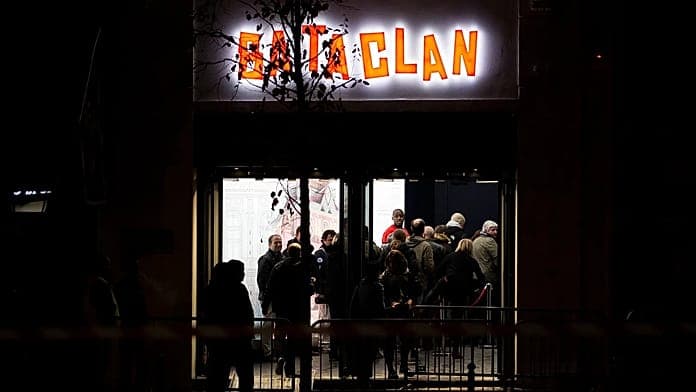
Mohamed Bakkali was sentenced to 30 years in prison by a French court in 2022 for his role in helping coordinate the deadly attacks that killed 130 people and injured hundreds more after gunmen stormed Paris’ Bataclan theatre and suicide bombers struck across the city.
Bakkali, who was extradited to Belgium in 2018, was also sentenced to 25 years in prison in Belgium for his part in planning another attack on a Thalys train from Amsterdam to Paris.
Belgian prosecutors told Agence France-Presse on Friday that a Brussels court had decided Bakkali could be temporarily allowed out of the Ittre detention facility, a maximum-security prison that opened in 2002.
The Brussels prosecutor’s office said the court had made the decision “despite the prosecution’s opposition,” adding that “the prosecution has no right to appeal, and the decision is therefore final.”
“It is up to the prison director to implement it,” it said.
Le Monde reported that the leave periods are a preliminary step toward the potential granting of parole under electronic monitoring.
The decision, which allows Bakkali to leave prison six times for 36 hours each, has sparked backlash in both Belgium and France.
“His prison releases and his possible upcoming release after serving one-third of his sentence are a slap in the face to the victims, to the investigators, and to the justice of democracies,” Thibault de Montbrial, a French lawyer and president of the Center for Reflection on Internal Security, wrote on X.
Matthieu Valet, a Member of the European Parliament from France’s far-right National Rally party, said it was “a huge middle finger to French justice and the victims.”
“Those who take part in these networks must serve their full sentences, without privileges,” he said.
In Belgium, Denis Ducarme, a Member of Parliament from the Reformist Movement, likened the decision to “turning one’s back on the memory of the victims and the pain of the families.”
“What a country. What a disgrace,” he added.
Vlaams Belang MP Alexander van Hoecke said his party would now be submitting a bill aimed at ensuring “convicted terrorists are no longer eligible for an exit permit or penitentiary leave.”
Justice Minister Annelies Verlinden said the decision to allow Bakkali to leave his detention facility had been granted after “a thorough review of the case” and under “very strict conditions.”
Verlinden added that Bakkali had previously been allowed out but for shorter periods of time.










Great article! This really puts things into perspective. I appreciate the thorough research and balanced viewpoint.
Interesting read, though I think there are some points that could have been explored further. Would love to see a follow-up on this topic.
Thanks for sharing this! I had no idea about some of these details. Definitely bookmarking this for future reference.
Well written and informative. The examples provided really help illustrate the main points effectively.
This is exactly what I was looking for! Clear, concise, and very helpful. Keep up the excellent work!