


Media Lens: 69 people killed in train crash in Spain including 4 Americans and others
A train crash in Spain has claimed the lives of at least 69 individuals, including four Americans. Authorities confirmed the fatalities and are investigating the circumstances surrounding the incident.
Quick links: What has happened | Status quo | Confirmed facts | Preconceptions | Elisions | One story, four angles | Related links
What has happened
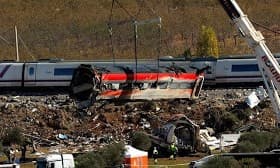
A tragic train crash occurred in Spain, resulting in the deaths of 69 individuals, including four Americans. The incident took place as the train was traveling near the northeastern region of Catalonia, leading to significant international attention due to the fatalities of multiple foreign nationals.
Among the deceased were citizens from the United States, Japan, and Canada, highlighting the diverse backgrounds of those involved. Authorities are currently investigating the cause of the accident while offering support to the victims’ families and managing the aftermath of this devastating event.
Status quo
A train crash in Spain resulted in the deaths of at least 69 people, including four Americans. The incident occurred on November 2, 2026, when a high-speed train derailed near a rural area, leading to widespread casualties and injuries. Families of the victims are seeking information as authorities investigate the cause of the crash and coordinate recovery efforts. The international implications of the tragedy have drawn attention, with representatives from several countries involved in the aftermath.
Confirmed facts
- 69 people were killed in a train crash in Spain.
- Four Americans were among the victims of the train crash.
- One Japanese citizen has been confirmed dead; another is unaccounted for.
- A Cambridge scientist was one of the individuals who died in the crash.
Preconceptions
- **CBS News** prioritizes the nationality of the victims in the Spain train crash, specifically highlighting that 4 Americans are among the deceased, suggesting a focus on the American perspective in international news.
- **The Guardian** emphasizes a broader scope by noting multiple nationalities among the victims (including US, Japan, and Canada), indicating a commitment to portraying a more comprehensive narrative surrounding the tragedy.
- **Japan Today** features the confirmation of one Japanese victim and the status of another unaccounted for, prioritizing the situation of their own citizens more directly than other outlets.
- **BBC** focuses on an individual victim’s story, specifically that of a Cambridge scientist, which personalizes the coverage but reduces emphasis on the larger national implications affecting multiple countries.
- Coverage from **The Guardian** and **Japan Today** is more centered on detailing the international composition of the victim list than **CBS News**, which mainly highlights American victims.
Elisions
- The Guardian reports on multiple nationalities among the casualties of the train crash, including U.S. and Japanese citizens, which is less emphasized on CBS News, that additionally mentions the deaths of Americans but does not specify the broader international impact.
- Japan Today highlights a confirmed death of a Japanese citizen and one person unaccounted for, while CBS News and The Guardian focus more heavily on the overall casualty count and nationality without highlighting the specifics of Japanese victims.
- The BBC includes personal details about the victims, such as the mention of a Cambridge scientist who died in the incident, which is not covered in the same depth by CBS News or The Guardian, showing a gap in human-interest stories among sources.
- The timeline of deaths and the responses from local authorities differ slightly across sources, with CBS News providing immediate updates while BBC and The Guardian seem to follow with more significant stories; this variation may lead to discrepancies in perceived event timelines.
One story, four angles
CBS News – 4 Americans among 69 people killed in train crash in Spain, officials say
Publication: CBS News | Intensity: (8/10) | Sentiment: Neutral | Legal precision: Medium
Expand
Espresso Shot: The lead focuses on the nationality of the victims, emphasizing that 4 Americans lost their lives in a significant tragedy involving a train crash.
Key differences:
1. CBS introduces the American fatalities immediately, contrasting with The Guardian, which emphasizes a broader international impact first.
2. The report states “69 people killed,” showcasing a macabre number upfront compared to Japan Today’s mention of individuals directly.
3. CBS explicitly notes involvement from officials indicating a governmental response, highlighting authority engagement versus personal loss arguments in others.
Bias: Selection: Prioritizes American victims, downplaying other nationalities involved. | Language: Uses passive construction in “69 people killed,” which distances the audience from the tragedy’s direct impact. | Omission: Lacks further details on survivors and is less compassionate toward international victims beyond Americans.
Assessment: The focus on the American victims leads readers to immediately empathize with a familiar narrative over broader global tragedy.
The Guardian – Spain train crash: US, Japan and Canada citizens among dead, authorities say
Publication: The Guardian | Intensity: (7/10) | Sentiment: Neutral | Legal precision: Medium
Expand
Espresso Shot: This headline broadens the narrative by including multiple nationalities, emphasizing a larger humanitarian impact rather than focusing solely on American victims.
Key differences:
1. The Guardian opens with a collective view of nationality in casualties, providing a wider portrayal compared to CBS’s singular focus on Americans.
2. It uses “among dead,” which contextualizes diversity in the tragedy rather than prioritizing one nationality.
3. The phrase “authorities say” adds a layer of credibility and indicates ongoing investigations, contrasting with CBS’s straightforward victim tally approach, which lacks supporting context.
Bias: Selection: Emphasizes the inclusion of Canadian and Japanese fatalities equally alongside Americans. | Language: The term “among dead” is less reactive than “killed,” making it feel more informative. | Omission: Less emphasis on the governmental response specific to the United States, focusing instead on global victimization.
Assessment: The multi-national perspective prompts readers to recognize the tragedy as a shared burden, promoting global empathy over nationalistic focus.
Japan Today – One Japanese confirmed dead; one unaccounted for in Spain train crash
Publication: Japan Today | Intensity: (6/10) | Sentiment: Neutral | Legal precision: Low
Expand
Espresso Shot: The lead zeroes in on the fact that there is a specific casualty from Japan, bringing a personal angle to the tragedy amidst broader reports.
Key differences:
1. Japan Today singularly identifies a Japanese victim, contrasting with CBS’s emphasis on multiple American fatalities and The Guardian’s broader international angle.
2. “Confirmed dead” vs. “among dead” from The Guardian suggests higher certitude in reported loss, indicating verified information as facts unfold.
3. The phrase “one unaccounted for” adds urgency, suggesting ongoing concerns and creating a narrative tension that is less emphasized in other outlets.
Bias: Selection: Centers exclusively on the Japanese victims, potentially downplaying the scale of the tragedy affecting other nationalities. | Language: The straightforward “confirmed dead” adds a sense of finality compared to others’ less definitive phrasing. | Omission: Lacks broader context regarding the overall casualty figures and international reactions.
Assessment: The focus on a Japanese victim encourages readers to adopt a personal connection to the individual tragedy, fostering empathy for that nationality specifically.
BBC – Cambridge scientist dies in Spanish train crash
Publication: BBC | Intensity: (9/10) | Sentiment: Negative | Legal precision: High
Expand
Espresso Shot: Emphasizing the identity and profession of the victim, the narrative personalizes the tragedy by stressing the loss of a notable figure within the scientific community.
Key differences:
1. The BBC focuses on an individual with relevant professional significance, unlike CBS showcasing multiple fatalities or The Guardian’s lack of individual specificity.
2. “Dies” versus “killed” indicates a more personal emotional tone, evoking sympathy by humanizing the loss in this narrative.
3. By mentioning “Cambridge scientist,” the report frames the victim in the professional context, adding layers of public interest and potential impact from the loss.
Bias: Selection: Elevates the profile of the victim over the broader context of casualties, potentially minimizing other individuals’ losses. | Language: Choosing “dies” gives a more personal touch compared to the more clinical approaches of others. | Omission: Less focus on the overall tragedy, hindering the recognition of collective suffering among all victims.
Assessment: Focusing on a prominent victim shapes readers’ feelings of loss into a narrative centered around recognition and societal impacts of individual tragedies.
In the coverage of the Spain train crash, CBS News emphasizes the involvement of American victims, offering a personal angle that adds emotional weight, while The Guardian frames the incident with a more international perspective, citing victims from multiple countries, which may imply a broader tragedy. Japan Today’s report underscores its focus on specific nationalities affected, particularly the Japanese, which contributes to an escalatory narrative about the crash’s implications. Meanwhile, BBC’s framing highlights the loss of a prominent scientist, underscoring the human cost. The facts do not change. What changes is where scrutiny lands.
Related links
CBS News
4 Americans among 69 people killed in train crash in Spain, officials say
The Guardian
Spain train crash: US, Japan and Canada citizens among dead, authorities say
Japan Today
One Japanese confirmed dead; one unaccounted for in Spain train crash











Great article! This really puts things into perspective. I appreciate the thorough research and balanced viewpoint.
Interesting read, though I think there are some points that could have been explored further. Would love to see a follow-up on this topic.
Thanks for sharing this! I had no idea about some of these details. Definitely bookmarking this for future reference.
Well written and informative. The examples provided really help illustrate the main points effectively.
This is exactly what I was looking for! Clear, concise, and very helpful. Keep up the excellent work!